
On 12 June, 1857, a girl was born in Limerick. Named Bidelia Crehan by her parents, she soon after came to the United States, settling in Brooklyn and making a quick path to theatrical stardom. After a mistake on a program misspelling her surname as C. Rehan, she renamed herself Ada Rehan.
Rehan is most commonly known for her role as a muse, her admirers spanning the globe. Writers, artists, and directors were fascinated by her beauty and charm as the young woman cemented her place in the theatre. Known by some for the portrait painted of her by American artist John Singer Sargent (1856-1925), Rehan was frequently featured by those working in the arts.
Rehan’s greatest collaborator was John Augustin Daly (1838-1899), founder of New York’s famous Daly’s Theatre. Rehan joined his theatre company in 1879 and stayed with the troupe for twenty years. Like many in the theatrical world, their relationship was turbulent and complicated. Beyond the professional, Rehan and Daly were romantically entangled, although not always on the happiest of terms.
Common of a young star, Rehan’s highest acclaim came in her earlier days. As she grew older, she was criticized heavily for supposedly losing her beauty, and rumors circulated that she was lying about her age. One critic wrote, “She makes up fairly for girlish roles … but at close sight in the cold light of day she shows her age” in only 1888, when she would have been but 31.
Ada Rehan pops up in a few places in our collections at AIHS, but most fascinating are her correspondences, showing the true remnants of her history from her perspective.
On 29 October, 1900 (when she was 43), she wrote a letter to Mr. St. John (read: “sinjin”) Gaffney, which now lives in our correspondence room. In it, she thanks him for the gift of a book and tells him that she is soon to leave town and work on painting.
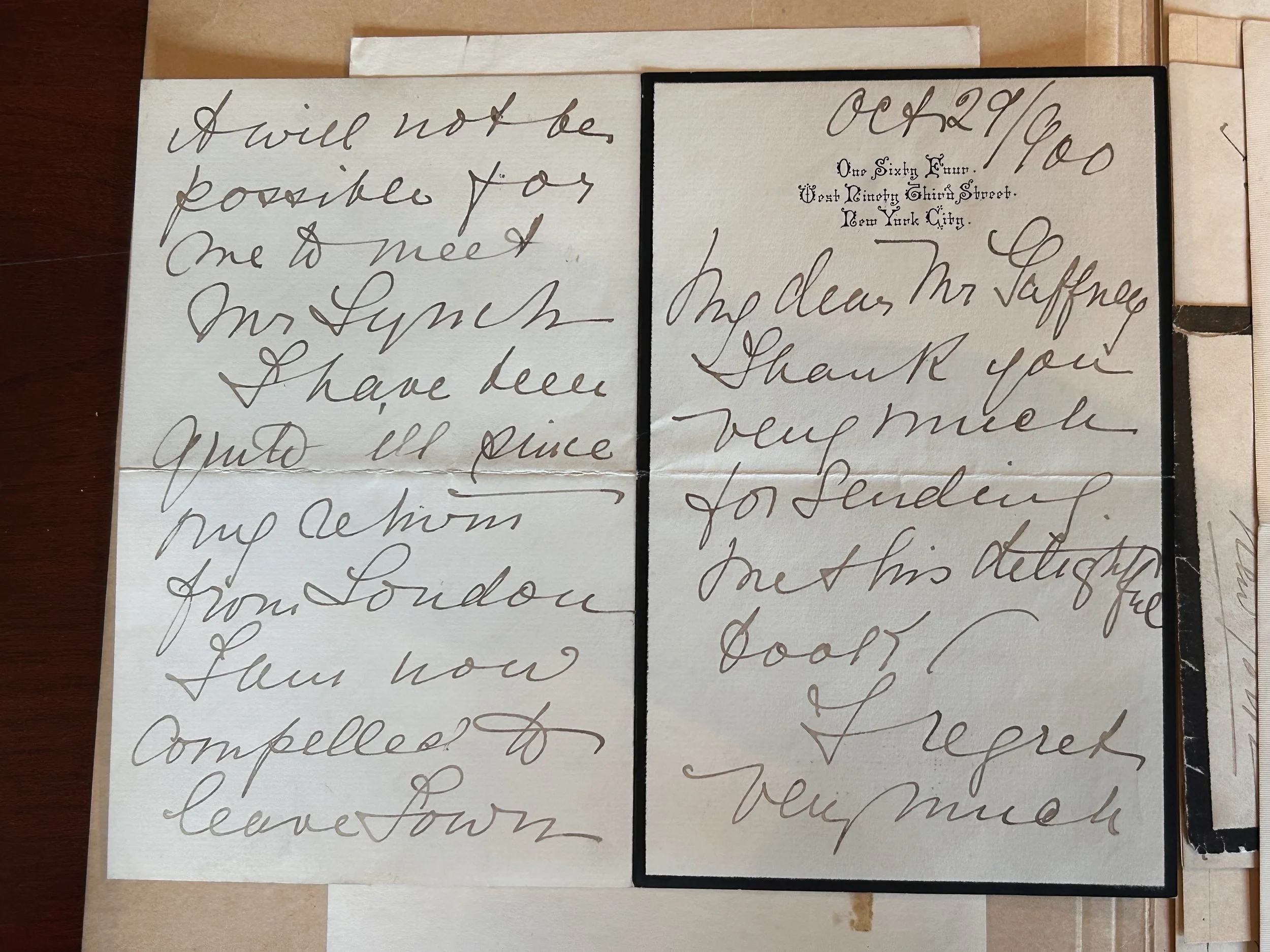
Letter, page 1
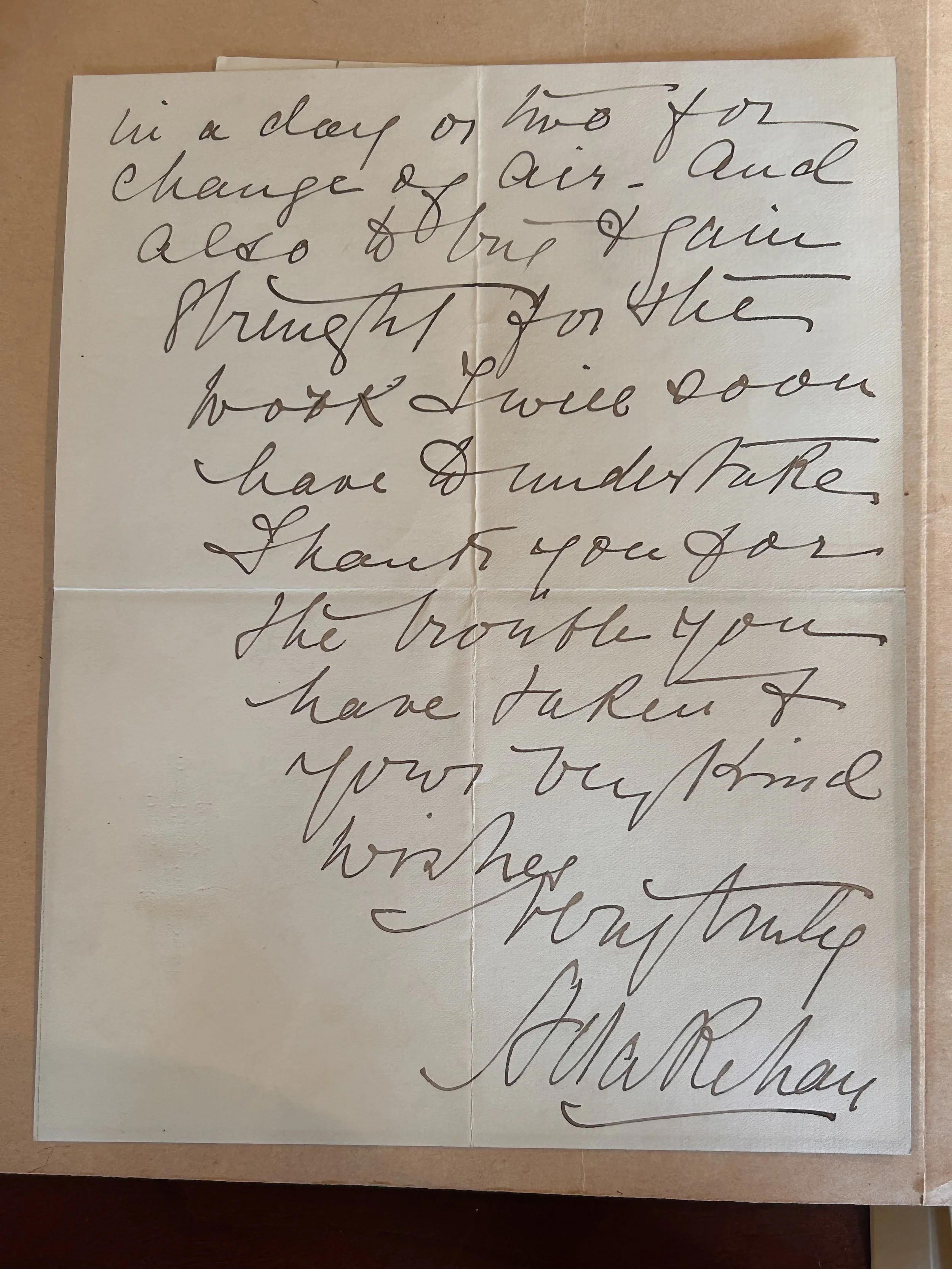
Letter, page 2
“My dear Mr Gaffney thank you very much for sending me this delightful [book] I [enjoyed it] very much. It will not be possible for me to meet for lunch. I have been quite ill since my [illegible] from London I am now compelled to leave town in a day or two for change of air. And also to buy a paint brush for the work I will soon have to undertake. Thank you for the book you have taken and your very kind wishes. Yours truly – Ada Rehan”
During the period this letter was written, Rehan would have been in the dwindling era of her career. Daly had died the year prior, causing her to leave her stage performances in distress. Five years after this letter, Rehan retired permanently.
St. John (1864-1945) himself is less attested. He was a diplomat (Consul-General in Munich) and an advocate for Irish Nationalism. His roots, like Rehan, came from Limerick. Yet their relationship is not clear, and Rehan had many friends with international ties. Gaffney is most famous for his pro-German stance, which caused him to be forced to resign by Pres. Woodrow Wilson. This stance, tied to Germany in the first World War, would have come later than this correspondence. In this note, it seems that he may be to Rehan merely another artistic admirer.
Rehan is often spoken about through these connections. But in this letter, as she talks about her desires to step away from the city, to purchase a paintbrush, and to see more of the world, her psyche reveals itself away from the stage. Through these scripted letters, we see the artist in all her vulnerabilities and hopes, towards the end of her career. Though her illness here is a brief mention, she had a long battle with cancer and arteriosclerosis which led to her death. Now, Rehan can be found in her final resting place at Greenwood Cemetery in Brooklyn, or painted in living color at The Met.
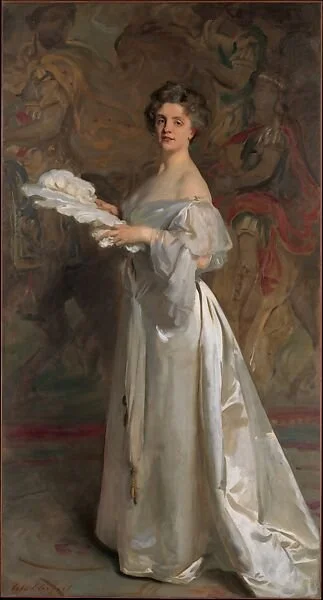
Ada Rehan, by John Singer Sargent. The Metropolitan Museum of Art.