
Digital Reproduction Guidelines
Photography & Reproduction
The American Irish Historical Society may scan or photograph materials from its collections for publication and reuse, given a small fee for labour and reproduction. Please see guidelines below. Requests may be made as part of the “research request” form.
Credits
Please accompany text, video, or images from the AIHS archives with a credit line such as “Courtesy of the American Irish Historical Society Archives”. Do not edit or remove metadata from files downloaded from online archives catalogs and do not use AIHS materials without stated permission.
Copyright
For material created by a person or organization other than the American Irish Historical Society, and not covered by fair use, managing copyright is the responsibility of the patron, not archives staff. This includes determining whether material is copyrighted and, if so, contacting the rights-holder for duplication permissions. Patron is also responsible for obtaining permissions to use the likenesses of people depicted in photographs or video.
Photocopies/scans (digital or paper)
$0.25 per page for Archives staff to create new scans; first 5 pages are free.
For offsite researchers, no more than 50 pages of scans will be sent due to limitations on staff time. Donors may request unlimited scans of their donated materials at no charge. However, large jobs of more than 50 pages at a time must be approved by the Lead Archivist.
Timing
Allow one week turnaround time for scanning or retrieval of items, more for large jobs. Archives staff will advise you if a job is likely to require more than one week.
Be aware that many materials are difficult to locate and may require more time for search and retrieval. Please be patient with Archives staff if a job requires extra time.
Delivery
Paper copies will be delivered by USPS. Digital files will be e-mailed or made available through cloud storage such as Google Drive, Sharepoint, or Dropbox. Digital files can also be saved to a flash drive if provided by the patron. Please let Archives staff know if you have a preferred means of delivery.
File format
Text documents, unless requested otherwise, will be scanned as 300 dpi PDF files. Images will be scanned as 300 dpi JPEG files.
Complex jobs
There will be an additional $15.00 service fee for any reproduction requests beyond the basic scans listed in File Format. This includes but is not limited to:
-
Preparing photos from negatives
-
Cropping, color-correcting, or otherwise editing images
-
Scanning items larger than 14” x 17”
-
High-quality scans (e.g., more than 300 dpi, or TIFF files)
-
Scanning items other than books, documents, or flat images (such as artwork or artifacts)
-
Making copies from microfilm
-
Isolating still images from video
-
Rush jobs (less than a week turnaround)
Publication fees
The Archives does not charge publication fees for nonprofit use of AIHS material, such as classwork, academic publications, and work by nonprofit organizations unless a nonprofit organization is collaborating with a for-profit use, in which case the typical for-profit fees apply.
For-profit use of Archives material will be assessed a publication fee based on the guidelines below. Payment of this cost entitles the patron to non-exclusive use of the image, video, or other duplicated work in perpetuity. Fees may be subject to change if items are already scanned or otherwise easily accessible.
Photography
While in the Archives reading room, patrons may take photographs of Archives material with smartphones, tablets, or other digital devices as long as no flash is used. Before taking photographs, please obtain permission from Archives staff.
Right of Refusal
The Archives reserves the right to decline reproduction requests in cases where an item may be too fragile to handle or may otherwise be harmed by the reproduction process. The Archives may also decline reproduction requests that would require too much staff time to fulfill.
Fees Below
All fees are per image. Payment must be received in advance of publication.
(Still Images)
Books and Periodicals
- Dissertations & Theses: $0
- Academic & Non-Profit (501c3) Presses: $25 (If print run up to 5,000—if greater than 5,000 commercial rates apply)
- Commercial: $50 (Print Run up to 5,000); $100 (Print Run 5,001+)
- Advertising Brochures, Promotional Materials, Dust Jackets, Album Covers
- Academic & Non-Profit (501c3) Presses: $50 (If print run up to 5,000—if greater than 5,000 commercial rates apply)
- Commercial: $100 (Print run up to 5,000); $250 (Print run 5,001+)
Electronic Publications
- Same as for print publications, including additional fees for use on cover or packaging
Online
- Dissertations & Theses: $0
- Academic & Non-Profit (501c3): $25 per image
- Personal Use: $25 per image
- All other: $50 per image
Exhibitions
- Academic & Non-Profit (501c3): $0 (Up to 1 year); $50 (Permanent Exhibit)
- Commercial: $100 (Up to 1 year); $150 (Permanent Exhibit)
- Use in brochure or publicity material:
-
Academic & Non-Profit (501c3): $30
-
Commercial: $50
Use in catalog or poster:
Same as fee schedule for books and periodicals
Television, Cable, Satellite Broadcast
- Local: $100
- National: $125
- Worldwide: $200
- Feature Films, Videos
- Commercial Film: $150
- Educational/Non-theatrical: $50
- Moving Images: $250 per image, per minute, per medium. After one (1) minute, time is pro-rated in 15 second intervals at $67.50 per quarter minute. Minimum payment $250.
- Arrangements for filming within AIHS must be made in advance and may involve a fee to cover staff time.
Method of Payment:
Invoices will be sent with the Permission to Publish form. The following methods of payment may be used:
- Checks drawn on American banks or on branches on foreign banks located in the United States and payable in U.S. dollars to the American Irish Historical Society.
- Credit cards
- Venmo, Zelle, and CashApp.
What do reproduction fees help us with?
Accessioning. Materials donated to the American Irish Historical Society must be physically and digitally accessioned into our collections. For archival materials, this involves careful storage with security, climate control, and often rehousing in acid-free boxes and folders. We then go through the materials, reading them carefully, organizing them, cataloguing them, and writing finding aids.
Preservation. All library and archival material are stored in a climate-controlled environment, which requires a set humidity and temperature level, and requires the use of an extensive HVAC system. Shelving, boxes and folders, a state-of-the-art security system, a state-of-the-art fire extinguisher system, all follow national preservation standards. This level of preservation ensures that we can keep our material safe from environmental erosion and dangers, as well as concerns about theft and privacy.
Access. When a scan request is received, staff members look through our cataloguing records to find the correct collection, as well as track the material through the whole process on various databases. Collections that are not digitized require staff members to pull the material and then scan each individual page. The images then often need to be edited, and physical materials reshelved.
Digitisation. The American Irish Historical Society is working to establish digitisation processes to create wider access to our collections. Our goal is to provide our users with our complete archival collection online, in low resolution, for research use. This digitization project also scans and makes accessible some of the rare library material, as well as the periodical collection. Costs for our digitization program include paying outside vendors who scan the material following professional standards, the transportation of material to and from digital vendors, and the cost for them to store the material in a preservation-secure environment during the digitization process. Finally, AIHS staff accession the digital images into our electronic system and catalog, a process that further involves some necessary editing and reformatting.
Reference, Scan Orders, and Permissions. Answering questions, scanning material, and providing publishing permissions to researchers are all regular tasks of our archival staff. Staff respond to reference questions by identifying material that might be helpful, and then accessing the material either online or physically. Often numerous collections, periodicals, and books need to be accessed and studied to provide answers to patron questions. Often, staff scan materials the researchers are interested in.
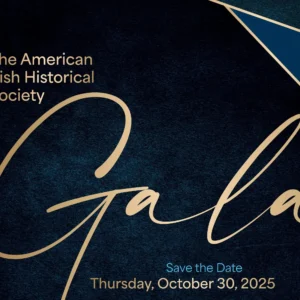
Purchase your tickets now for Our Grand gala event on October 30th.
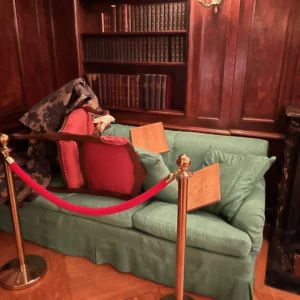

Preserving Irish-American Legacy
Founded in 1897, the American Irish Historical Society stands as a beacon of cultural preservation, dedicated to celebrating the rich tapestry of Irish and Irish-American history. Our mission is to foster an appreciation of this heritage through our extensive archives, educational programs, and public events. As a non-partisan and non-sectarian institution, we invite you to explore our collections, participate in our events, and join us in our ongoing efforts to honor and preserve this vibrant cultural legacy.

Upcoming Events at AIHS
Annual Gala Celebration
March 17, 2024

FREE
Irish Heritage Lecture Series
April 10, 2024

FREE
Celtic Music Night
May 5, 2024

FREE
Historical Archives Tour
June 15, 2024

FREE
Honors and Distinctions
2023
Cultural Heritage Award
Recognized for outstanding contributions to preserving Irish-American history.
2022
Excellence in Archives
Awarded for maintaining an exemplary archive of Irish literature and history.
2021
Community Impact Award
Honored for fostering community engagement and cultural education.
Voices of Our Community

"Attending the Society's events has deepened my appreciation for my heritage and connected me with a vibrant community."
John O'Connor

"The archives are a treasure trove of knowledge, offering invaluable insights into our shared history."
Mary Sullivan