
Sarah Eileen Hanley: From Tiffany Muse to Art World Extraordinaire
March is known in Irish American circles for the event of Saint Patrick’s Day, and a month-long celebration of heritage surrounding the holy day. But, since 1980, it has also been Women’s History Month. This annual observance showcases the lesser known stories of women’s contributions to the world. With the coinciding events in March, it seems no better time than to highlight some of the achievements of Irish-American women. Being both Irish (often working class, Catholic, or otherwise disenfranchised) and women, their stories have frequently been forgotten or ignored.
Unfortunately, some of these stories are forgotten not out of historical error or loss of information, but by choice. One such figure is Sarah Eileen Hanley, an Irish-born artist, socialite, and entrepreneur.
Hanley (1883-1958) was born in a small village near Easkey, Co. Sligo to a family of farmers. Her parents encouraged ambition in their children, leading their eldest son (Dudley) to become Lord Mayor and their younger children (including Sarah) to make the bold decision to emigrate to America.
At age 22, Hanley moved from Sligo to New York and trained as a nurse, working for five years with what assignments she was given. In 1910, she was given a job that would change her life. She was dispatched to Oyster Bay at the estate of Louis Comfort Tiffany (1848-1933), “Laurelton Hall.” Tiffany (1848-1933) was thirty-five years her elder, a widow, and suffering from a severe kidney infection.
Tiffany himself was a complicated figure. Both male and female artists in his studios found their legacies and work overshadowed by his push for credit and critical acclaim. Many of his female designers who worked in his glass studio, most notably Clara Driscoll (1861-1944), created some of his most iconic designs without ever getting due credit. When Hanley arrived at the estate, he reportedly had three nurses caring for him, who seemed to remain solely because of Tiffany’s aesthetic appreciation for them (according to Robert Koch, 1966). He asked for all three to stay with him, but only one agreed to this proposal: Hanley.
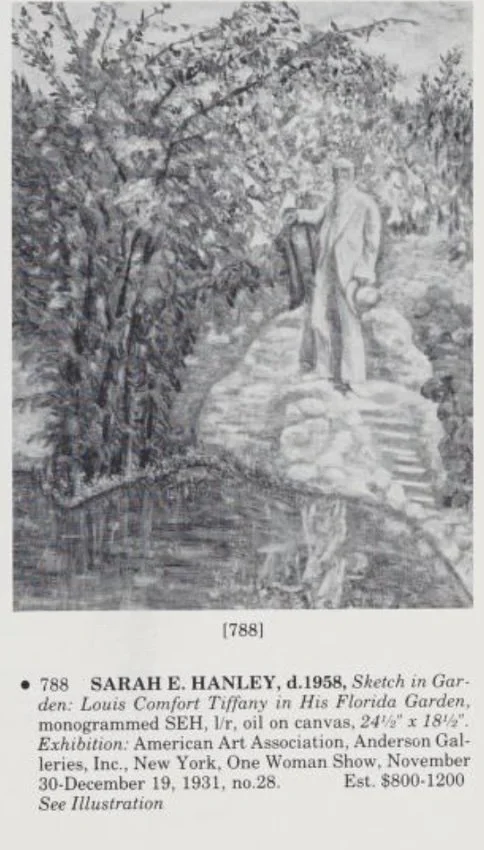
From 1985 Phillips Auction Catalog
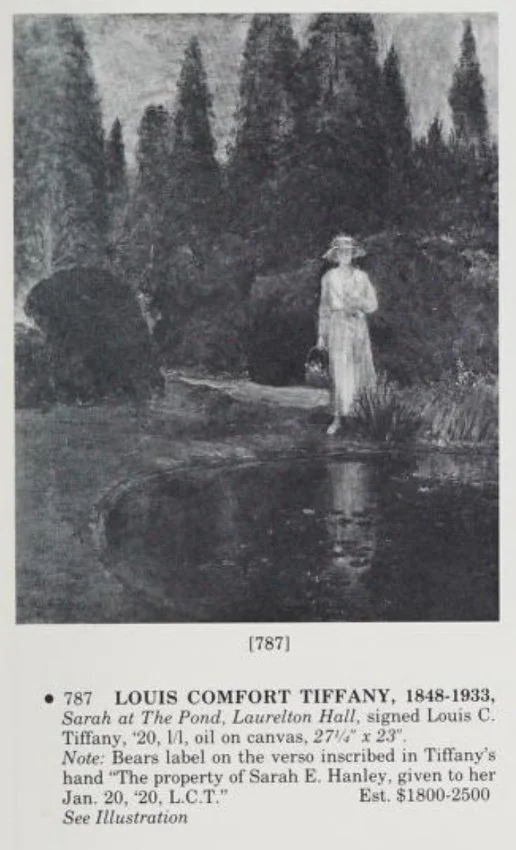
From 1985 Phillips Auction Catalog
Though his family speculated on the nature of his relationship and some of Tiffany’s descendents claim that he proposed marriage to her (she is said to have declined), their relationship was not necessarily romantic. Hanley was a devout Catholic and prioritized her work, care, and faith above all else. Tiffany apparently struggled with alcohol after the death of his second wife, a habit that Hanley reportedly helped him to quit. She was not a replacement for a wife. However, the strength and closeness of their relationship cannot be denied. He trusted her immensely and their closeness is evident by their frequent portraits of each other and their fond nicknames (“padre” and “Patsy”). Despite the concern of his family, their relationship seemed to be more that of father and daughter than anything romantic. Tiffany introduced her to a whole new world, a change from her childhood home.
Tiffany’s estate was far from humble. The mansion itself boasted 84 rooms and 25 bathrooms, while the grounds featured a greenhouse, carriage house, tennis courts, multiple terraces, yacht basin, chapel, power plant, bell tower, and (of course) an art museum. This design surpassed Hanley’s humble upbringing and Tiffany built her a small house to live in, on the grounds but away from the grandeur of the estate. Paintings of Hanley by Tiffany show her around the estate, as well as in various sceneries of his Florida home.
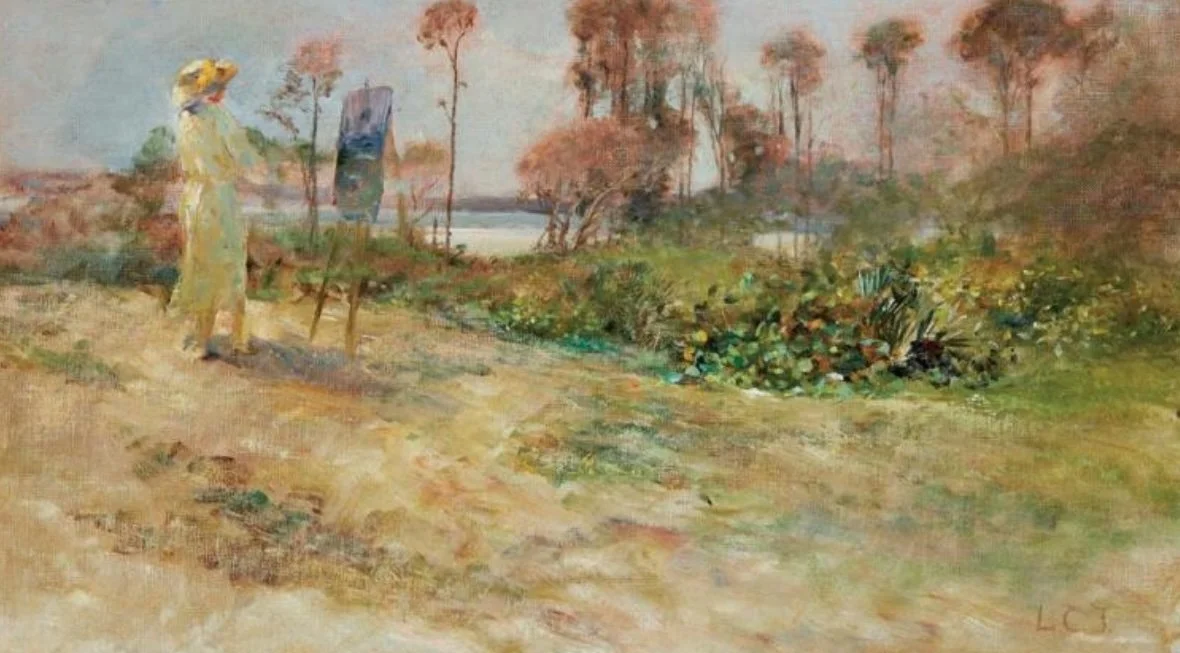
Sarah Painting, Florida Shore. Louis C. Tiffany, oil on canvas.
At the start of their relationship, Hanley functioned as both his pupil and his muse. Tiffany taught her how to paint, but saw her as a subject and inspiration for his own work. His paintings of her show her wandering the grounds to paint flowers, trees, and other natural subjects. Other than Tiffany’s instruction, she had no formal arts education, reflected in her art by a primitive naive style that she intentionally maintained. Her religious background fed into her work in paintings such as her depiction of nuns and famed subjects like Dante’s Inferno, though these more daring approaches were rarely seen during her time with Tiffany.
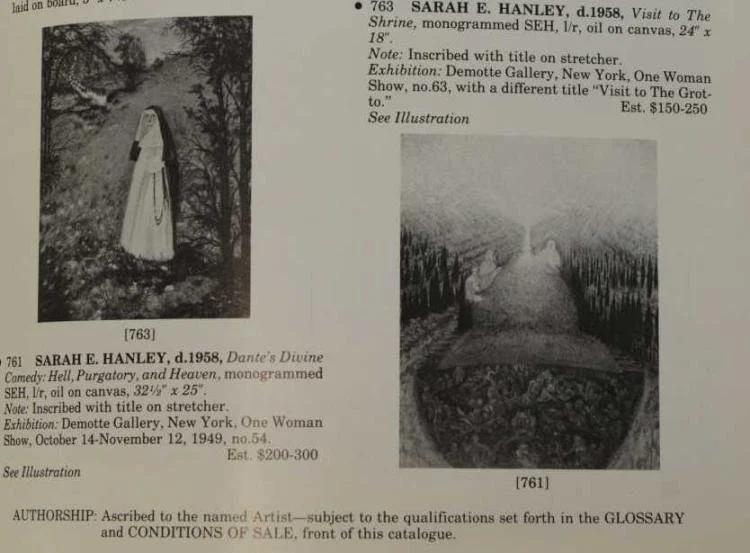
From 1985 Phillips Auction Catalog
As a muse, she was a strong inspiration to Tiffany. She always wore yellow, his favourite color, leading him to paint her more frequently. On a broader scale, his ability to produce art rapidly expanded after meeting her. He gained clear trust in her, and when he opened his foundation in 1918, Hanley was chosen as its first director at only thirty-five. She was not only a painter and nurse, but a skilled businesswoman who brought newfound attention to Tiffany and his students.
Towards the end of their relationship, Hanley’s connections and skill for the competitive and expansive New York art world had far surpassed that of Tiffany’s. His art style that had been so definitive of the early 20th century art nouveau movement was no longer considered interesting or exciting. The public craved something new, something daring. Tiffany, aging still, could not understand or engage with the changing art world. Hanley could.
Tiffany died in 1933 at age 84. Twice widowed himself, he had sired eight children. Though his will was separated, Hanley was not excluded and was given ownership of her house at Laurelton Hall and a considerable monetary sum. She was given equal stock shares to his biological daughters, granting her the financial freedom to make a final visit to her Irish home. While in Ireland, she visited galleries in Dublin and took note of the rising artist movement there.
Though like many of his students, Hanley had been trained in his style, she moved to develop her own voice as an artist. She moved away from the Laurelton Hall impressionism, and her paintings focused less on subjects like the natural environment of Long Island and more on the urban cityscape she now found herself in. Scholars like Michael Parker cite her turn towards Irish modernist influences like cubist glassmaker Evie Hone (1894-1955). While Tiffany had some interest in Irish culture and design, Hanley’s personal connection to Ireland and visits to Irish artists and galleries brought a fresh insight.
While her artwork itself stands out from Tiffany the most, she went beyond just her own creations. Hanley’s ability to understand the changing art world made her a staple in Manhattan. After exhibiting her work at the Tricker Galleries with shocking geometric designs, the New York Times called her work “daringly designed” (Nov 21 1937), and Art Digest cited her as “a decidedly individual talent” (Nov 20 1937). Using her skill as a painter to connect with other artists, she found her footing in the artworld, doing more than just taking up Tiffany’s legacy. She became a member of the National Arts Club, was exhibited alongside John Butler Yeats and other famed Irish modernists in a groundbreaking show at the DeMotte Gallery, and was selected as a fellow for life at the Metropolitan Museum of Art.
Tragically, after a failed retrospective exhibit in November of 1949, Hanley fell out of public favor and critics no longer respected her work. Three years prior, Laurelton Hall had suffered from a lack of funding in its foundation. After a devastating house fire in 1957 and the sale of many of its fine materials, the $2million construction of the mansion was moot, resulting in the estate’s sale for only ten thousand dollars. Though the mansion was mostly destroyed, the house that Tiffany had built for Hanley remained unscathed and she continued to live on the grounds. She died a year later at age 75, leaving the entirety of her estate to the Dominican Sisters. Her artworks were separated over the years and no complete catalog of her works exists. It is unknown how many paintings she completed in her lifetime, though a 1985 auction catalog highlights a great deal of her works.
Given her inclusion in Tiffany’s will and the family concern with their relationship, it does not seem incidental that she is not mentioned frequently in his biographies. Further, her rise as an artist and critic has sadly been overshadowed by one failed exhibit and a failure to turn her notoriety around afterwards. Like many women in Irish-American history, she remains primarily a footnote in the stories of men.
Hanley is buried in Calvary Cemetery in Sunnyside, Queens. While her legacy has been largely forgotten, her collections remain in New York at institutions like the Metropolitan Museum of Art (two necklaces). Most importantly to us, a number of her paintings are safely held at the American Irish Historical Society, where we preserve her history. To see some of the paintings held at AIHS, just scroll down to view our materials.
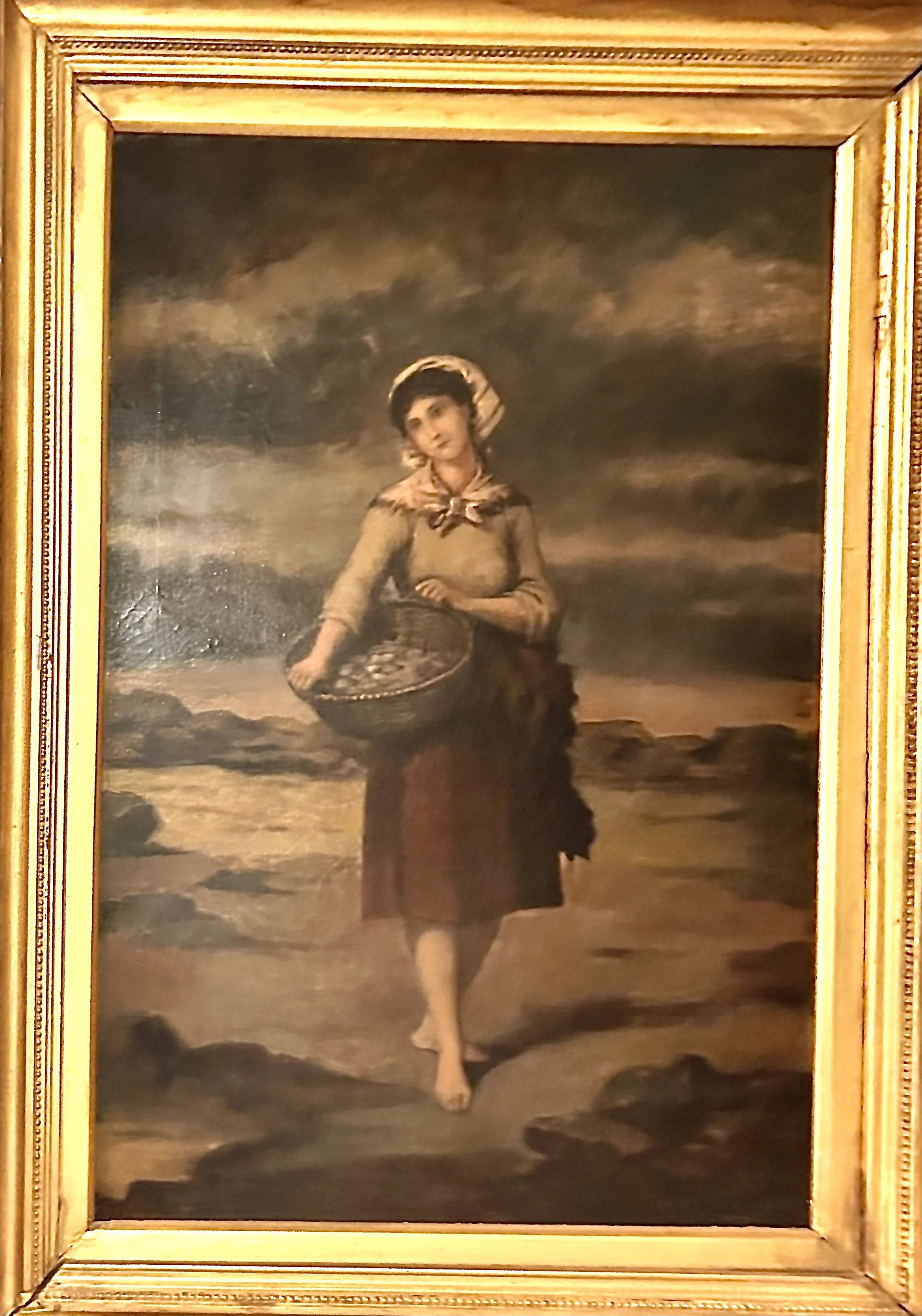
“Girl with Basket of Mussels” Sarah Hanley, oil on canvas, date unknown.
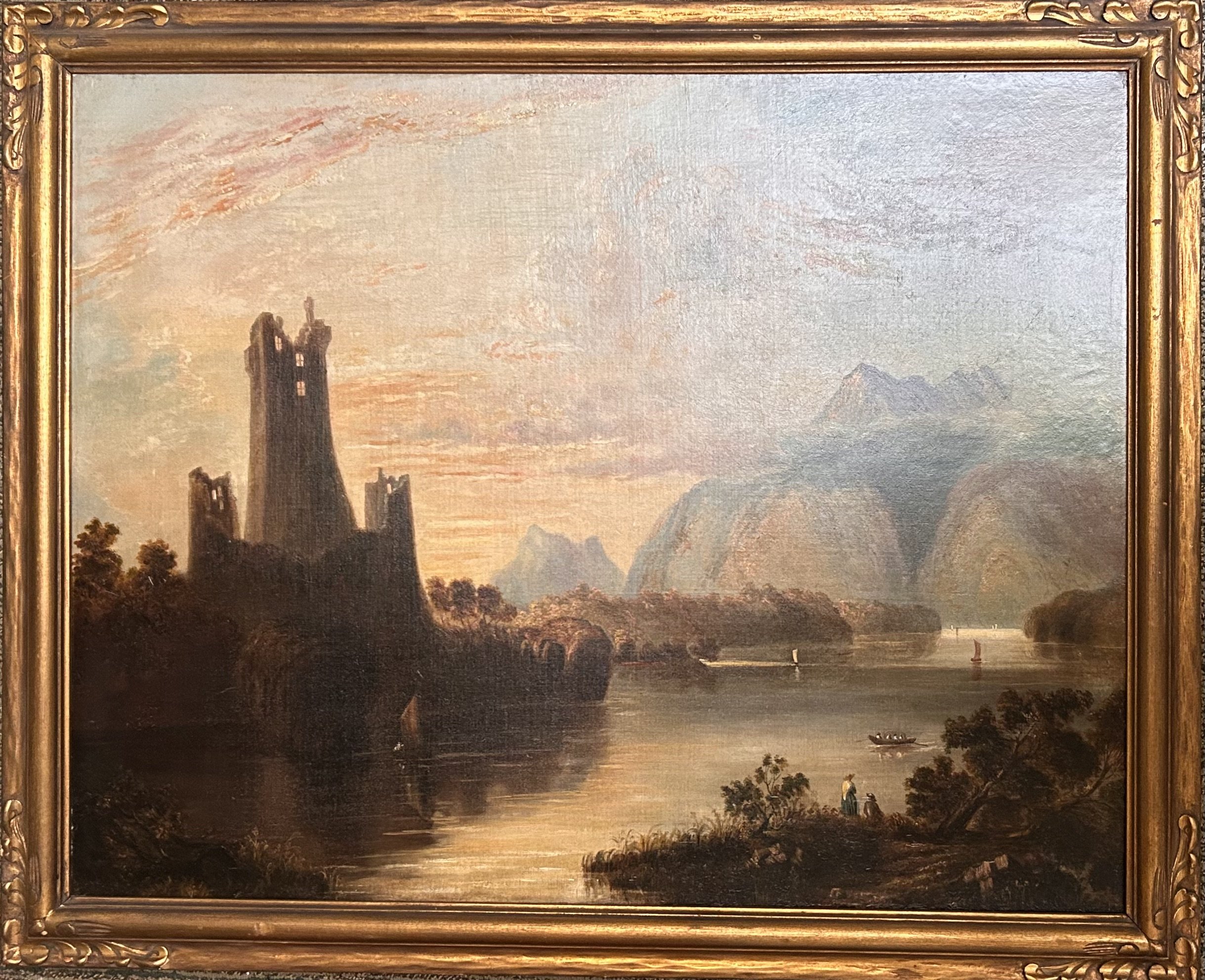
“Ross Castle, on the Lakes of Killarney” Sarah E. Hanley, oil on canvas, c. 1935
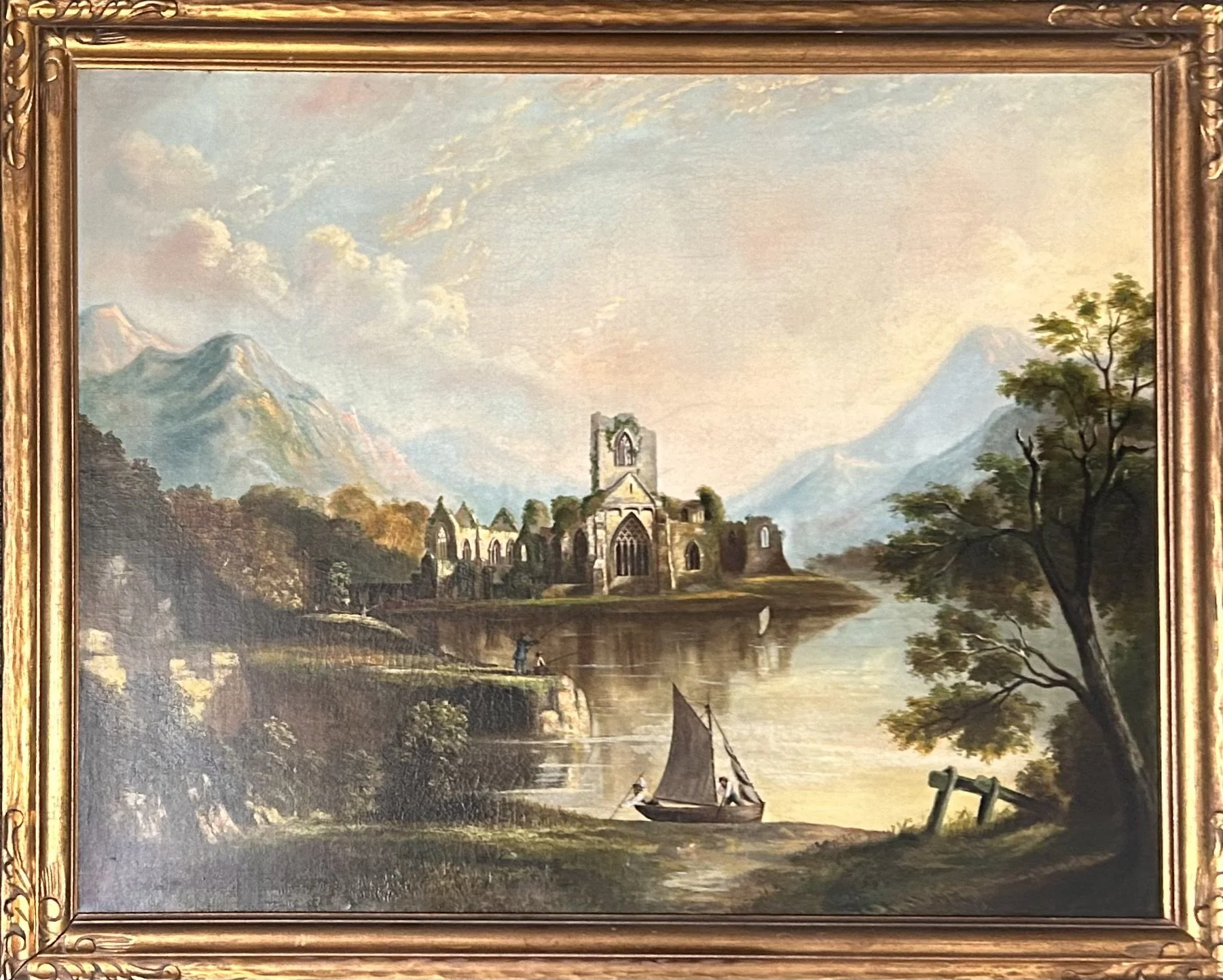
“Island Near Renvyle” Sarah E. Hanley, oil on canvas, c. 1935
References:
Parker, Michael. “Hanley, Sarah Eileen : American National Biography Online - OI.” American National Biography, 1999, oxfordindex.oup.com/view/10.1093/anb/9780198606697.article.1701373.
“A Storied Desk.” Forbes, Forbes Magazine, 19 June 2013, www.forbes.com/2007/09/30/collecting-auctions-art-forbeslife-cx_nw_1001tiffany.html.
“Miss Sarah E. Hanley.” The New York Times, 1958, www.nytimes.com/1958/02/13/archives/miss-sarah-e-hanley.html.
Walsh, Mary M. The Sarah Hanley Collection of Tiffany and Related Items. Phillips Auctioneers, 1985.