
Irish Olympians: The Athletics Club, the Whales, and Irish Sports in New York
The Winter Olympics have taken over the news this past week, featuring four Irish athletes competing in freestyle, alpine, and cross-country skiing. Of course, Irish athletes are not uncommon in global sporting events, particularly when they are descendants of Irish emigrants or Irish nationals competing for other countries. More and more, we see Irish athleticism at a high. But make no mistake, the inclusion of Irish athletes in sports has been a long struggle.
The first Irish Olympian was hammer-thrower Pat O’Callaghan (1906-1991), who won two Olympic gold medals and was the first athlete to win for Ireland after the Treaty.
Prior to Irish independence, Irish athletes had to compete for other countries in order to be recognized, most often for Britain. This, naturally, was not easy for Irish athletes. The Olympics in particular are a competition of national pride, an opportunity to show your skills and bring honour to your nation of origin. Having to compete for others, especially a country that controlled and dictated your rights, was not an easy thing to stomach.
Across the pond, similar frustrations were occurring. Irish American athletes found that they were excluded and barred from the sports they wanted to participate in. Even if they could play, they were not welcomed and not given an equal opportunity to engage with and access their sports of choice.
Here in New York, athletics were thriving at the turn of the century. The New York Athletics Club, founded in 1868, was a Protestant-only organization intended for athletes who saw sports as an elite leisure experience. Anyone not matching the wealthy White Anglo-Saxon Protestant group was not welcome, and working class Irish-Americans viewed sports and physical fitness in a very different light.
In 1898, the Irish American Athletics Club was founded, creating a space not only for Irish Americans, but for anyone who was not welcome at the New York Athletics Club.
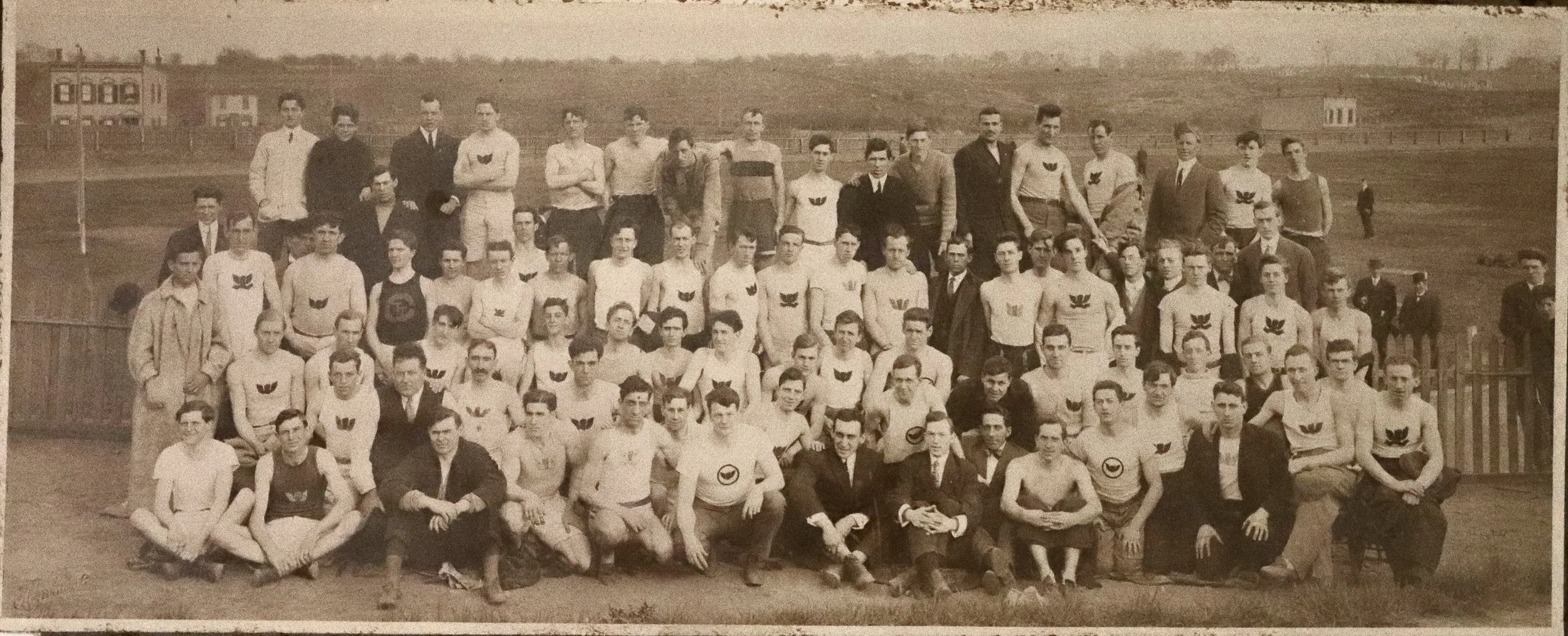
Celtic Park Panoramic, AIHS Archives
The IAAC became immensely successful at a rapid pace. While their athletes were not necessarily the most rigorously trained, their inclusivity and desire to promote and encourage young athletes brought them a great deal of positive attention. Abel Kiviat, a Jewish Olympic champion of the I-AAC, stated that, “If you could run or jump, you could try out. [...] Whereas the wealthy and elitist NYAC discriminated against Jews and other white ethnic, working-class athletes, the Irish Club welcomed them.” The IAAC included the first Irish-born Olympic gold medalist (John J. Flanagan – 1900), as well as the first Jewish track & field Olympic gold medalist (Myer Prinstein – 1904), and the first AfricanAmerican Olympic gold medalist (John B. Taylor – 1908).
The sports championed by these athletes brought pride not only to Irish emigrants, but to those who did not want to compete for the British team. Those who competed with the IAAC were seen as strong, tough, and capable despite the oppressive systems working against them.
Perhaps the most famous members of the IAAC were the Irish Whales, a group of weight throwers.
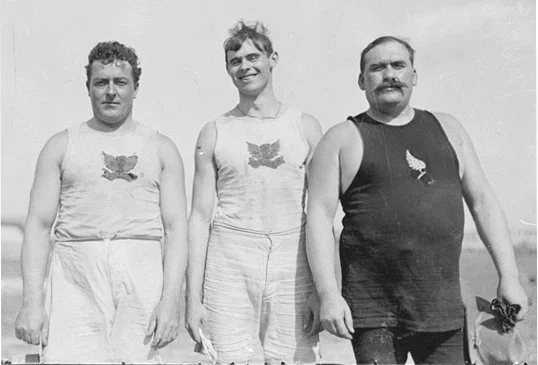
Irish Whales, John Flanagan and Martin Sheridan of the Irish American Athletics Club at the 1904 Summer Olympics. All three native Irishmen were also New York City Police officers.
The “whales” were named as such for their size as heavy lifters, though one particular story claims the name came from a waiter who tired of feeding them large amounts of food (supposedly one whale ordered a snack of roughly 27 dozen oysters and six T-Bone steaks).
In any case, their size and their skill gave them the athletic drive to excel in competition and make a name for Irish athletes.
Though Irish athletes are able to compete in the Olympics for their own country now, the path to reach that was long and challenging. As we look at the Olympians representing Ireland and Irish heritage, we remember the struggle it took to get to that point, and how much of that story roots itself here in New York!
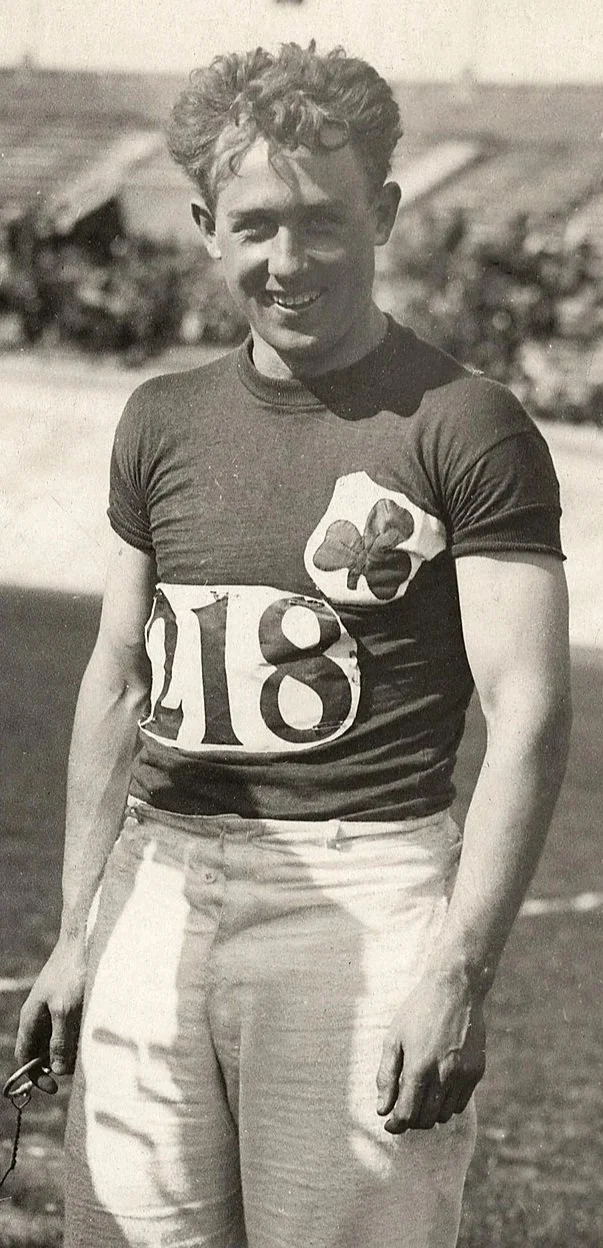
Pat O’Callaghan at the Olympics, unknown photographer.
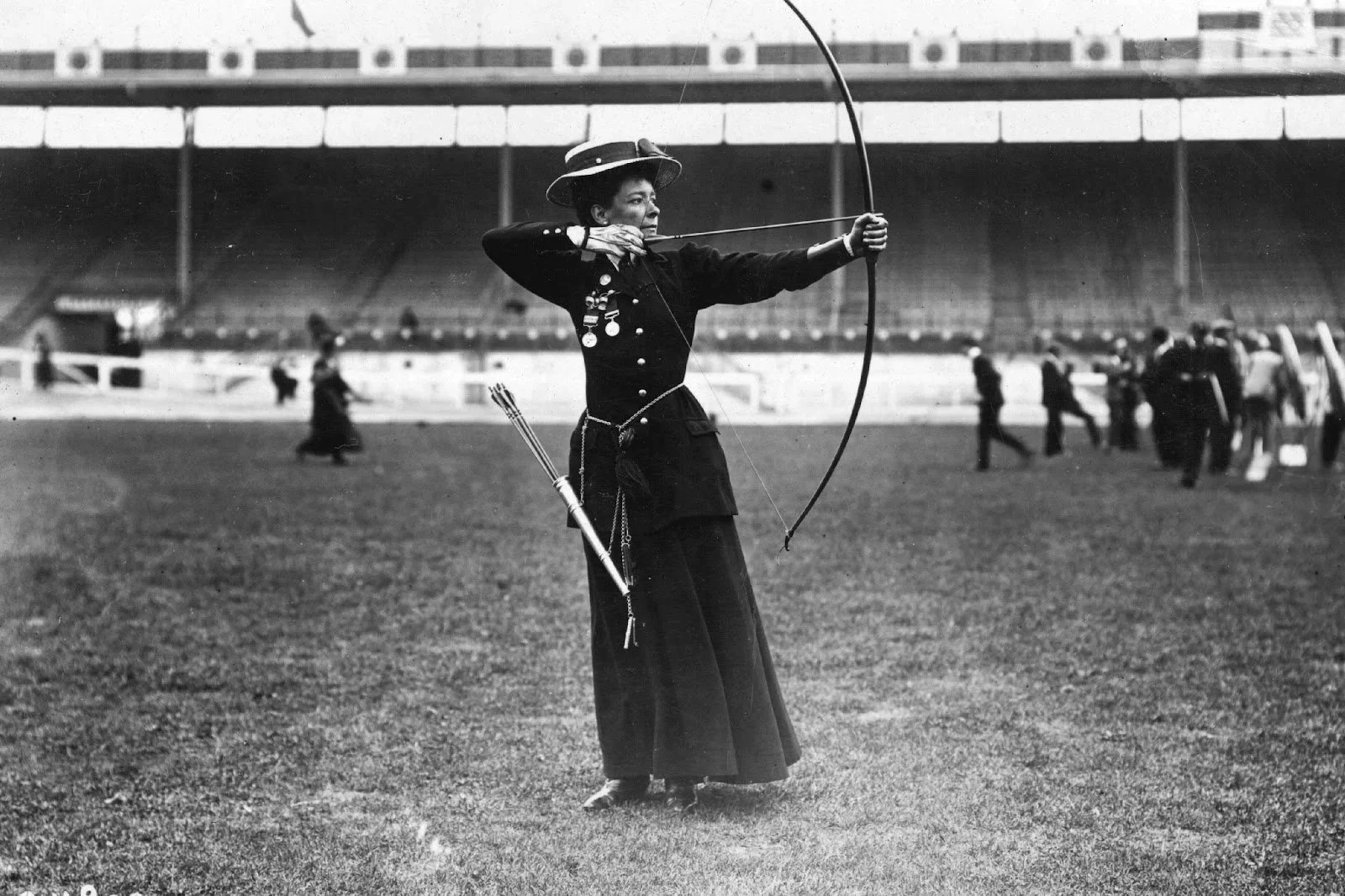
1908 Irish Olympian Beatrice Hill-Lowe. She competed for England’s team as an archer, which won her the bronze medal as the first Irish woman to win an Olympic medal.
Illustration in the "Fourth Olympiad 1908 London Official Report" published by the British Olympic Association in 1909
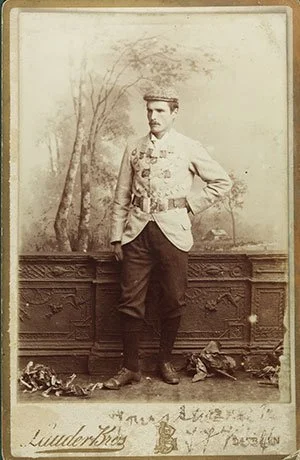
Tom Kiely (1869-1951), a famed Irish Olympian. Photo from the Tipperary County Museum.
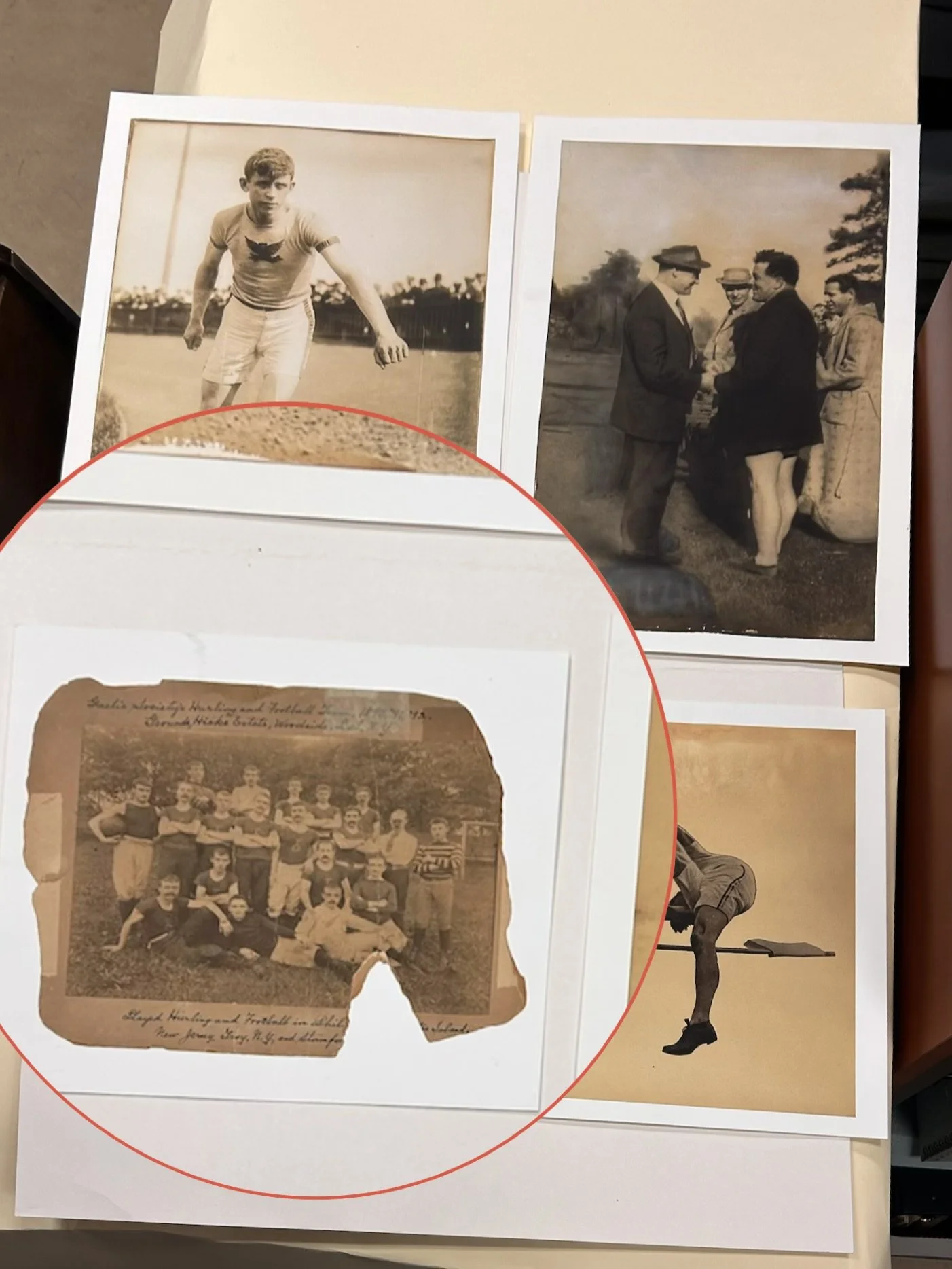
IAAC Images, AIHS Archives
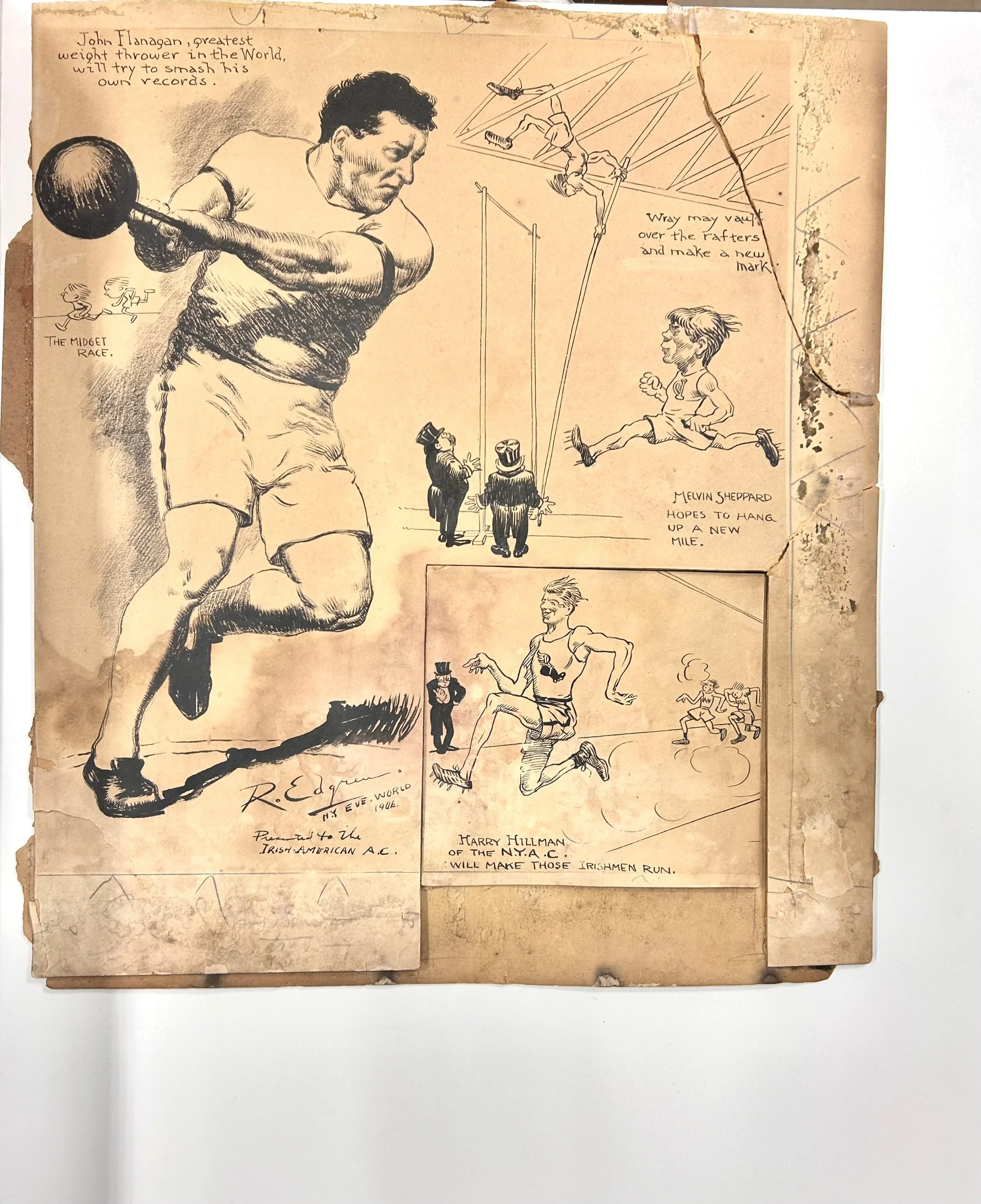
Caricatures of Irish Olympians, AIHS Archives