
John Boyle O’Reilly: A Fenian Remembered by American Presidents
Today on President’s Day, we look back at the Irish contributions to the American Federal Government. When people think of Ireland and American presidents, it’s often through Irish-American President John F. Kennedy. However, as those who have been following our events and exhibits know, there are many Irish nationals and Irish-Americans who have had ties with American presidents. Some have been directly involved through the Revolutionary War and other major events, while others have simply been admired for their work and contributions.
In today’s blog, we focus on John Boyle O’Reilly, a Fenian poet and activist who came to Boston after escaping imprisonment in Western Australia. Boyle O’Reilly (1844-1890) was born in Down, Co. Meath to a proudly nationalist family, where he worked on a small newspaper.. At fifteen, he moved to England (Lancashire) to live with his aunt. He worked there at a local newspaper and his writing and research skills quickly flourished.
In returning to Dublin from England, he enlisted in the army and became further disillusioned with British rule in Ireland, seeing directly the cruelty to Irish Catholics. He then became involved in the Irish Republican Brotherhood, dedicating his time to fighting against British rule and recruiting others to fight in secret. In February of 1866, he and many of his Fenian brothers were arrested and imprisoned. A few months later, he was charged with treason and sent to 20 years penal service in Australia.
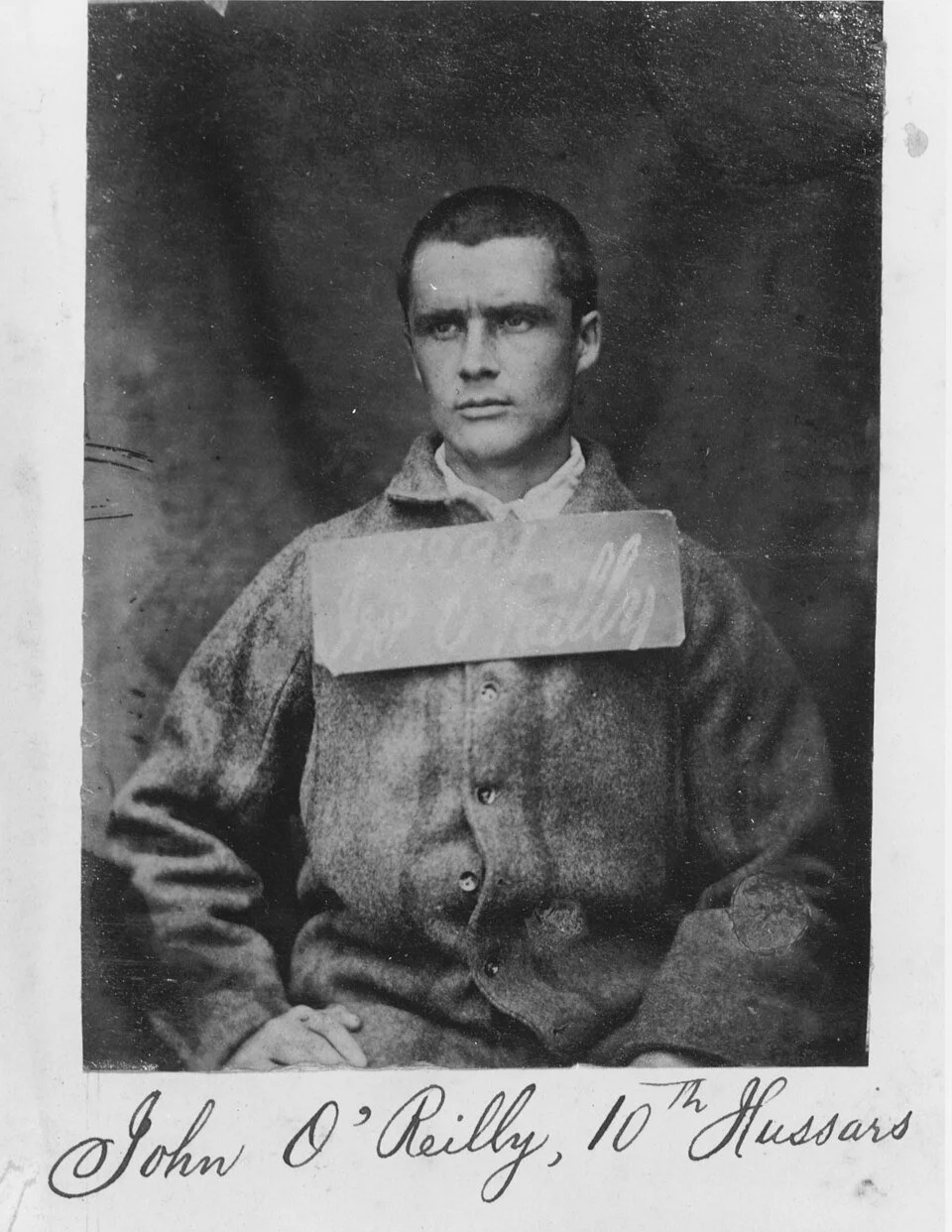
John O’Reilly, photographed while in prison in 1866. This is part of the Mountjoy Prison photographic collection, which was photographed by Thomas Larcom (1801-1879). This photograph is in the public domain worldwide.
While imprisoned in Australia, O’Reilly befriended a local Catholic priest (Fr. McCabe) who offered to help him escape. After escaping his work party and met with a local Irish settler (James Maguire) who took him to the rowboat Fr. McCabe had left for him. First missing one American ship, they waited again until they could board a safe American whaler, making a deal with the captain. A treacherous journey led him to American shores, where he quickly settled and began his life as a lecturer, writer, and journalist in the states.
His writing was heavily inspired by his seafaring escape, focused on sharing his story with his Irish and American supporters. Not only was his escape remembered through his writing, but it gave inspiration to the famous Catalpa rescue, which used the same technique of a whaling ship to escape a penal colony.
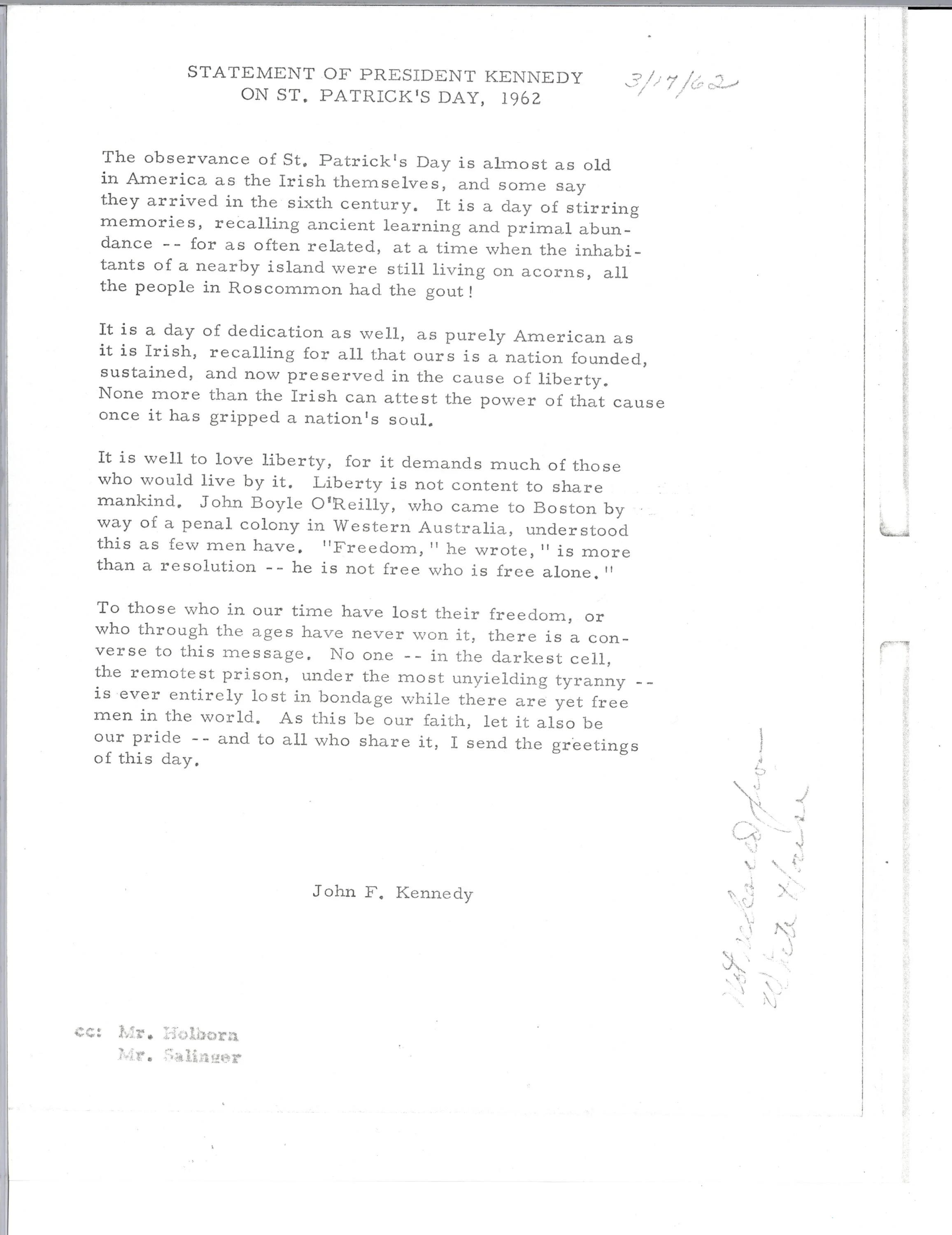
St. Patrick’s Day letter from John F. Kennedy, praising O’Reilly as his favorite poet. This comes from the archives of the John F. Kennedy library.
John Boyle O’Reilly was considered in high regard by multiple American presidents. Grover Cleveland and John F. Kennedy showed their clear appreciation for O’Reilly as a writer and activist. At the time of his death, Cleveland stated, “I have heard with sincere regret that John Boyle O'Reilly is dead. I regarded him as a strong and able man, entirely devoted to any cause he espoused, unselfish in his activity, true and warm in his friendship, and patriotic in his enthusiasm.”
JFK is more notable in his fondness, as he often cited O’Reilly as his favorite poet. In the above letter, he notes his admiration for O’Reilly’s passion for freedom.
In our archives, we maintain information on O’Reilly through books, his newspaper The Boston Pilot, and various references to his work. To this day, his contributions as a writer and Fenian are kindly remembered.
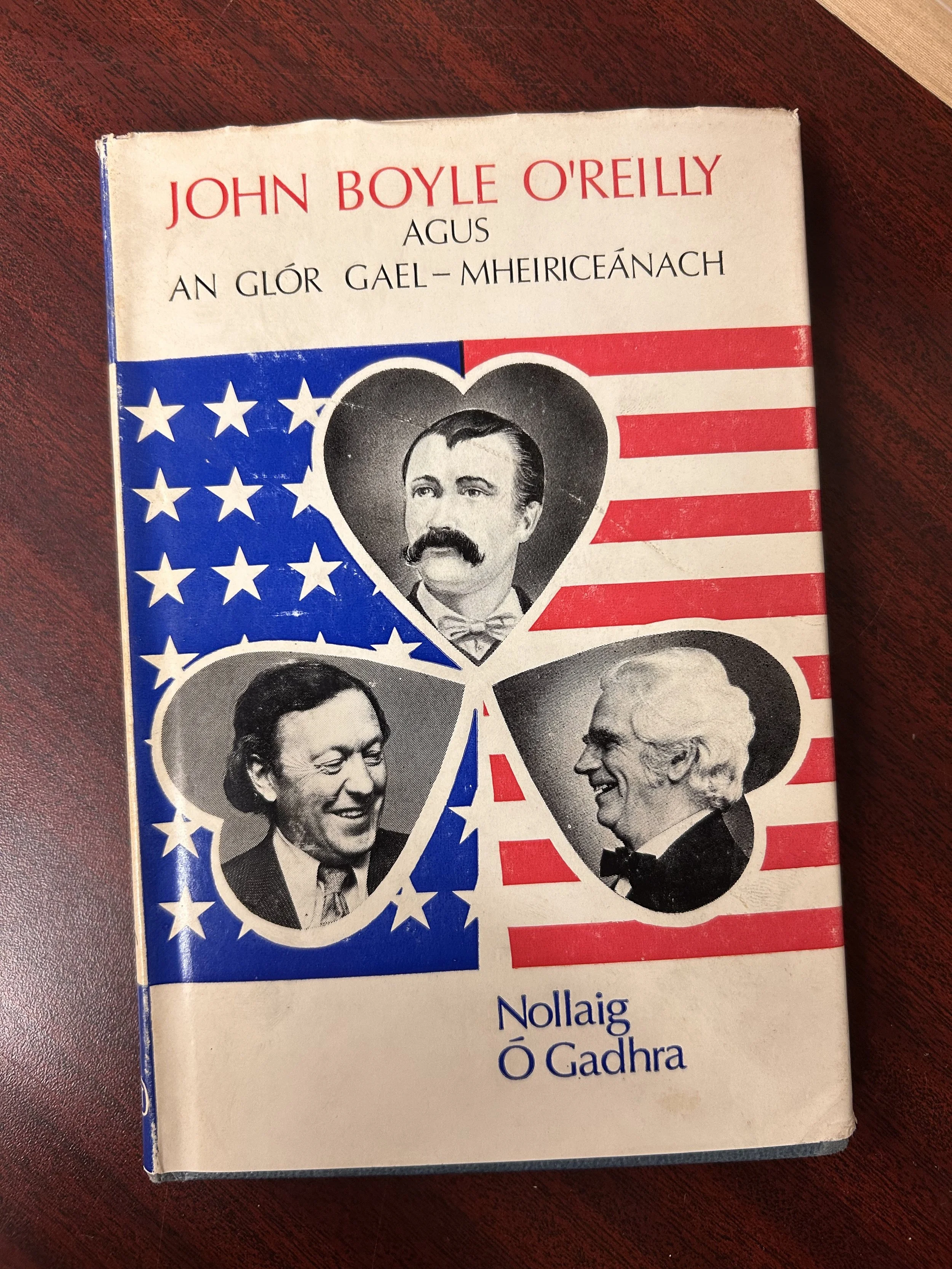
Book from AIHS archives