
Galway man, William James MacNeven was a physician, scientist, and political figure in the late 1700s. A friend of fellow United Irishman Thomas Addis Emmet, MacNeven was largely involved in the fight against Great Britain for Catholic rights and Irish independence. With two busts, two portraits, and portraits of various family members, he is the Society’s most featured figure throughout our building at 991 5th Ave.
MacNeven (or MacNevin) was born in Ballynahown in 1763. Due to the penal laws in Ireland at the time, Catholics did not have the right to education, so he was sent to Prague at the age of twelve to live with his uncle, a physician, Baron William MacNeven O’Kelly. Here, he took interest in medicine and science, and completed his studies in Prague and later Vienna. He returned to Ireland in the mid 1780s.
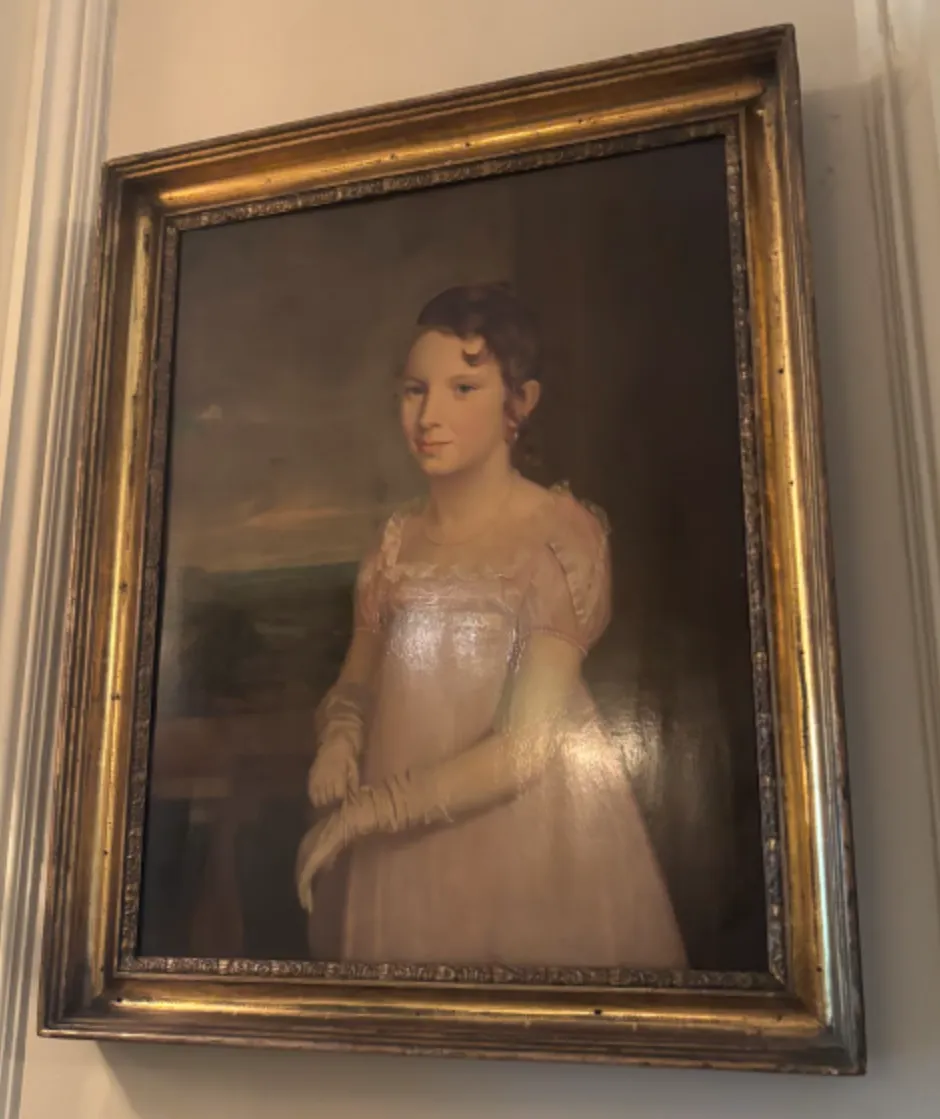
Portrait of William James MacNeven’s Niece, anonymous artist, American School, 19th ct., Oil on panel, 27x21in
His acquaintances in Dublin included Dr. Robert Emmet, a fellow physician and father of Thomas Addis Emmet. His political activities began in 1791 when he joined the Catholic Committee, and following this became a representative of Navan at the Catholic Convention, both of which fought for Catholic emancipation in Ireland. At this time, he was likely involved in the first meeting of the Dublin Society of United Irishmen alongside other members such as Theobald Wolfe Tone and James Napper Tandy. He became one of the men appointed at a meeting of Dublin Catholics to draw up a petition seeking Catholic emancipation. He also wrote a speech criticizing Ireland’s connection to Great Britain. Towards the end of 1796, he was sworn into the United Irishmen.
MacNeven then became involved in independence movements, involving French aid. During this period of the French Revolution, Wolfe Tone and other Irish rebels sought the help of French troops for Ireland’s revolution. In Paris, Wolfe Tone put MacNeven in a list of nine men who should meet a French emissary in Dublin, and he was one of three United Irishmen to meet an emissary in secret. He was then appointed an emissary of the United Irishmen national directory in 1797. Upon travelling to France, he met with various figures including a French minister and General Hoche, who promised that 10,000 troops would be sent to Ireland. The directory had planned the rebellion for 1798, but the majority of its members were arrested and were regarded as state prisoners before it had even started. This included MacNeven, who was taken from his accommodation at Inns Quay on 12 March 1798, and sent to Kilmainham jail. In July, he and two other United Irish leaders provided confessions, on the basis that they would not incriminate others and that lives would be spared. He was moved to Fort George in the north of Scotland in 1799.
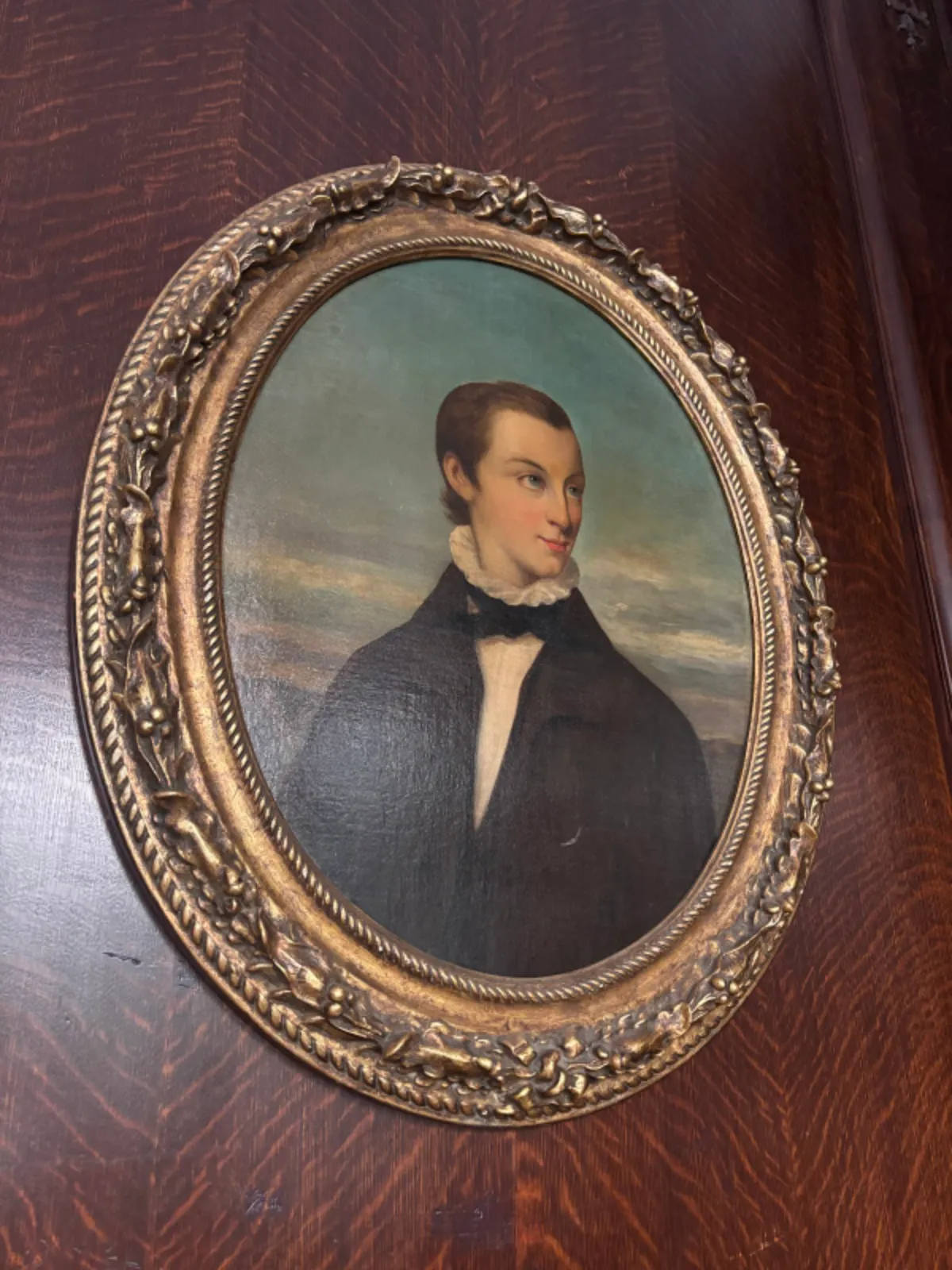
Portrait of young William James MacNeven, anonymous artist, French School, 19th ct., Oil on canvas, 10x8in.
After his release in June 1802, he was forbidden to return to Ireland. He visited Bohemia (a historical region in the Czech Republic), Switzerland, and eventually ended up in Paris in October of that year. In 1803, the Napoleonic era, he entered the French Army as Captain of the Irish Legion, fighting for France against Great Britain. After leaving the army in 1804, he moved to Bordeaux and the year after, followed his friend Thomas Addis Emmet to America, landing in New York on July 4, 1805.
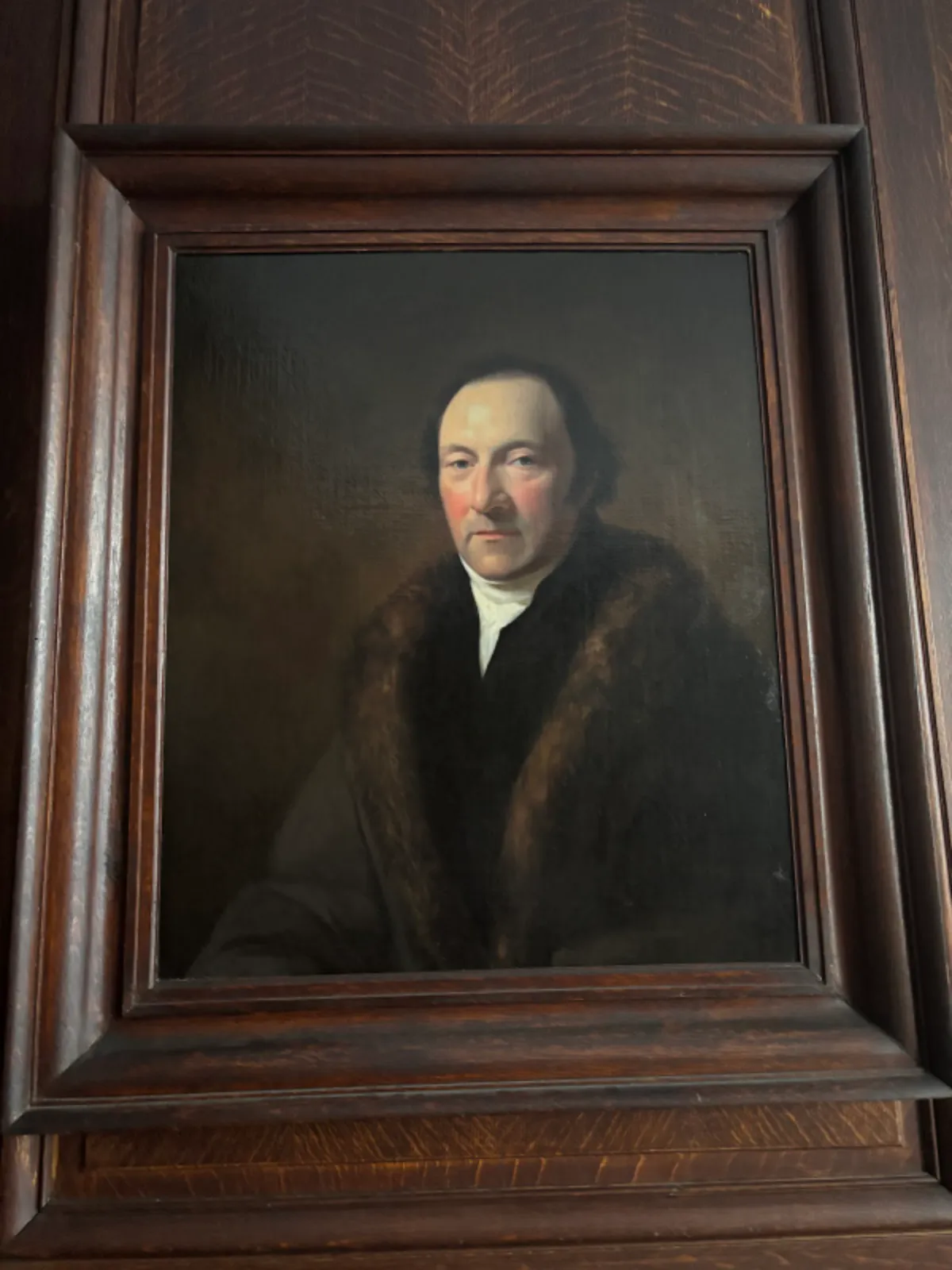
Portrait of William James MacNeven, anonymous artist, British School, early 19th ct., Oil on panel, 30x20in.
In New York, he resumed his practice of medicine and received his Doctor of medicine degree from Columbia College in 1806. He was a professor at the College of Physicians and Surgeons of New York, and specialized in midwifery and diseases of women and children (1808-1810), and then chemistry (1810-1826). He established the first chemical laboratory in New York and introduced laboratory lessons to his students. He was even co-editor of the New York Medical and Philosophical Journal and Review between 1812 and 1823. He is best known as a chemist for his recognition of the importance of the atomic theory. He went on to publish scientific works on various topics, and was a member of multiple Literary and Philosophical Societies. Meanwhile, he remained interested in Irish politics and affairs. Around 1807, he published a collection of documents about Irish politics in the 1790s, which included anecdotes and memoirs of himself and Emmet, Pieces of Irish History. He was heavily invested in the welfare of Irish immigrants, and at his own expense, created a labor bureau in Nassau Street. With other Irishmen, he formed the Friends of Ireland Society (and later became president), to promote Catholic emancipation, and they sent money to the Catholic Association in Ireland. MacNeven was also president of the Emigrant Society, which promoted the welfare of Irish immigrants in the city.
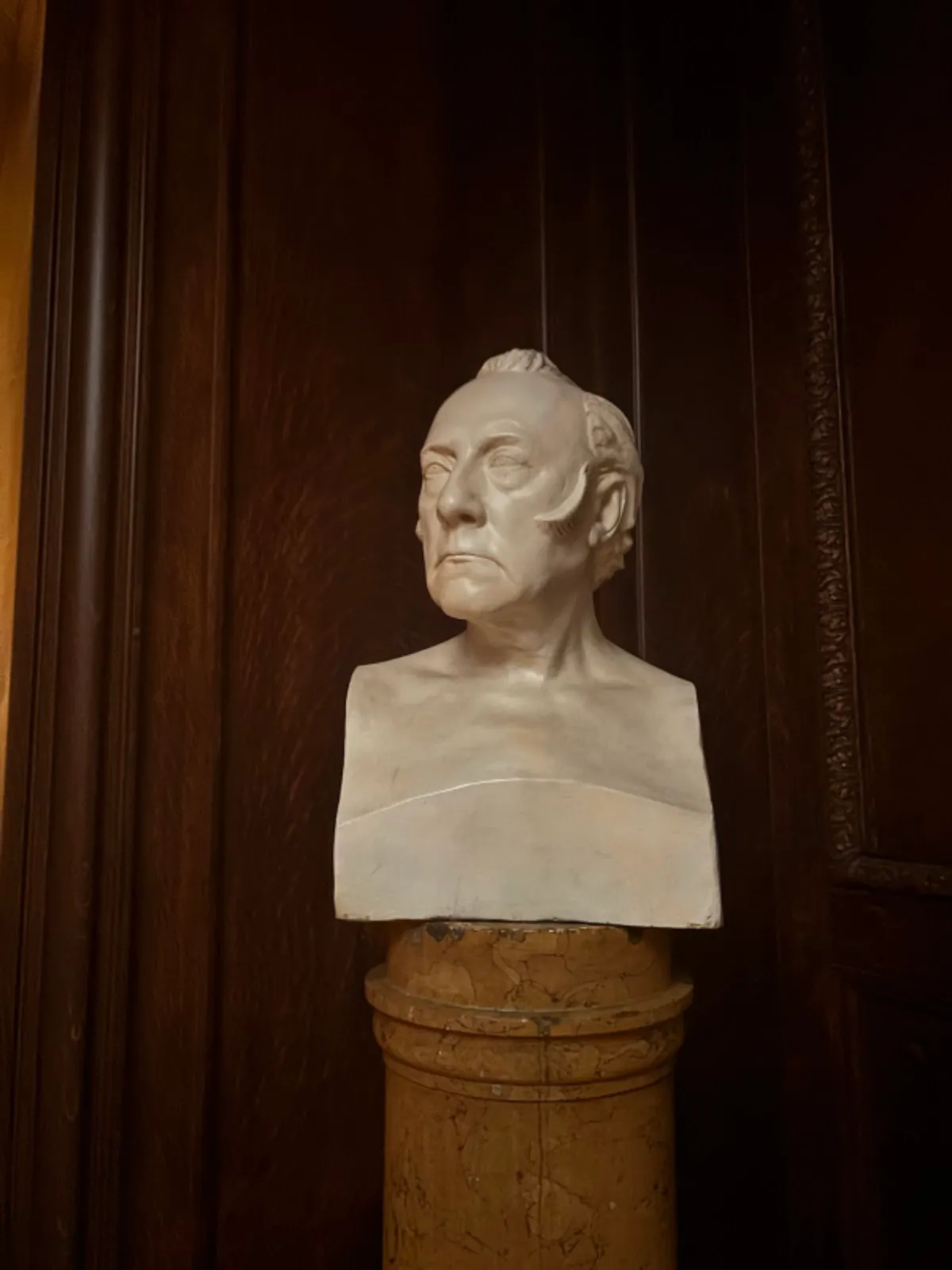
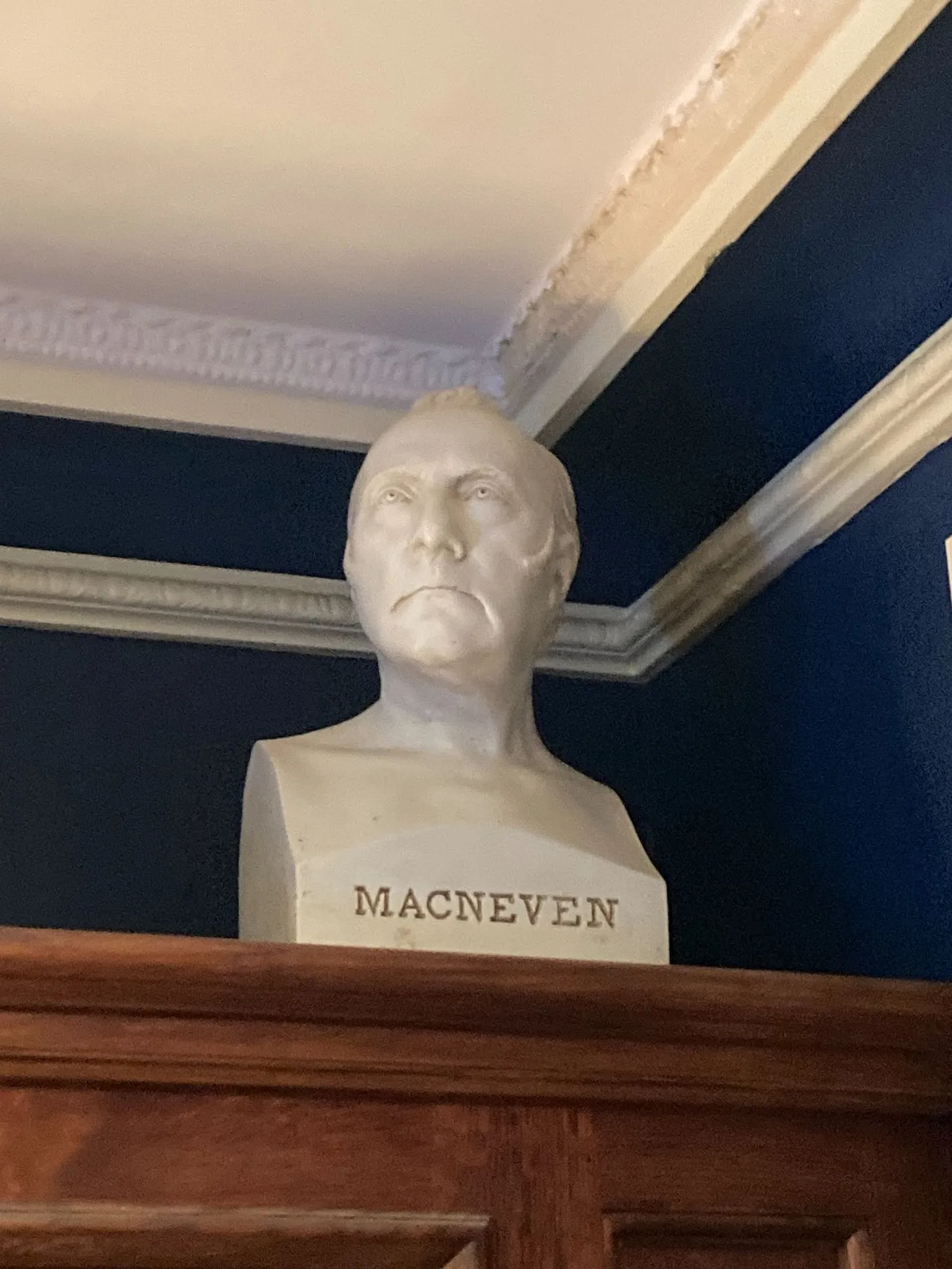
Two portrait busts of William James MacNeven
MacNeven married Jane Margaret (born Riker) Tom in 1810, daughter of U.S. Representative and member of Congress Samuel Riker of Long Island. Together, they had three sons and two daughters. He died on July 12, 1841. He is buried on the Riker Farm in Astoria, Queens (now known as the Lent-Riker-Smith Homestead), and there is a commemorative obelisk dedicated to him in St. Paul’s churchyard in Lower Manhattan, matching one to his long-time friend and fellow Irishmen, Thomas Addis Emmet.