
150 years ago, from the 17th to the 19th of April in 1876, six Fenian rebels escaped an Australian penal colony and made their way to New York. Though many are familiar with the work of Irish-American journalist John Devoy (a staple of AIHS’ collections) to organize and assist the escape, few know the fundraising of Judge John Goff that made it possible. In this article, we look through the history of this escape, the role of penal colonies in Australia, and the contributions of Irish Americans to support Irish Republicans abroad.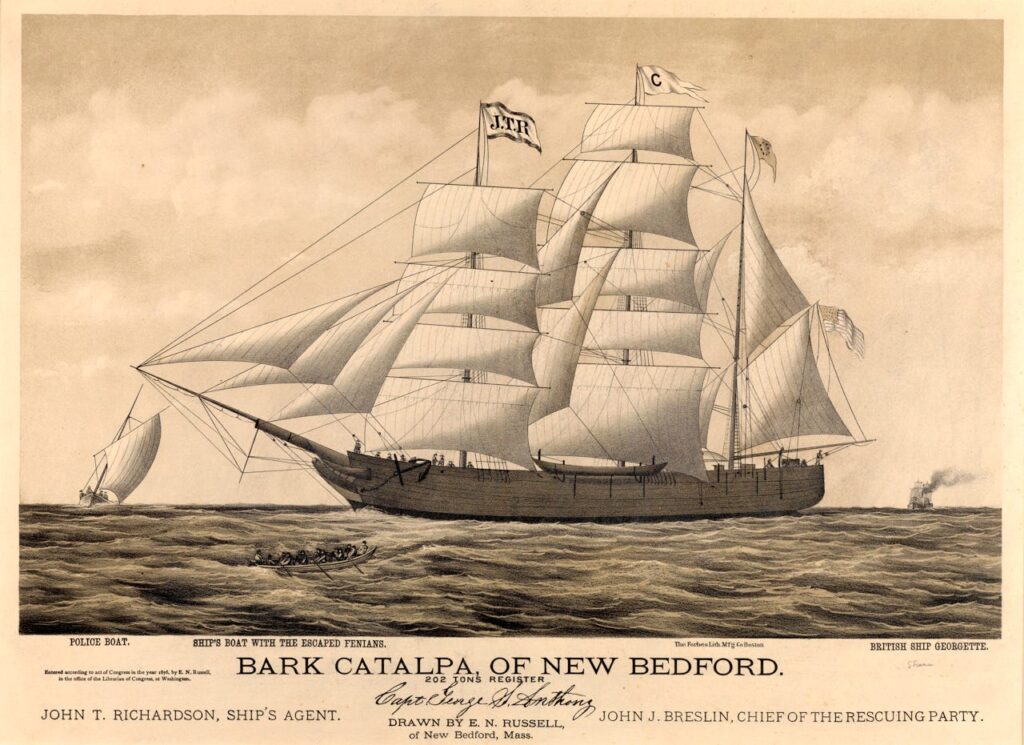
Escaped convicts are rowed towards the whaler Catalpa of New Bedford, with police boat and British ship Georgette in pursuit. (PAH0582) 1876. Reworked version of historic lithograph found at https://collections.rmg.co.uk/collections/objects/140529.html Copy in National Maritime Museum, Greenwich, London. E. N. Russell (original lithograph).
Firstly, a brief review of why this escape was necessary in the first place. As many of our audience will be familiar with, the role of penal colonies (settlements used to exile prisoners) in Australia holds a significant place in Irish history. While these colonies existed for a number of charges, the primary reason for Irish prisoners to be exiled was their role in revolutionary practices, particularly Irish nationalist groups like the Young Irelanders and the Society of United Irishmen. By the late 1860s, many prisoners had been issued pardons and were gradually released. However, some Irish Republican Brothers or Fenians remained in the system, seen as particularly dangerous for their supposedly militaristic approach. In 1871, only a small group remained in prison, but with little hope of freedom for escape.
It was then that the fenian prisoners grew truly desperate and began to seek other methods of escape. Knowing the support members of the diaspora had previously given to Irish causes, the prisoners decided to reach out to their American brethren in hope that they might be able to assist them. In 1874, Séamas Mac Liammóir (also known as James Wilson, 1832-1921), wrote to New York journalist John Devoy (1842-1928) and asked for his help. Devoy helped to collect donations, eventually permitting an escape aboard the merchant ship Catalpa.
Though Devoy chaired the committee that led these efforts, the fundraising work of Goff is often neglected in the retelling of this escape. Both Goff and Devoy were prominent members of Clan na Gael, the American sister organization of the Irish Republican Brotherhood. In this organization, they had often worked to support Irish causes in the states and back in Ireland. After Devoy received the letter from Wilson, he quickly rushed his peers to action, proposing a direct response at the 1874 Baltimore Clan na Gael conference and urging all to work together to guarantee freedom for these prisoners.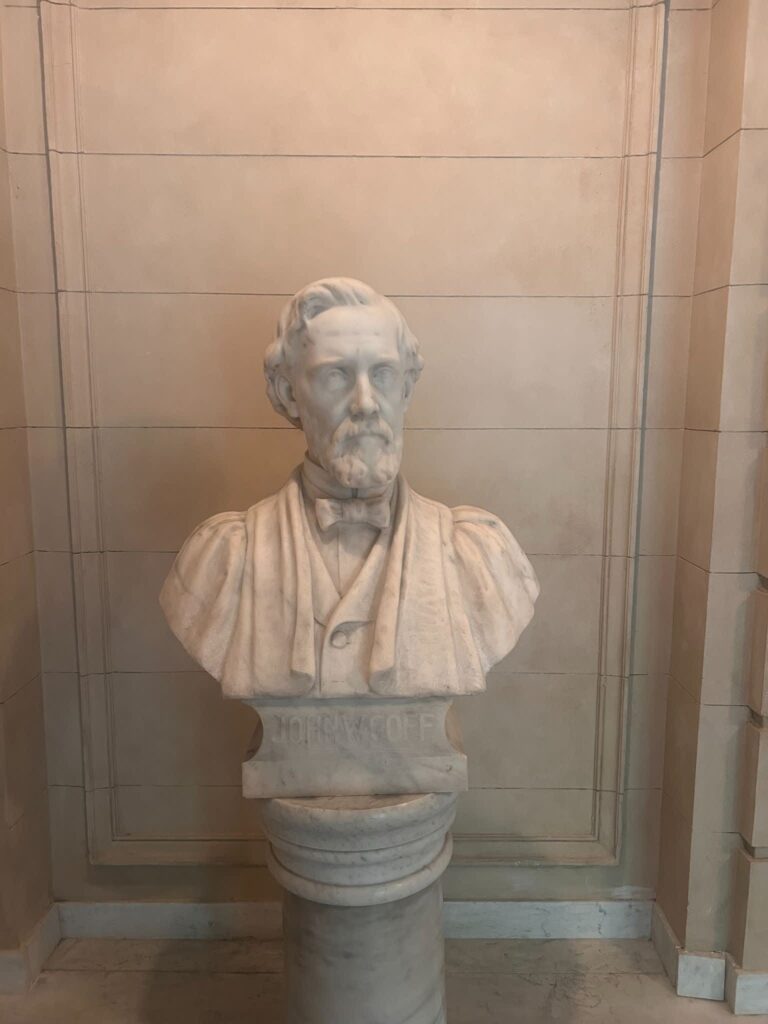
Marble portrait bust of John W. Goff by William Ordway Partridge (American, 1861-1930), AIHS Collections
Included in the ten man committee to enact this rescue was a young lawyer known as John Goff (1848-1924). Just 26 years of age at the time, Goff had passion and drive for the cause. His roots in Ireland were more recent than some of his peers, having emigrated himself as a child from Co. Wexford. Though he had started from a humble background and pushed himself to study law, his drive was enough to make him recognizable for such advocacy and passion. As he raised funds and encouraged others to support the freedom of these prisoners, the entire mission changed to be known for his name, known as “Goff’s Irish Rescue Party.”
During the course of the campaign, tensions rose between Goff and Devoy, likely in part due to this change of branding. The growing resentment bubbled into a bitter ending to their friendship, and though they succeeded in fulfilling the escape mission, the two men went their separate ways once the task was complete.
Both Goff and Devoy went on to be successful and memorable Irish Americans, making significant contributions to the landscape of Irish New York - including in this archive. However, this escape remains one of the most significant courses of action taken by Irish Americans to support the cause of Irish nationalism. Goff’s ability to embolden the public and build their passion into meaningful funds was crucial to the success of the Catalpa escape.
Goff continued in his legal career in New York, taking his passion for the cause of Irish Nationalism and using it to fight against corruption in the states. In New York, he became involved with the Society for the Prevention of Crime and started to investigate the corrupt officers of Tammany Hall. His notoriety for revealing city and state corruption made him known as the “Great Terror of the New York Bar.” One author stated that members of the bar would wake in a cold sweat, hearing Goff’s voice in their nightmares saying “’Buzz, buzz, buzz, buzz, guilty!’”
Though Devoy and Goff exist separately in their lives and in our archives, their causes remained much the same throughout the remainder of their lifetimes. While Goff’s legal practice seemed to many to be less Irish-oriented than Devoy’s explicitly nationalist journalism, he never shied away from his belief in Irish freedom. In 1916, after the failed Easter Rising, Goff started the Irish Race Convention, which later built the Friends of Irish Freedom. Both organizations promoted the cause of Irish nationalism and encouraged global discussion on the roots and actions of the fight for Irish freedom.
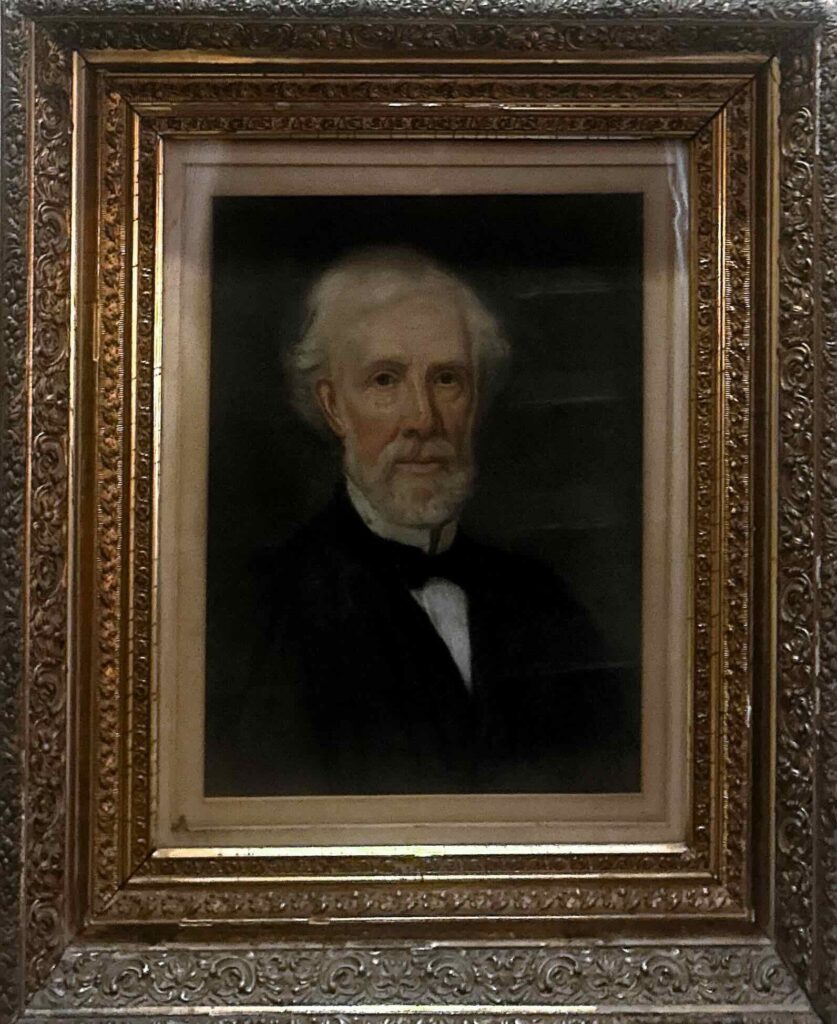
Portrait of John W. Goff, AIHS Collections
Goff is buried in Kensico Cemetery in Valhalla, New York. He is remembered in collections such as our own, and throughout New York State for his legal and civic contributions.