
This week, we take a dip into our Irish language section by focusing on playwright, educator, and folklorist Máiréad Ní Ghráda. As noted in our present exhibit, Irish language study has long been a part of the Irish diaspora. In our early 20th century acquisitions, we began to collect more Irish language materials to reflect the revival back in Ireland. Our Irish collection spans from the earliest editions of an Irish language Bible to numerous instructional and linguistic materials.
Though many of our older Irish materials could be considered rare and valuable, some of the greatest cultural value comes from the widely circulated Irish books. Public access organizations like Raidió Teilifís Éireann (RTÉ), the Department of Education, and other centers for public education published and promoted their own Irish works. This public access is how we now have radio programs like RTÉ’s Raidió na Gaeltachta (Radio of the Gaeltacht, the Irish-speaking district). Such programs were created and designed by academic scholars of Irish, who took their complex study of the language to the masses and built educational programs to promote Irish language learning.
One pioneering figure of RTÉ’s Irish programming was Máiréad Ní Ghráda (1896-1971), who wrote, published, and broadcasted in the language. Ní Ghráda was born in Kilmaley, Co. Clare to a native Munster Irish speaker. Her father Séamas would recite stories to her in Irish, building a love not only of the language but of the literary culture surrounding it. With this family background promoting learning and education, it comes as no surprise that Ní Ghráda excelled in her studies. She won a scholarship to study languages (English, French, and Irish) at University College Dublin, and soon after went on to receive her Master of Arts, supervised by famed Irish linguist Douglas Hyde.
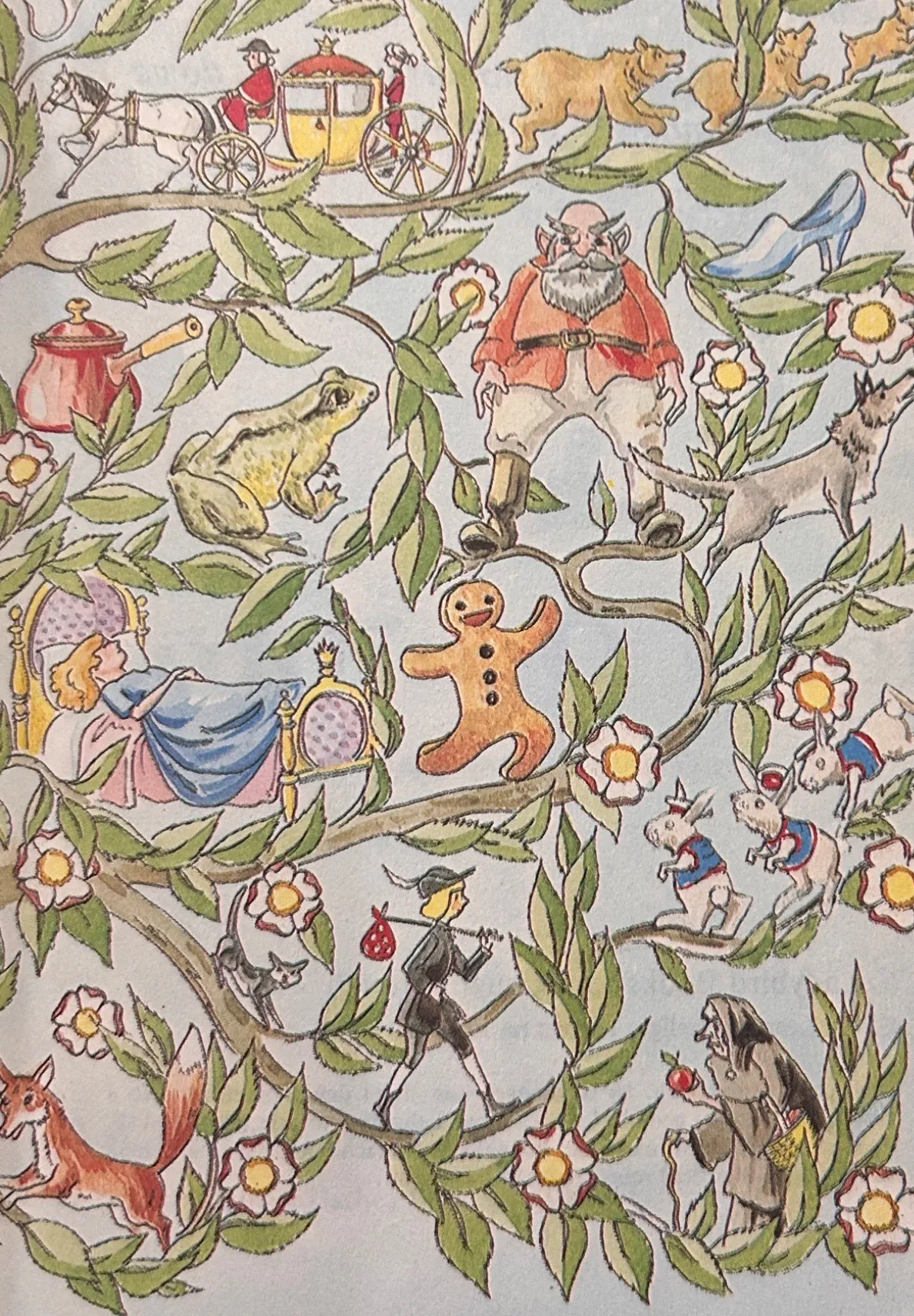
An interior book cover from Ní Ghráda’s Ladybird publications
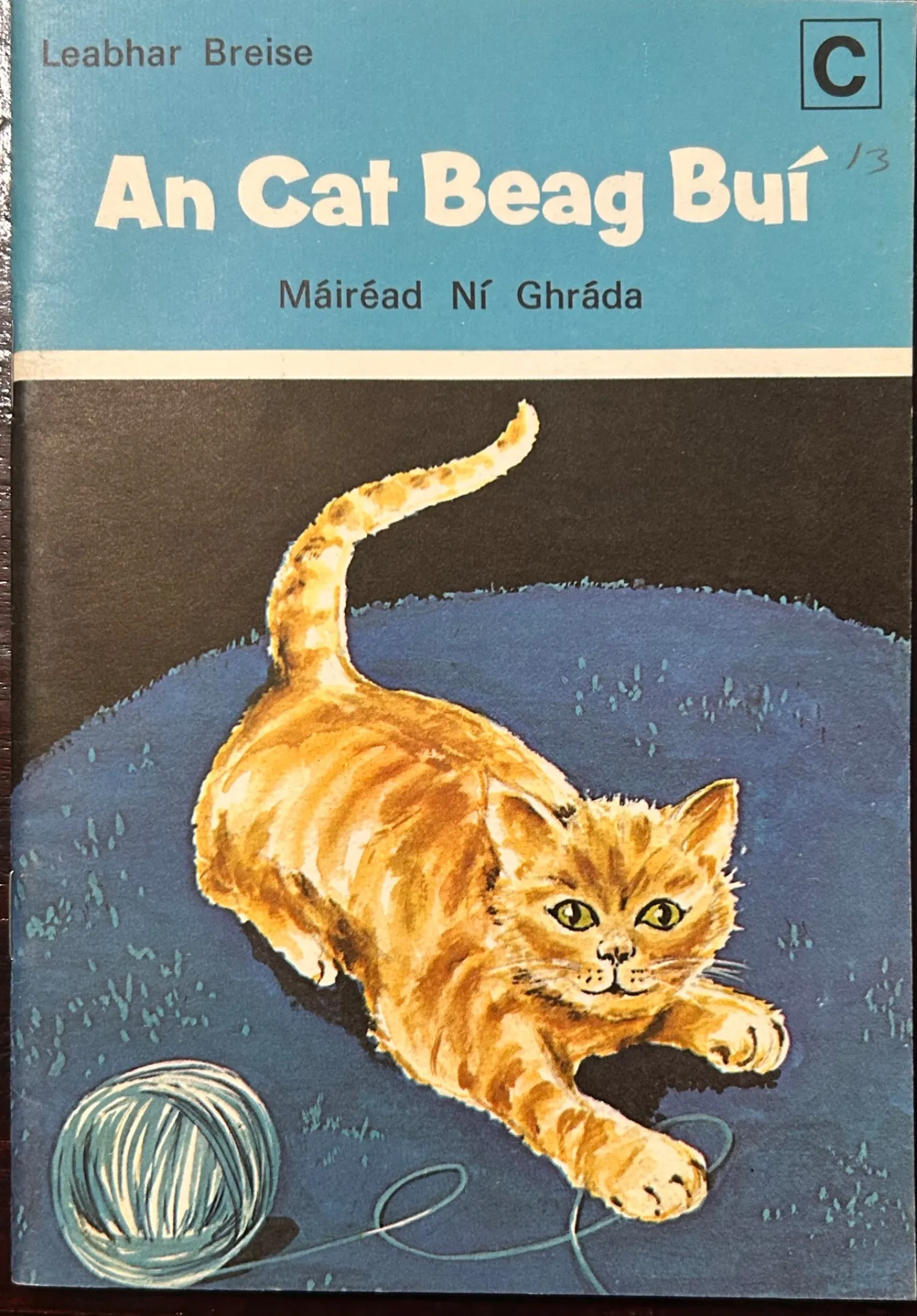
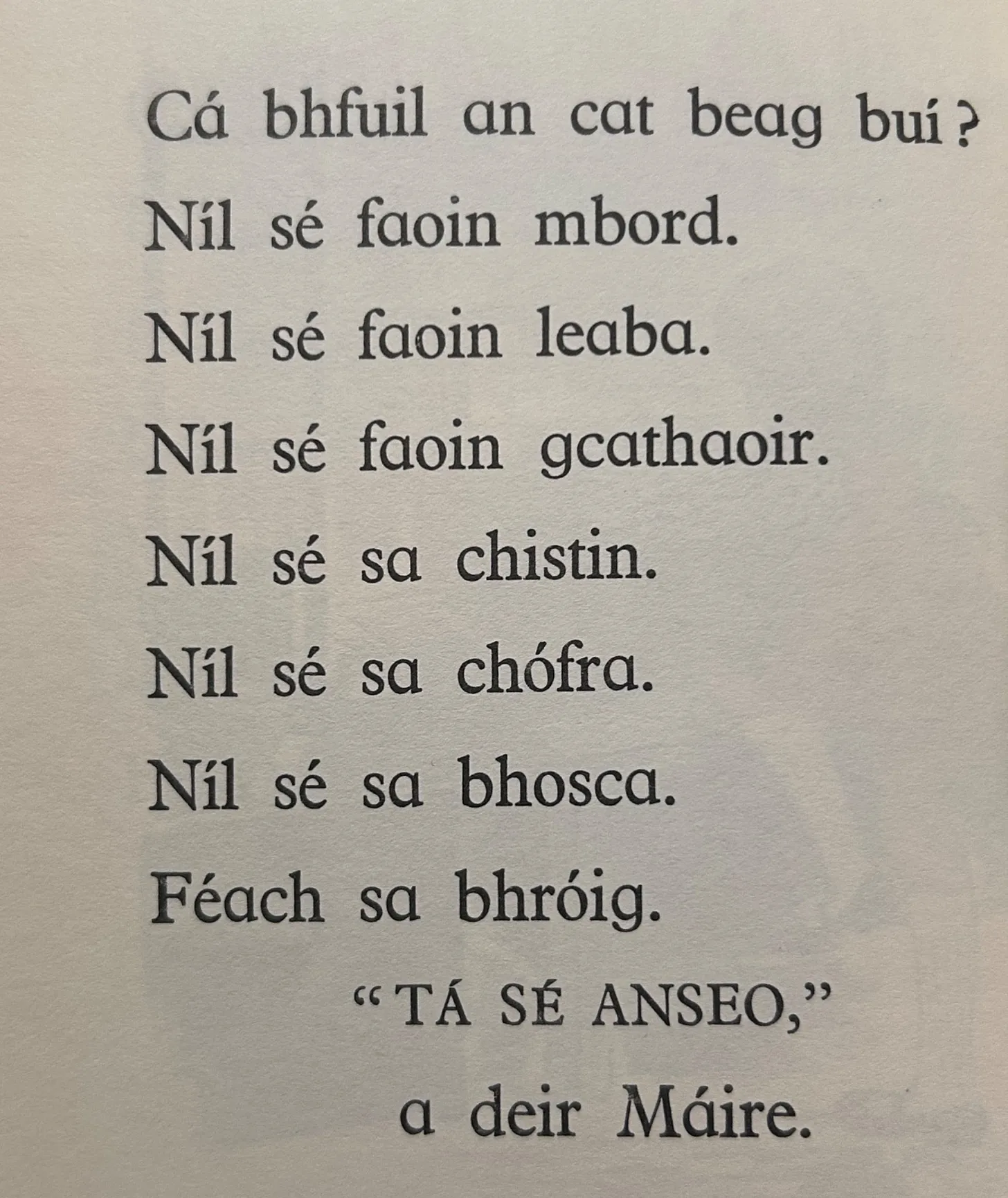
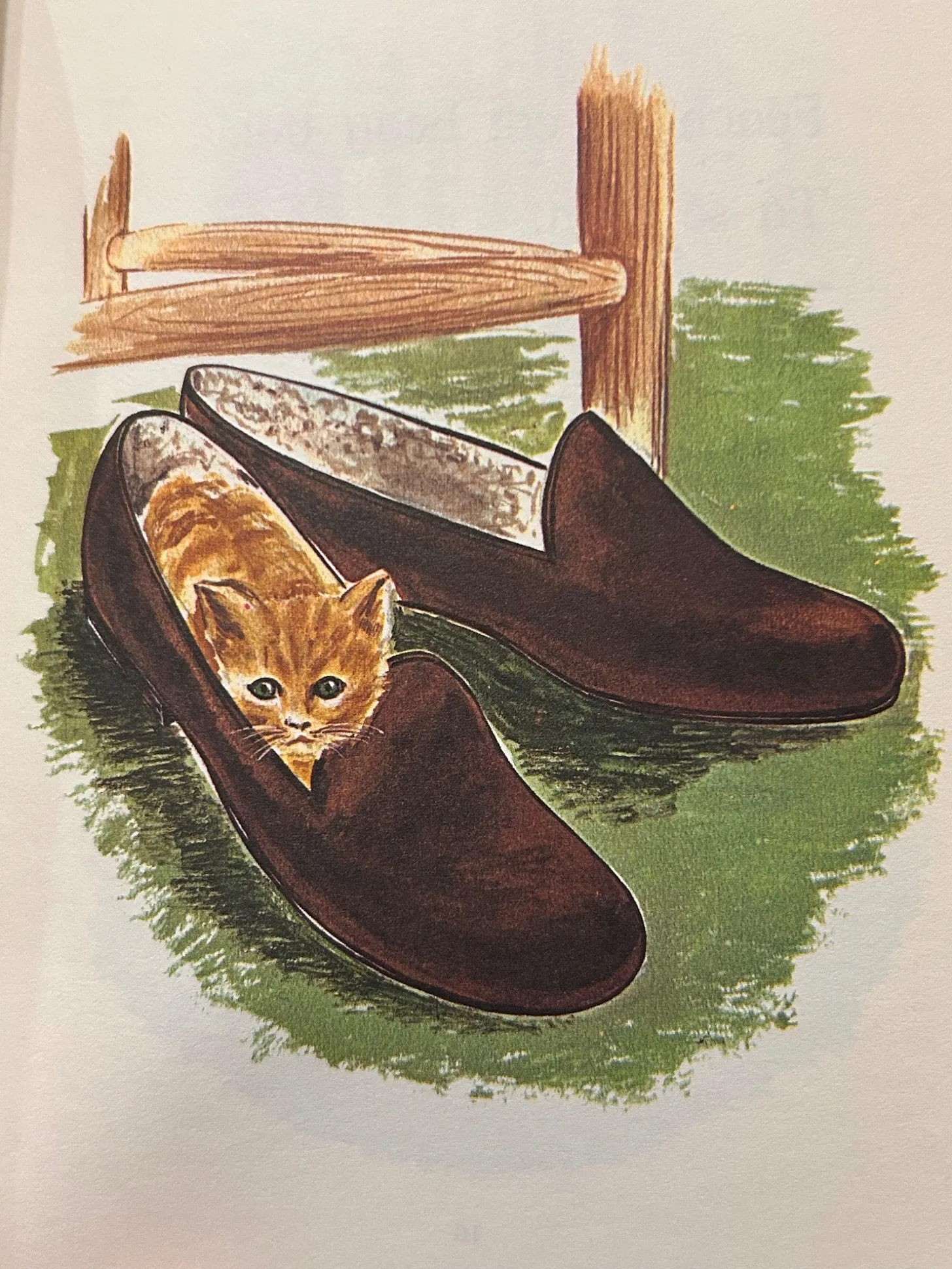
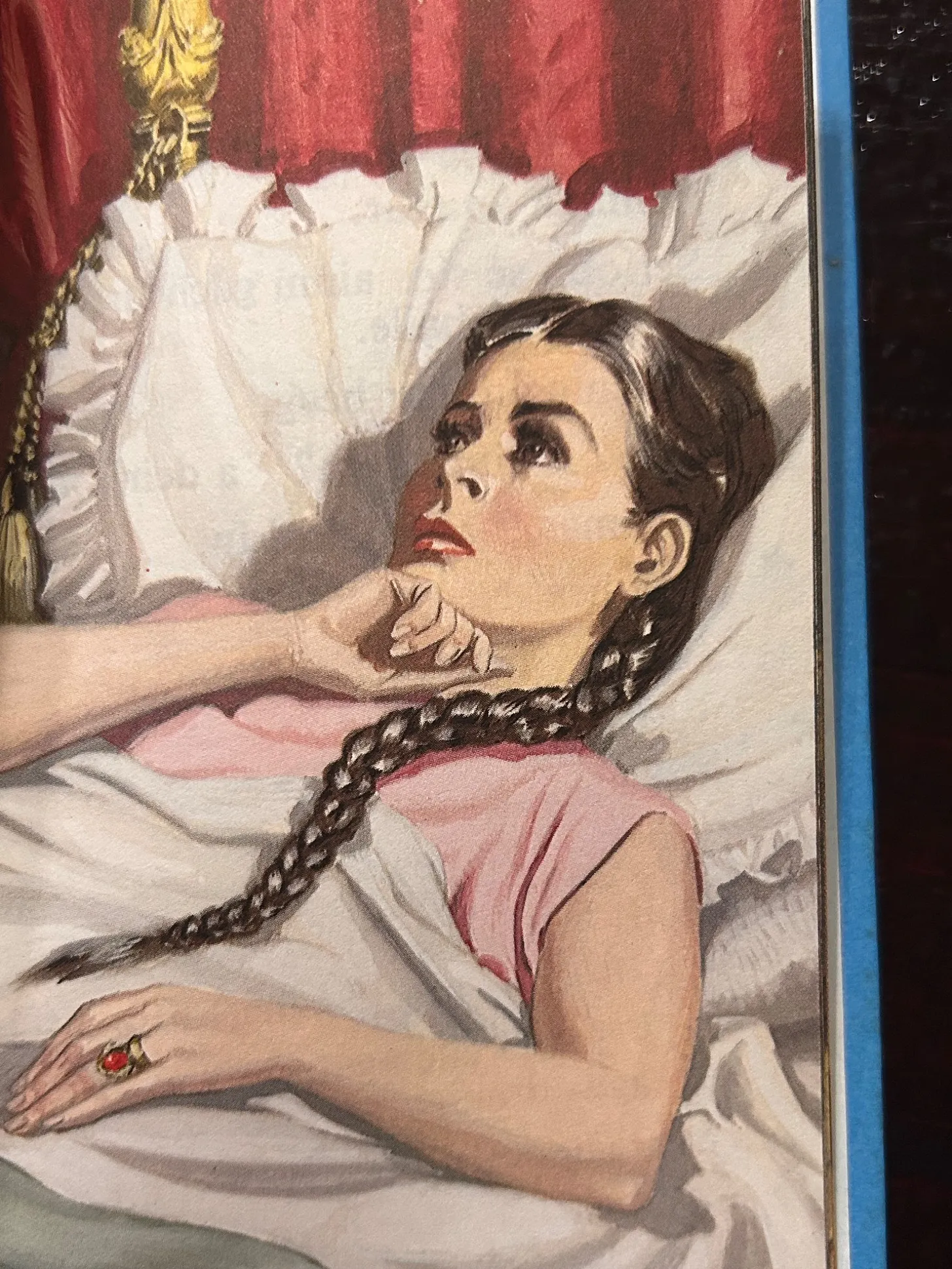
Images from Ní Ghráda’s An Cat Beag Buí or The Little Yellow Cat
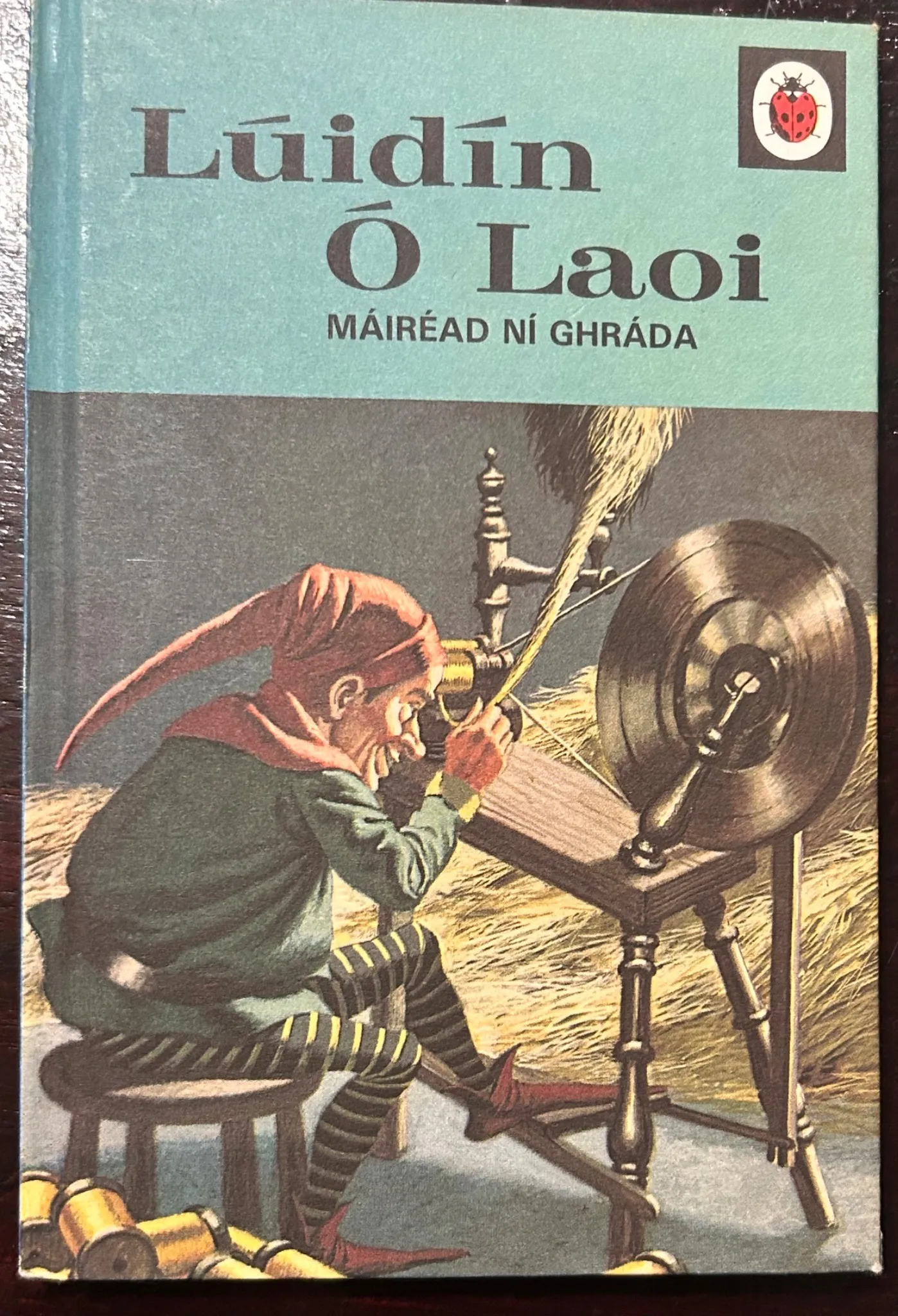
Scene and cover from Ní Ghráda’s Irish adaptation of Rumpelstiltskin
Given her audience of children and her knowledge of Irish folklore, it should be no surprise that Ní Ghráda was a skilled writer of children’s stories. She not only shared Irish stories, but adapted fairytales of other cultures (and novels like Peter Pan) to Irish to encourage a study of the language in all avenues. These children’s books are some of her most popular works, and she continued to publish them until her death in 1971. In our archives, these children’s books are kept within the Irish language collection, among other similar texts.
However, Ní Ghráda did not contain herself to one genre, and her children’s writing highlights the lighter periods of her work. She is globally known as a playwright, and her Irish language plays are some of the best known in the world. In these plays, Ní Ghráda pressed for a full experience of Irish culture in her native tongue. She was unafraid to tackle taboo and serious topics like single motherhood (An triail, 1964), the exploitation of women in politics (Breithiúnas, 1968), or the complexities of marriage (An Grá agus an Gárda, 1937).
Her work as an author, scholar, and educator still maintains her cultural value to newer generations. Ní Ghráda’s Irish grammar book Progress in Irish remains one of the most widely used, and her work has motivated future linguists to continue the studies she began.
To see more on Ní Ghráda, we recommend viewing her recorded interviews in the archives of RTÉ, viewing a list of her plays on PlayographyIreland, or visiting her books in our collections at AIHS.
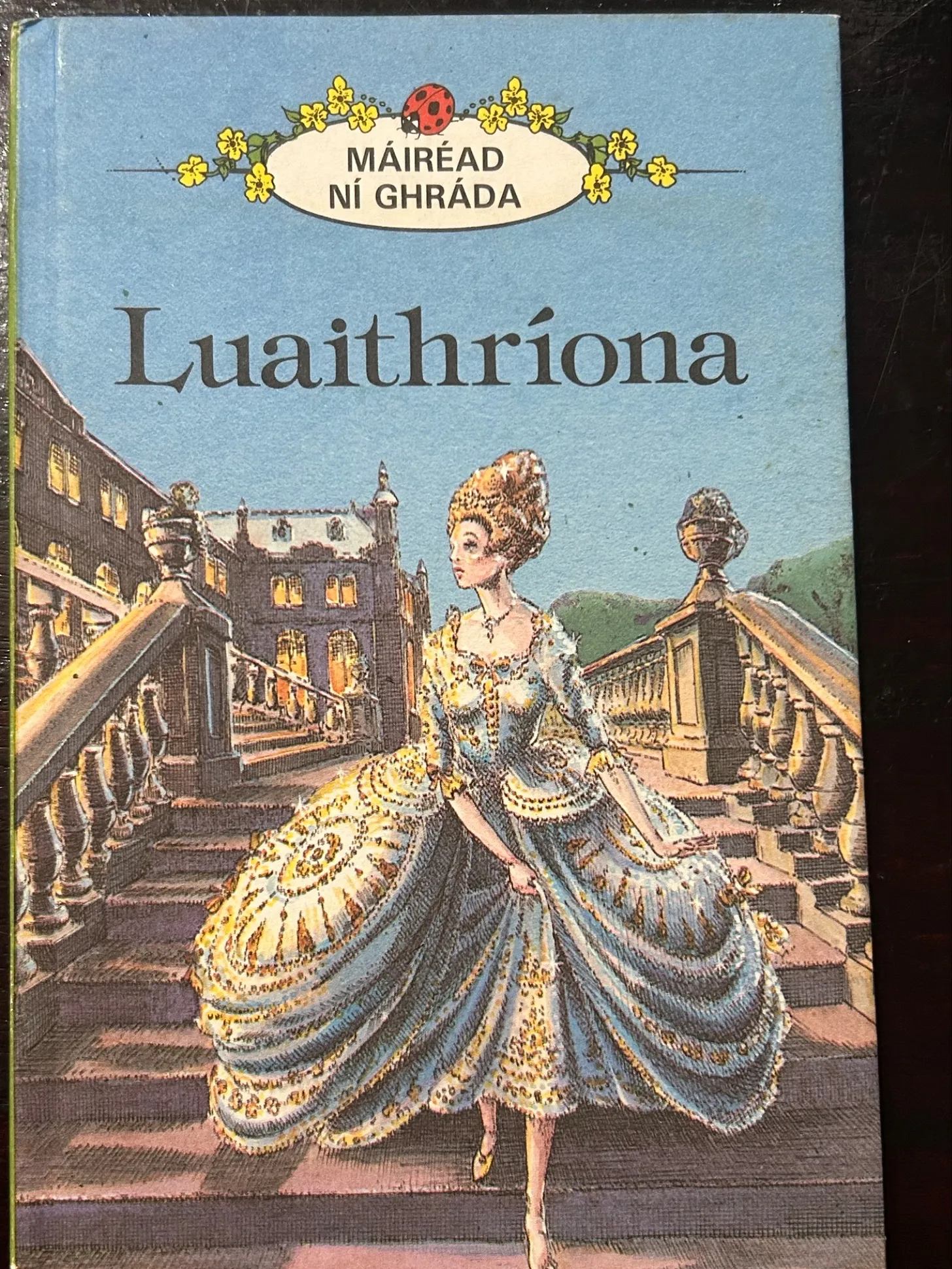
Ní Ghráda’s Irish adaptation of Cinderella