
Written by Marcus Lindenburg, Lead Archivist
As the clocks turn and we lose sunlight, we move from the mischievous whispers of Samhain into the hopeful songs of winter. Happy November, AIHS!
Winter is a time of music across many cultures, celebrating different festivals throughout the world. In post-Christian Ireland, winter typically marks the transition into Christmas, leading then into Easter with the turn to spring. However, Ireland is a nation marked by mixed spiritual histories. Ancient pagan Ireland, though largely erased by a global push to Christianity, is not forgotten in these musical traditions. In fact, some Irish folk songs demonstrate a mix between pagan and Christian traditions.
This song, “The Fairy (or Faerie) Tree,” is an excellent example of this mix. In its lyrics, the pixies and faeries of pagan Ireland are confronted with images of Christ, showing Irish history as a mix of shared traditions. The mix represented in this song is a perfect way to lead us from Samhain into winter. It does not portray the pagan traditions of Ireland as evil or blasphemous. Rather, it incorporates both pagan and Christian images into one story.
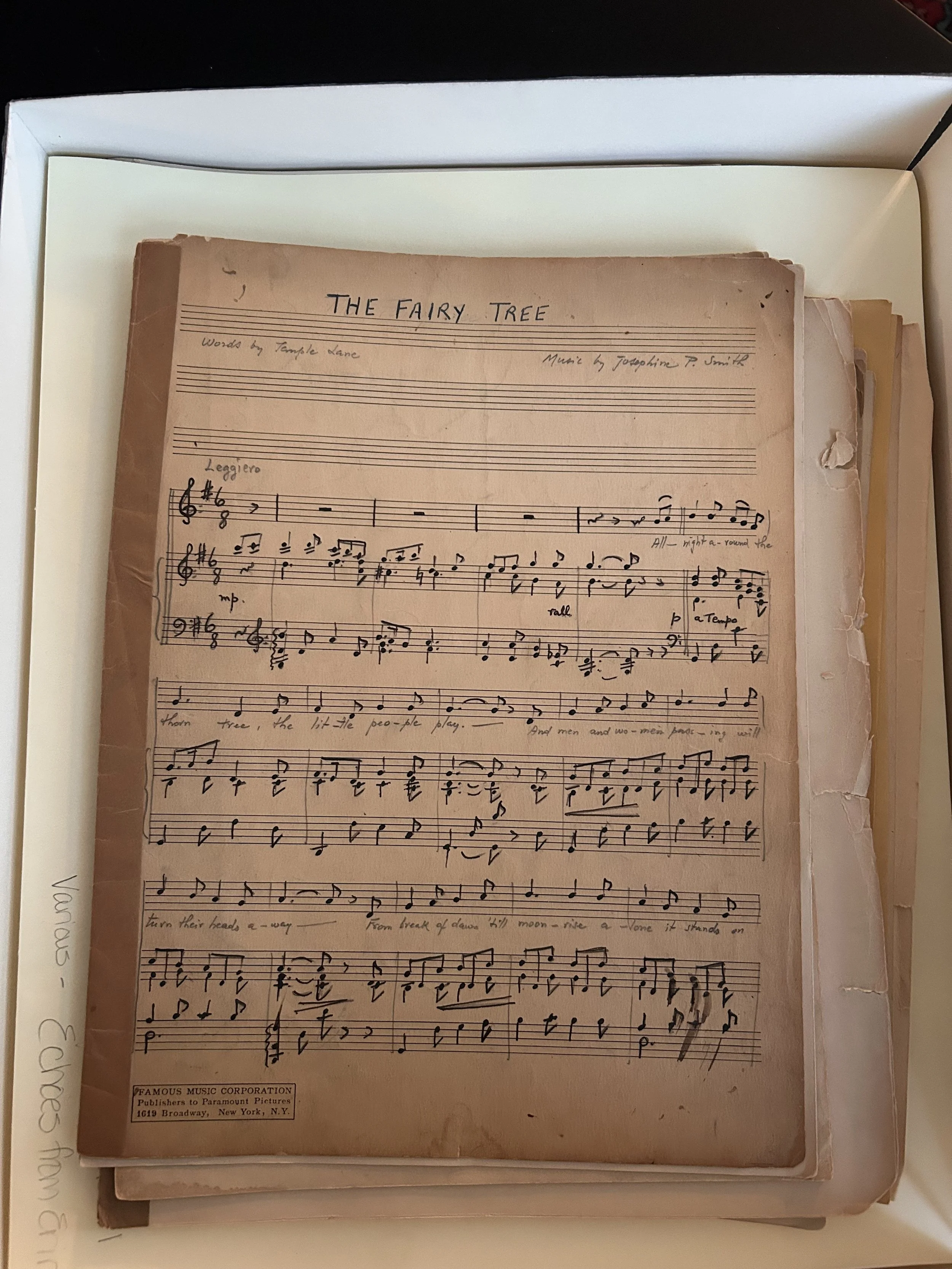
Lyrics:
“All-night around the thorn tree, the little people play. And men and women passing will turn their heads away, from break of dawn ‘till moon-rise alone it stands on high. With twisted sprigs for branches, across the wint’ry sky.
They say ‘that dead men hung there,’ its black and bitter fruit. To guard the buried treasure ‘round which it twines its root.’ They’ll tell you ‘Cromwell (1) hung there’ but that could never be. For he would dread like others, to touch the fairy tree.
But Kathy Ryan saw there, in some sweet dream she had, the Blessed Son of Mary and Oh ! His face was sad. She dreamt she heard him saying: ‘Why should you be afraid, when from the thorn tree’s branches, the crown I wore was made?’ All night around the thorn-tree the little people play. And men and women passing will turn their heads away. But, if your heart’s a child’s heart, and if your soul is clean, you’ll never fear the thorn tree, that grows beyond Clogheen.” (2)
In these lyrics, we see that the faeries (or, as referred here, “little people”) are not seen as anti-Christian. The song implies that fear of the faeries and their tree is misguided, and that they should be accepted and not judged. Thus, pagan roots are made Christian by a rewriting of Christ’s history to be placed in Ireland—in Tipperary.
The song itself, as is typical of folk songs, is credited to many different authors. However, our archival copy lists two primary authors: Josephine Smith and Temple Lane. Both of these authors are Irish women, Smith as pianist and Lane as poet and lyricist.
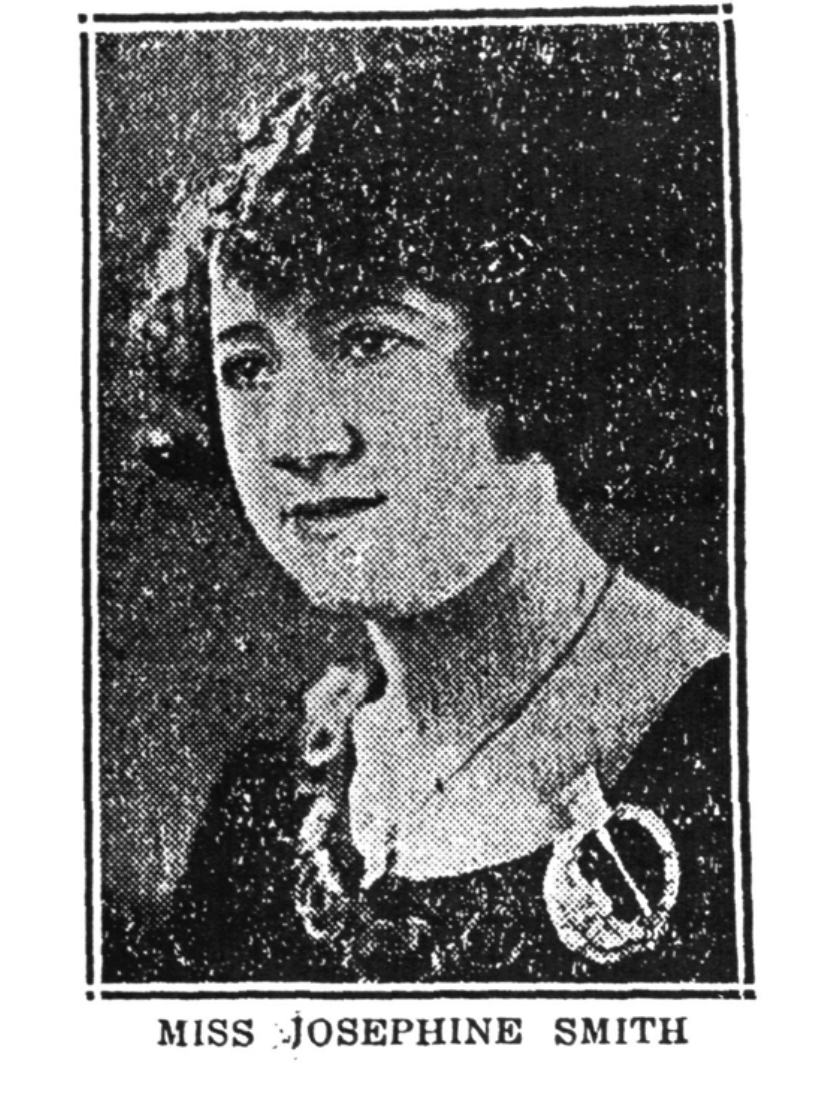
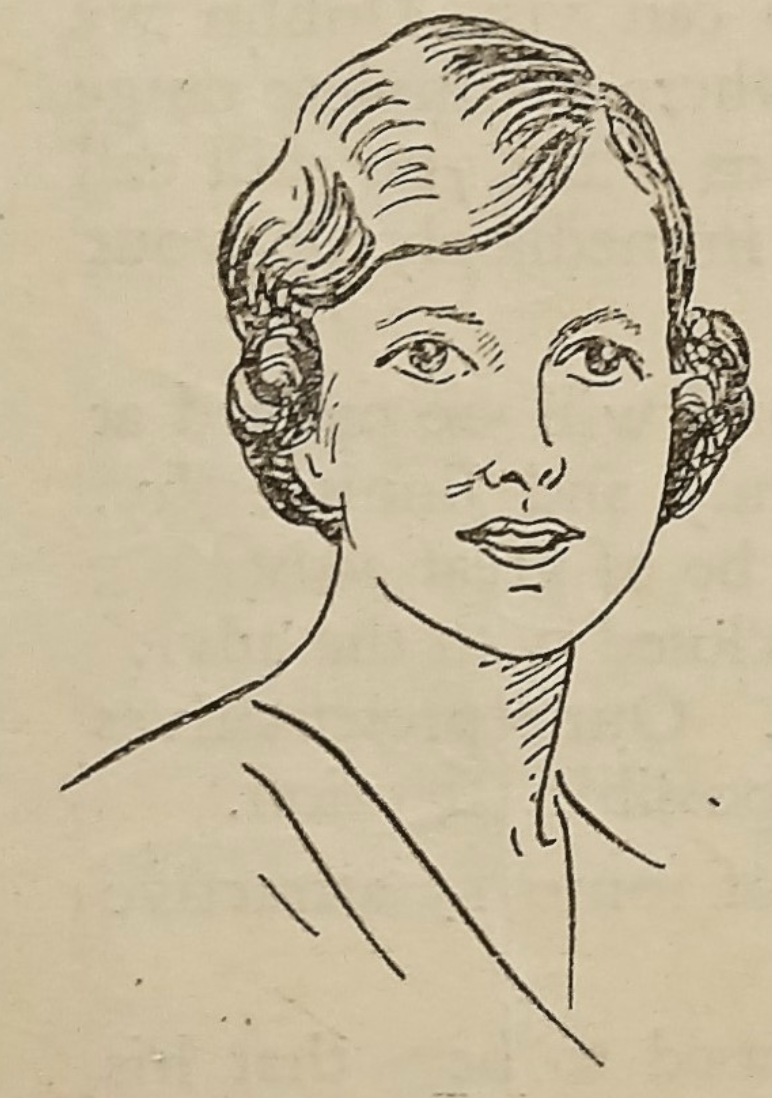
This song was first adapted from poetry into music by Dr. Vincent O’Brien, before being arranged by Smith. It was frequently sung by famed Irish tenor Count John McCormack. The song and its original poem touches on the complexities of Irish history and national pride, which Josephine Smith took carefully, bringing its nuances to an American audience.
Our sheet music collection is housed in our archives, along with many tapes and records. As we near towards the winter, this music and its Irish creators will be further highlighted. Smith and Leslie’s delicate artistry guide us to bend an ear to the history through music. For a special feature this week, please see a 1930 performance of this song by McCormack at the link below!
References/Footnotes:
(1) Cromwell refers to Oliver Cromwell (1599 – 1658), an English politician and soldier who led the reconquest of Ireland in the 1650s, leading to some of the most brutal massacres in Irish history.
(2) Clogheen is a village in Co. Tipperary, where Leslie was raised.
(3) This image and the biographical information was provided by a digitized article in New York Irish History.
CEOL. “At the Sign of the Harp.” The Irish World, 8 Dec. 1928, https://nyirishhistory.us/wp-content/uploads/NYIHR_V06_08-From-the-Pages-of-New-York-Irish-History.pdf. Accessed 3 Nov. 2025.
(4) This image and the biographical information was provided by the Catholic Archives of Ireland.
“Temple Lane.” Likely “Eason’s Bulletin”, 1945, https://catholicarchives.ie/index.php/profile-of-mary-isabel-leslie-temple-lane. Accessed 3 Nov. 2025.