
As the big day rapidly approaches, we are dedicating our blog to Saint Patrick and his celebrations for the next two weeks. Saint Patrick’s Day (17 March) is known for many things in and outside of Irish America. Those who are not Irish may only see it as a day for drinking* or wearing green, while religious observors recognize it as a feast day of a patron saint. Many, especially those in the Irish diaspora, see it as a way to recognize Irish identity and celebrate Irish culture in all its forms.
*The holiday became known for its revelry because of its tradition as a break from lent.
In America, Saint Patrick’s Day has often been criticized for its stereotyping of Irish culture. When the holiday is removed from its cultural grounding, it does make room for insensitive jokes, costumes, and depictions of Irish people. At AIHS, we see the holiday as a way to dig deeper into Irish culture in the diaspora and think about the way we celebrate.
One of those numerous ways to celebrate on Saint Patrick’s Day is through the sharing of Irish music. In our archives, Irish music is recognized through both recordings and sheet music. These collections have been collected and donated by musicians and listeners alike, preserving the history of Irish music from its earliest days to the late 20th century. Though not all of these collections center around Saint Patrick’s Day, it seems a fitting time to bring attention to them.
There are many ways in which music ties into Saint Patrick’s Day. Typically, we expect to hear pipes at the parade (traditionally not Scottish bagpipes, but rather Irish uilleann pipes). Outside of the parade itself, we’re accustomed to listening to traditional Irish music or “trad” sessions. Irish trad sessions and social gatherings (céilithe) are common around Saint Patrick’s Day in the states and Ireland, after all. For those focused on the day as a saintly feast day, a holy mass may be their main listening experience. Regardless of your own preferences, it’s hard to imagine a celebration of the holiday without any music playing.
This week, we’ve pulled a small section of our vinyl record collection to show the variety of Irish music and records. Though we are nonpartisan, our collections often lean towards Irish nationalism. However, the ways this is shown in popular music varies. Others still have very little to do with nationalist ties and focus entirely on the history and culture of Irish music.
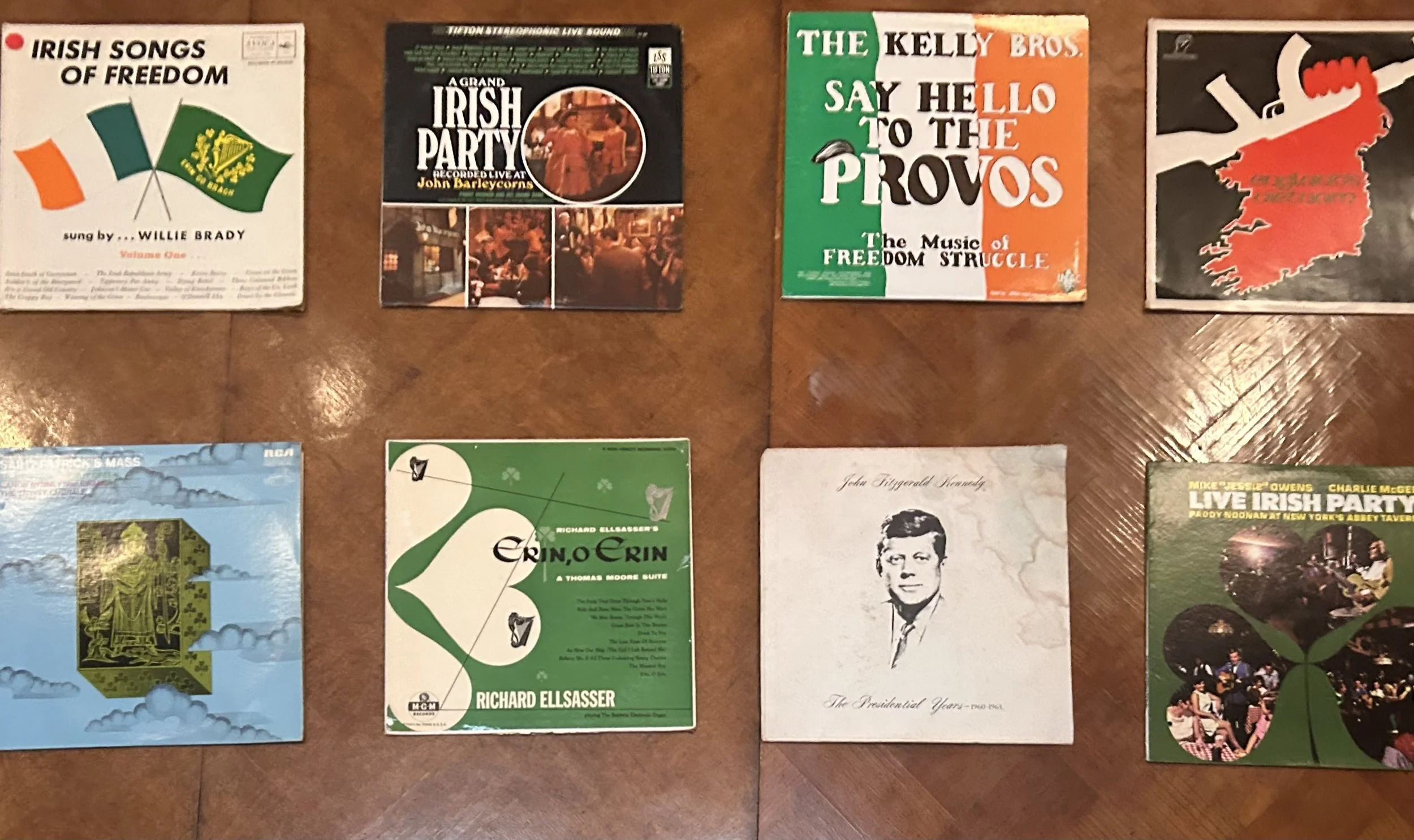
Various vinyl records, AIHS archives
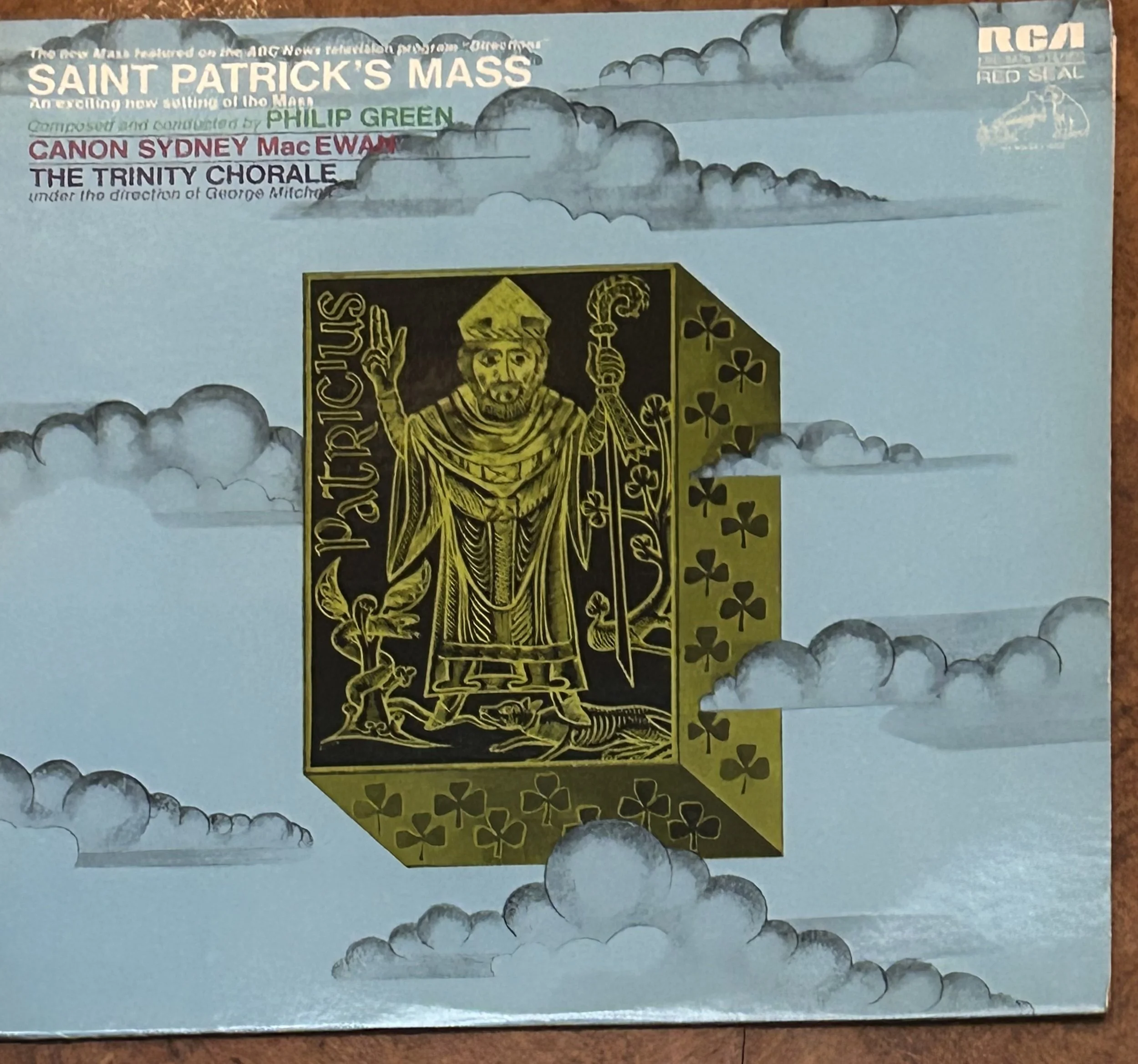
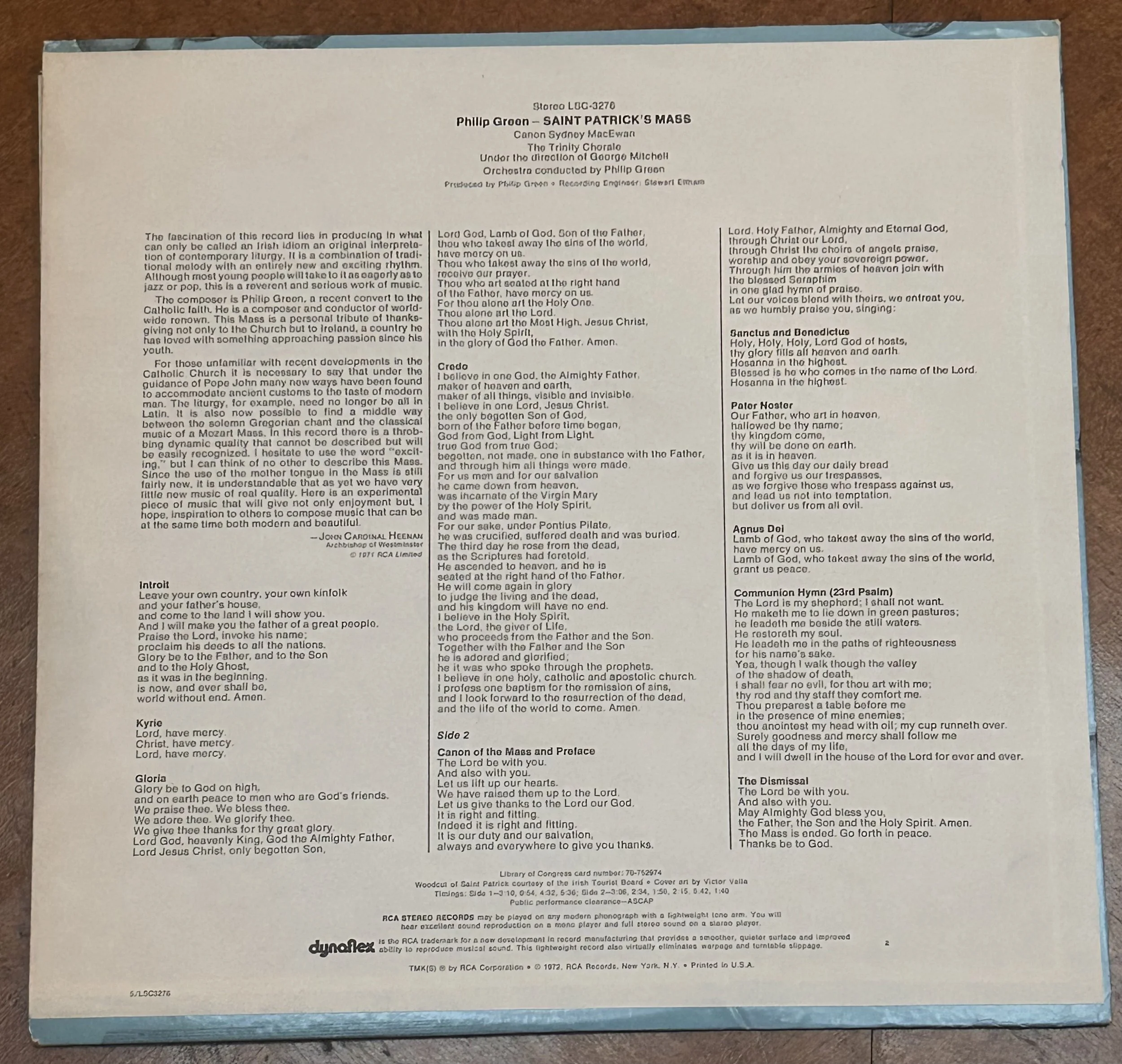
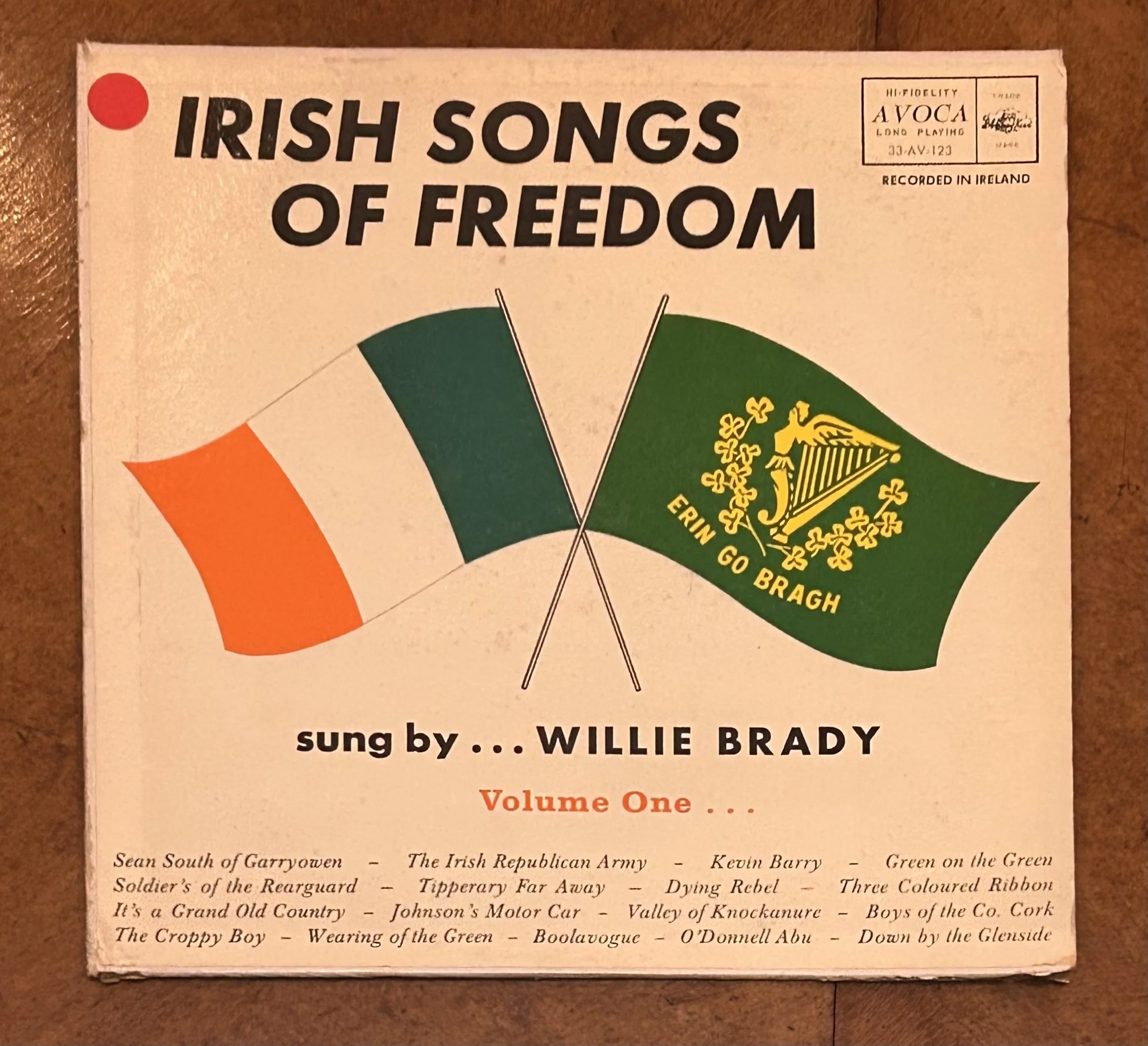
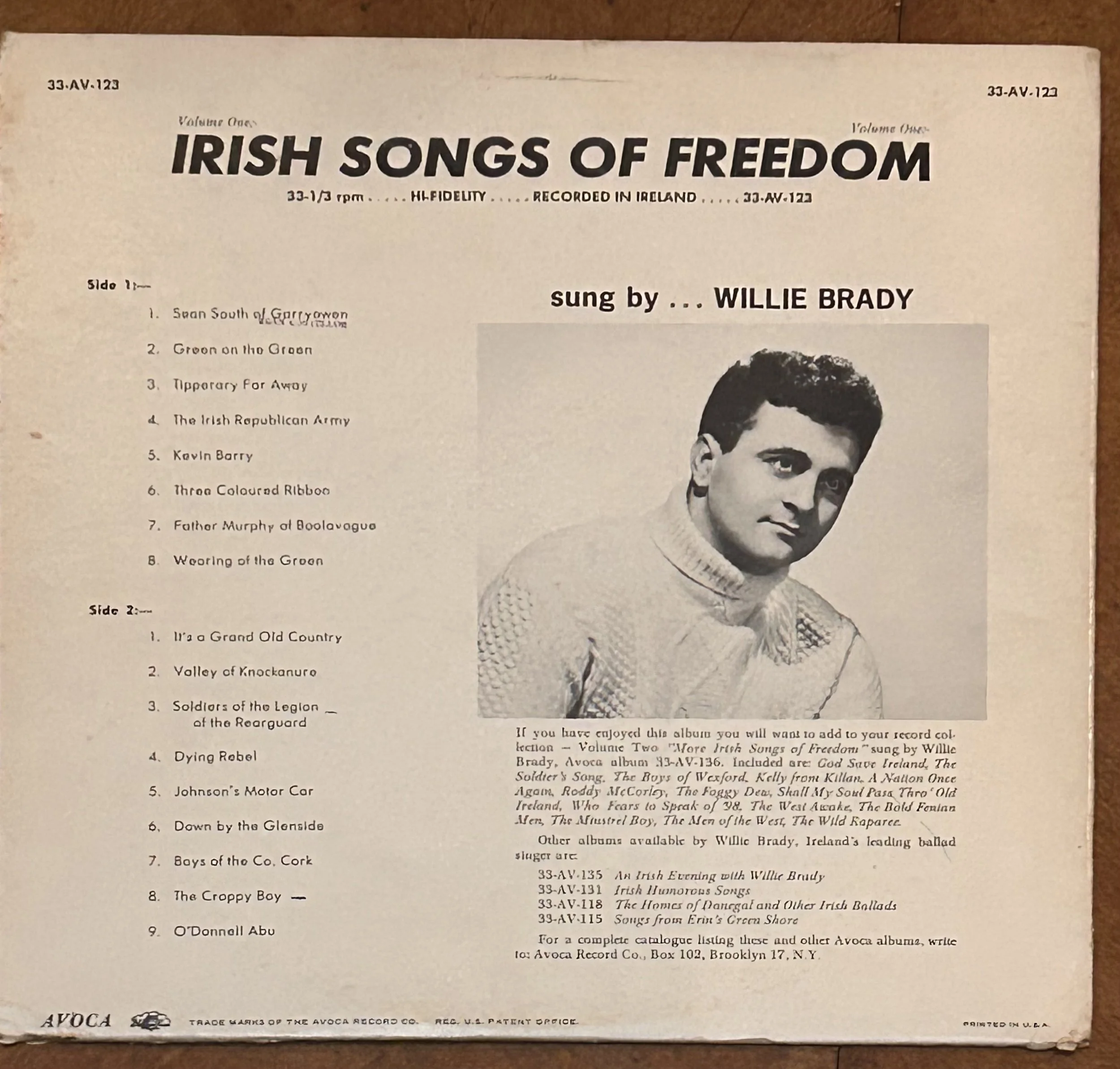
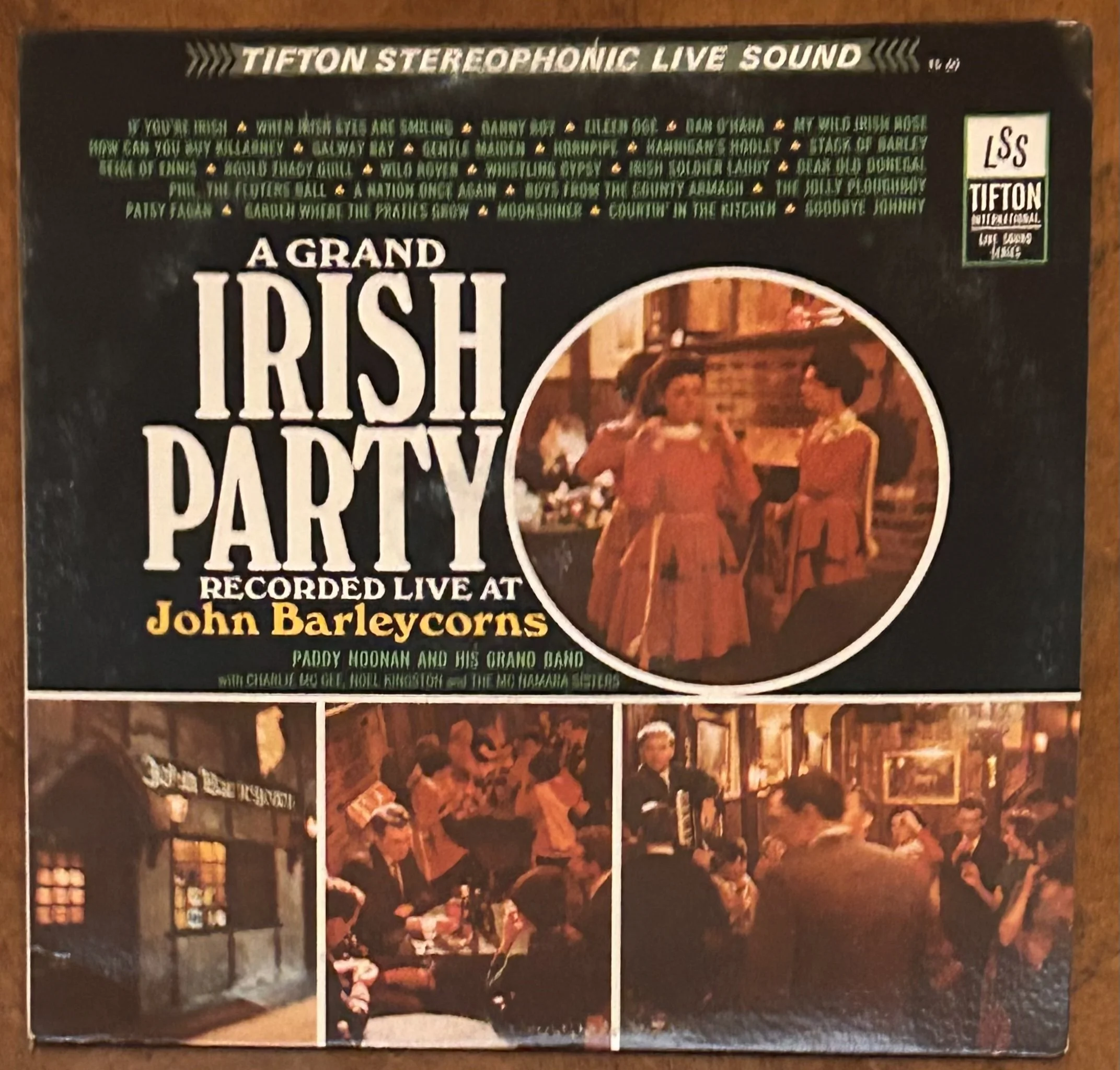
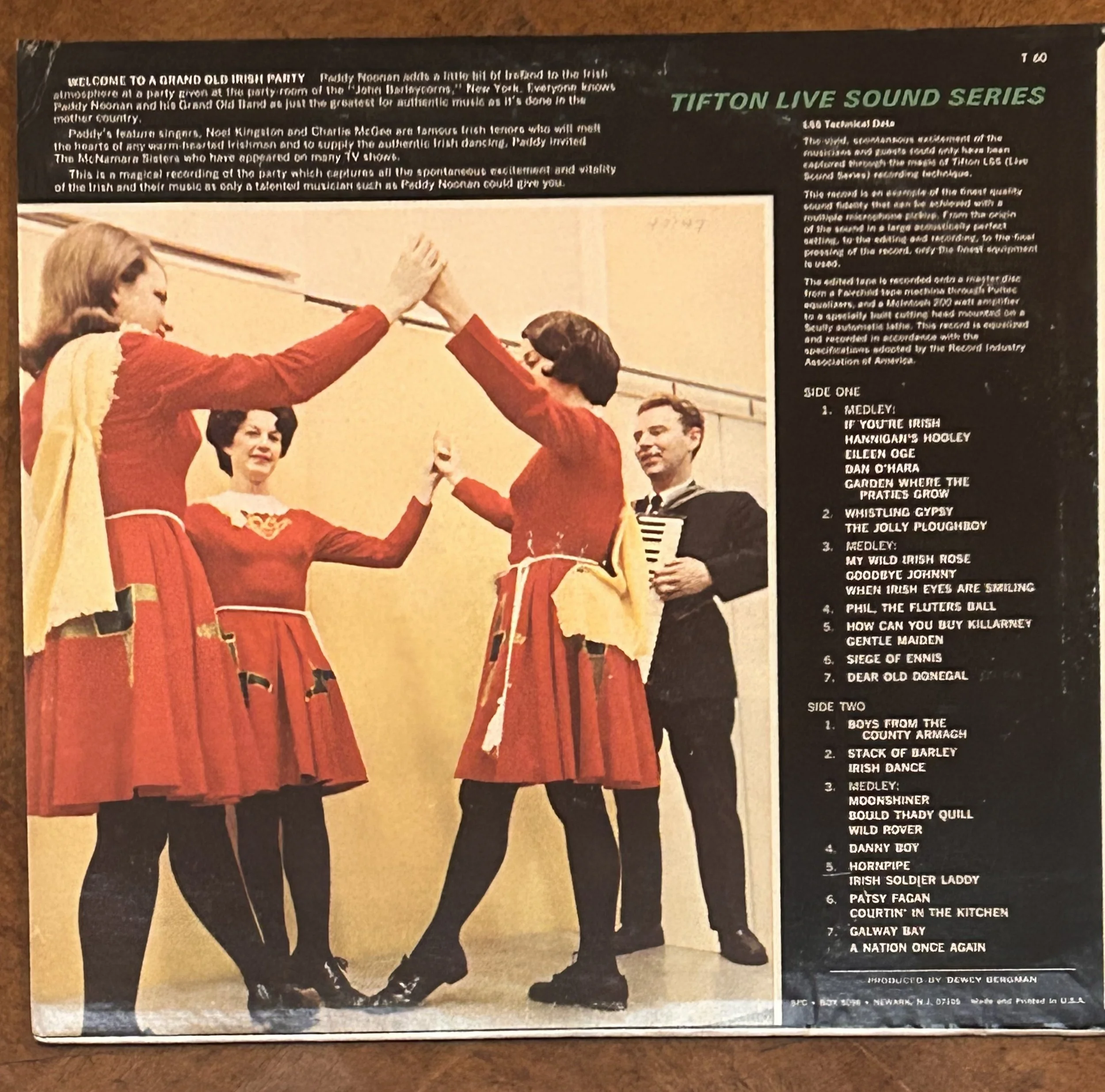
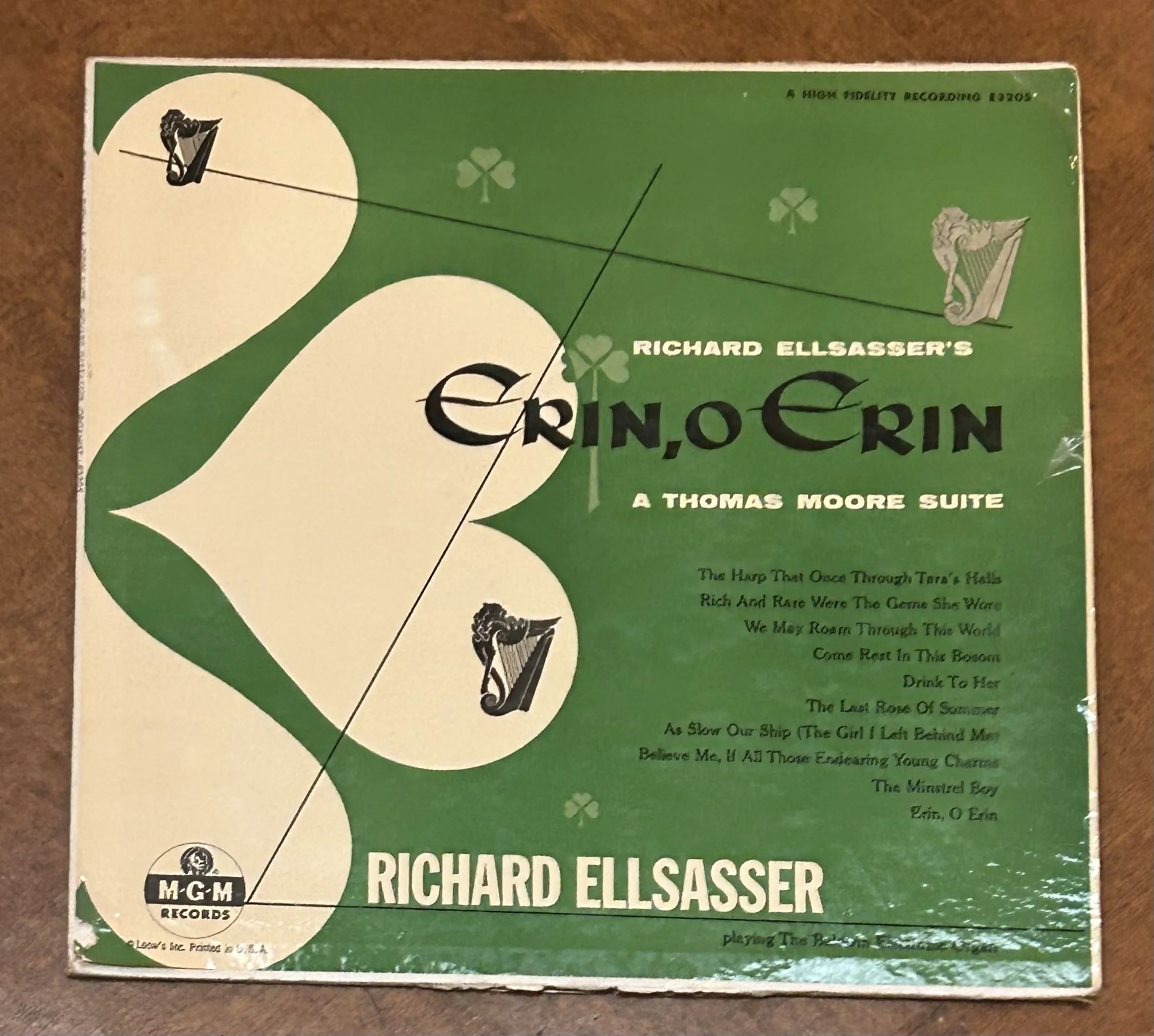
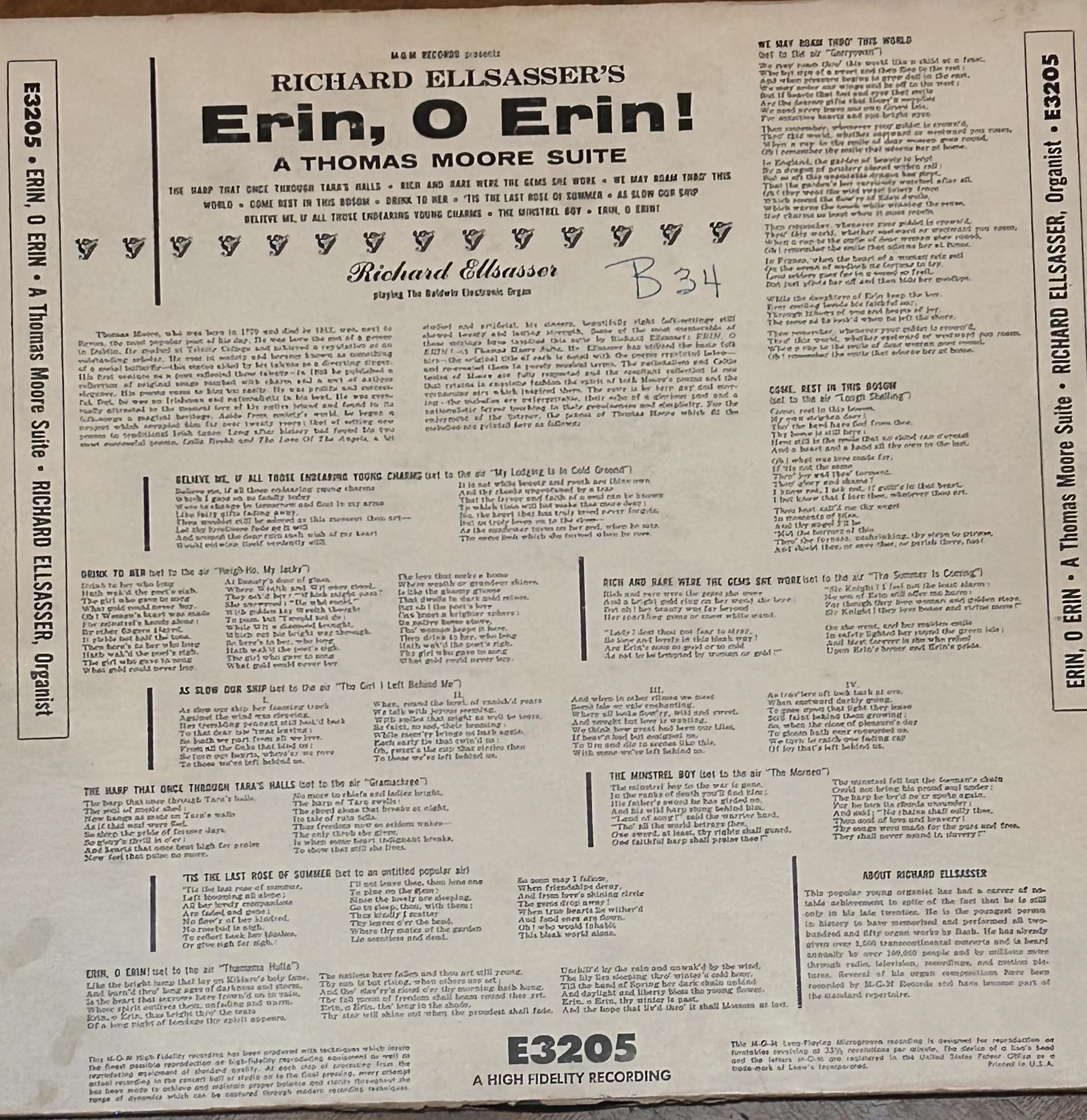
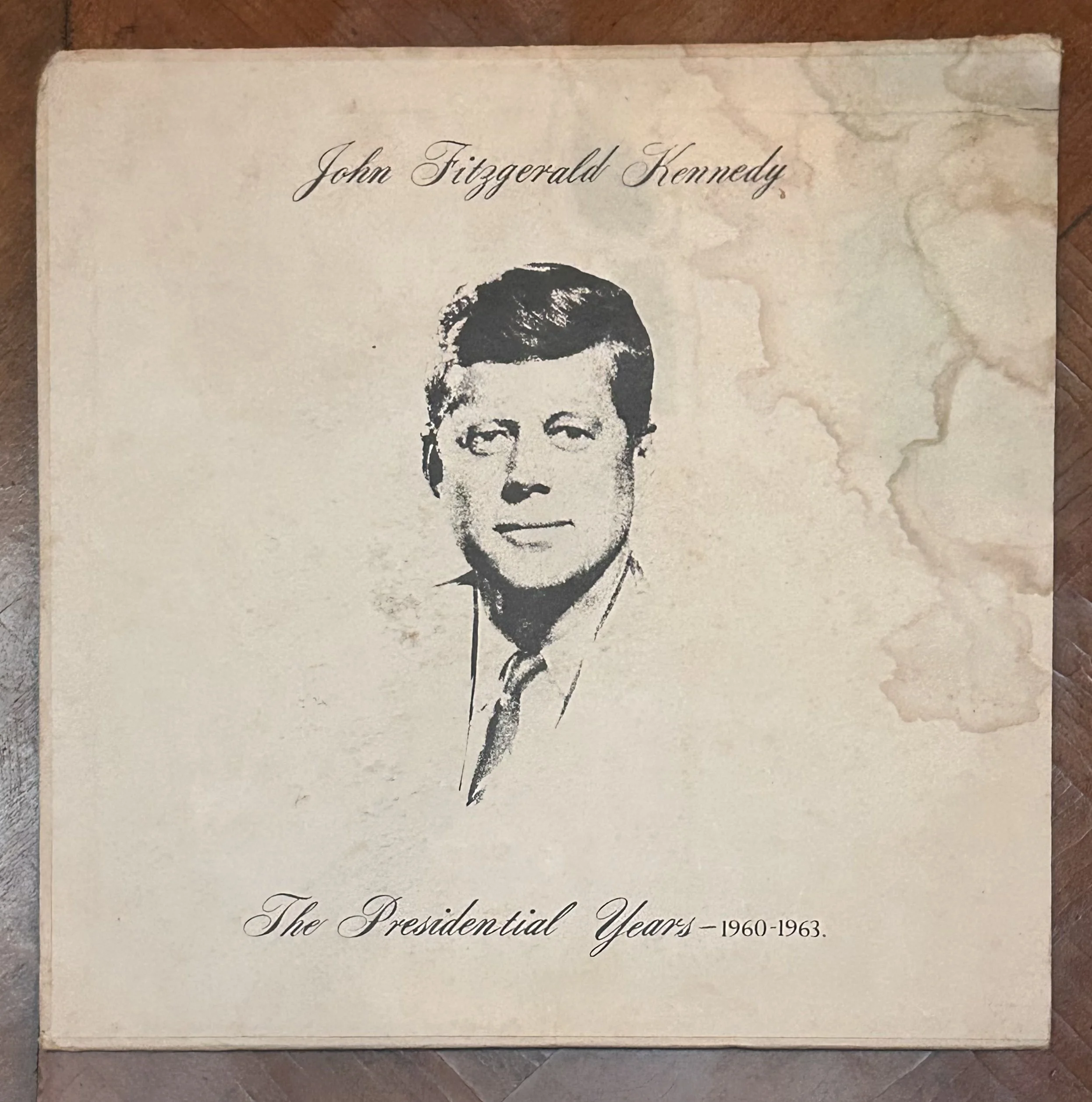
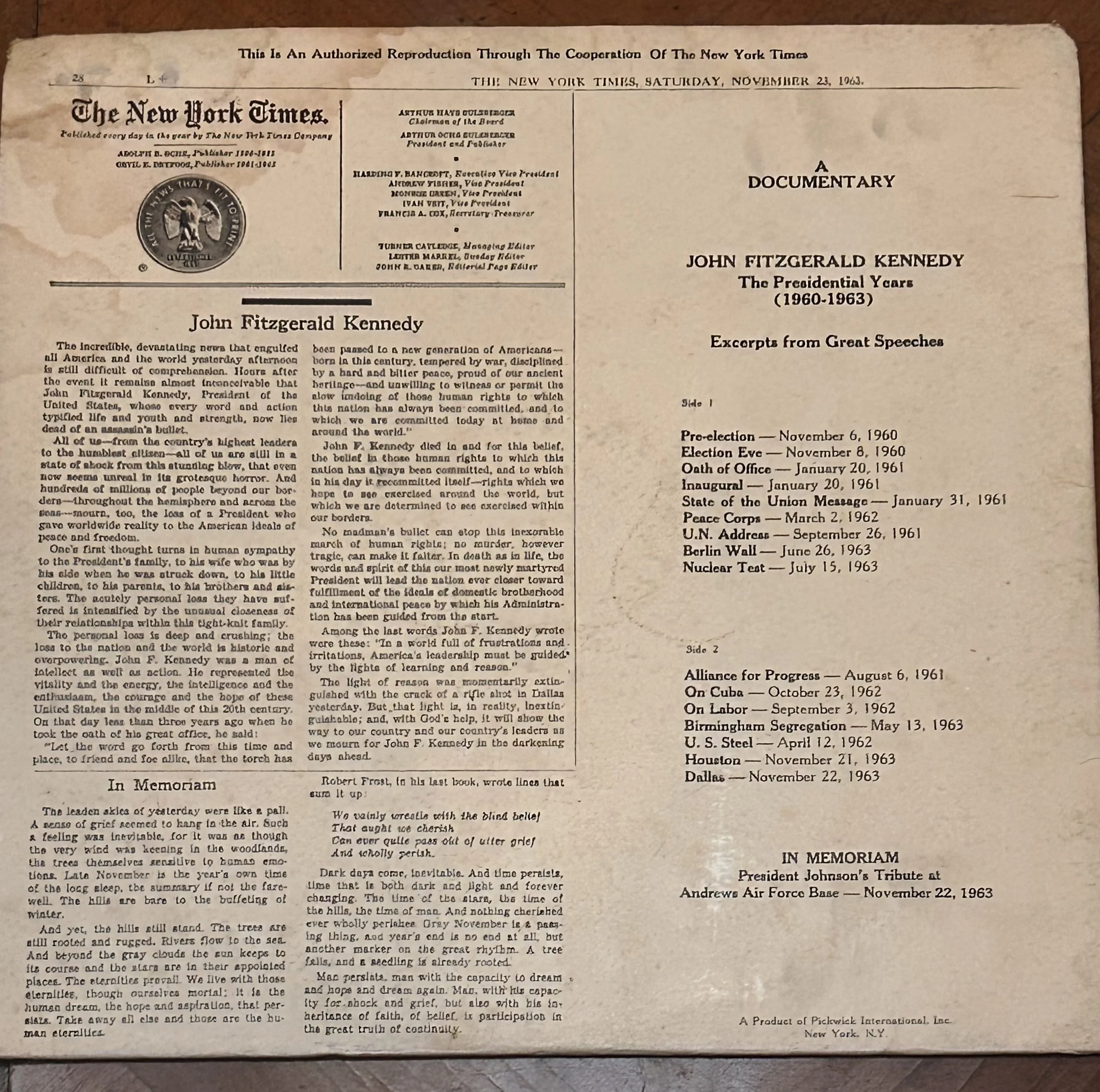
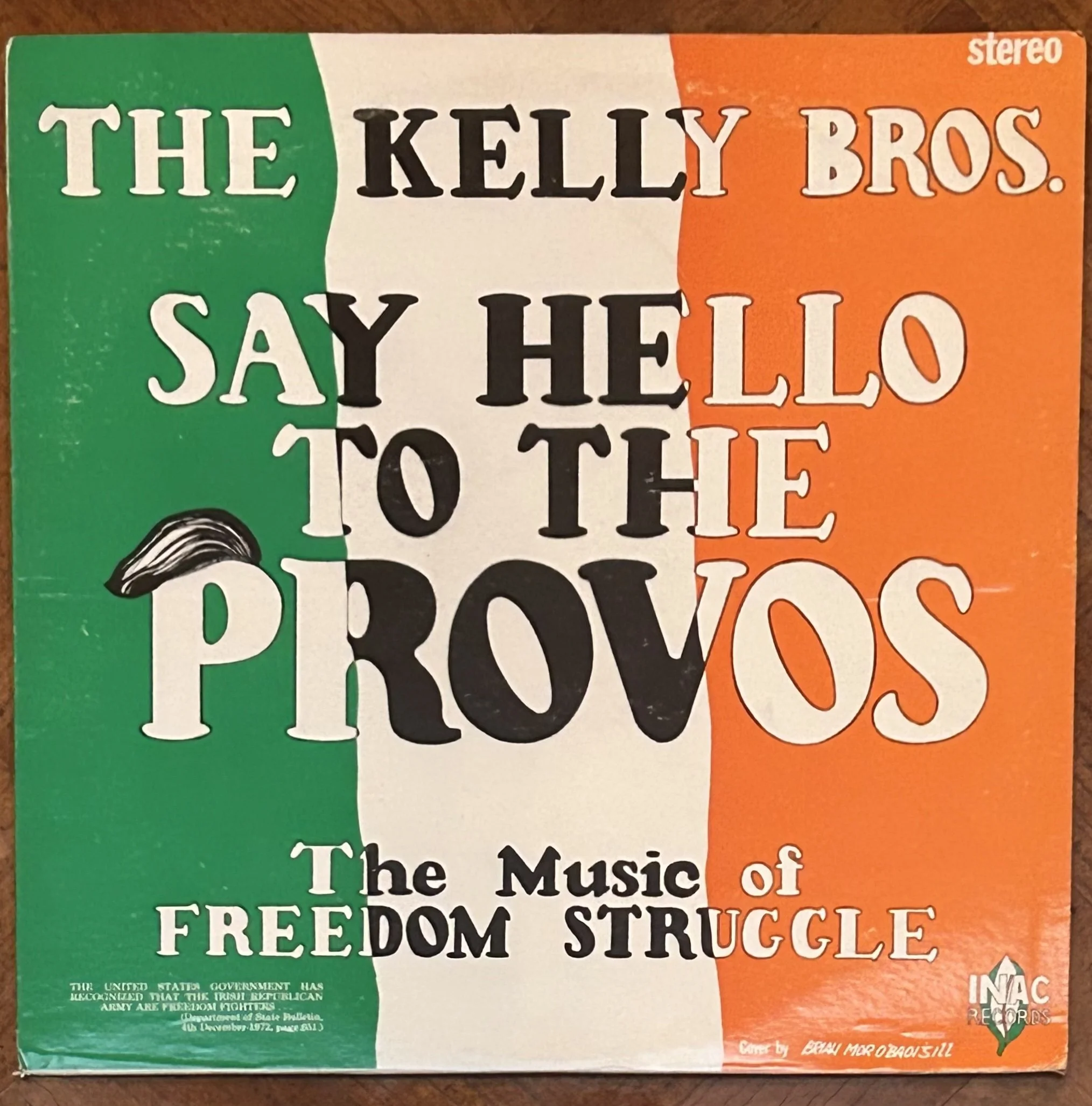
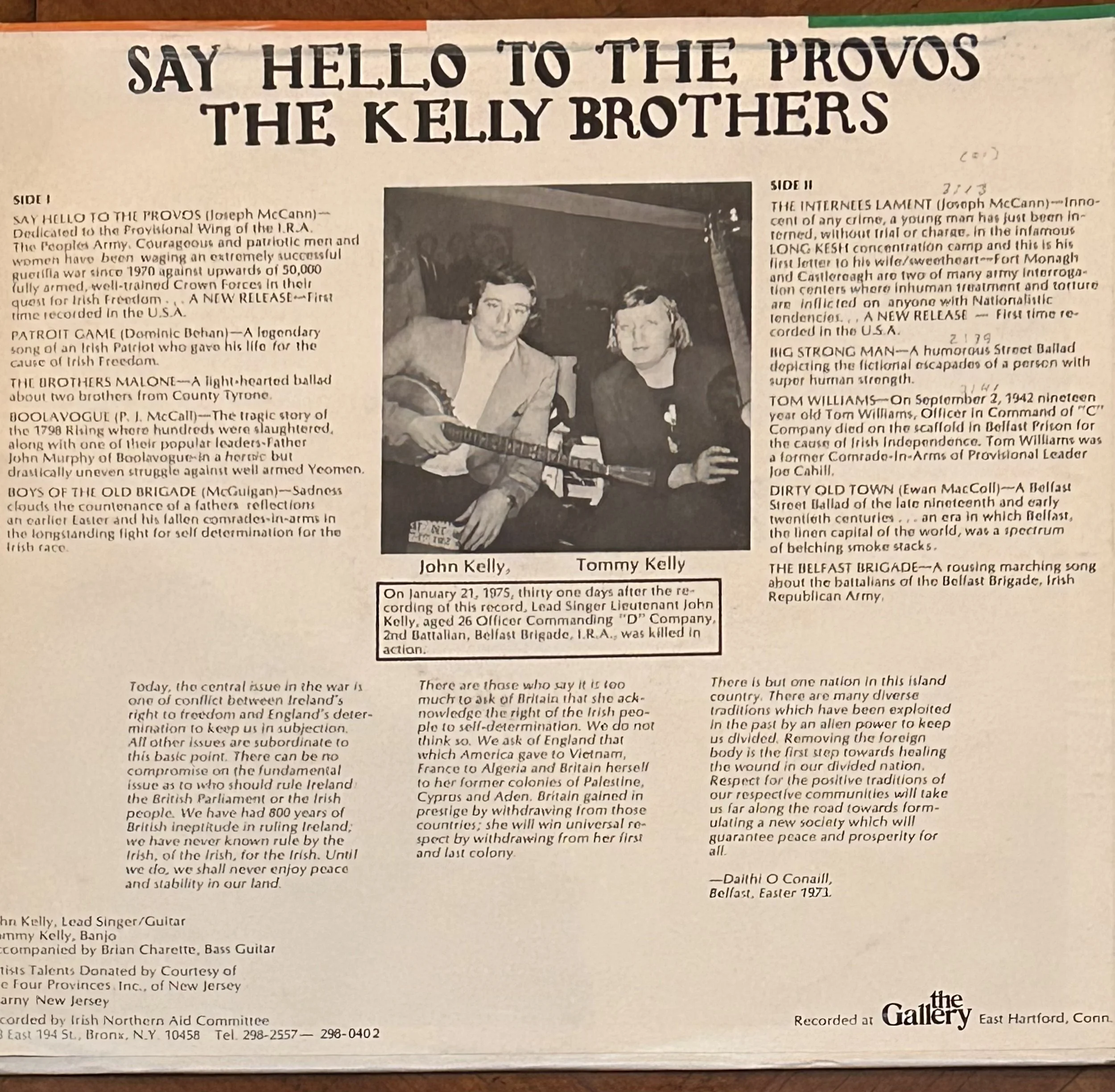
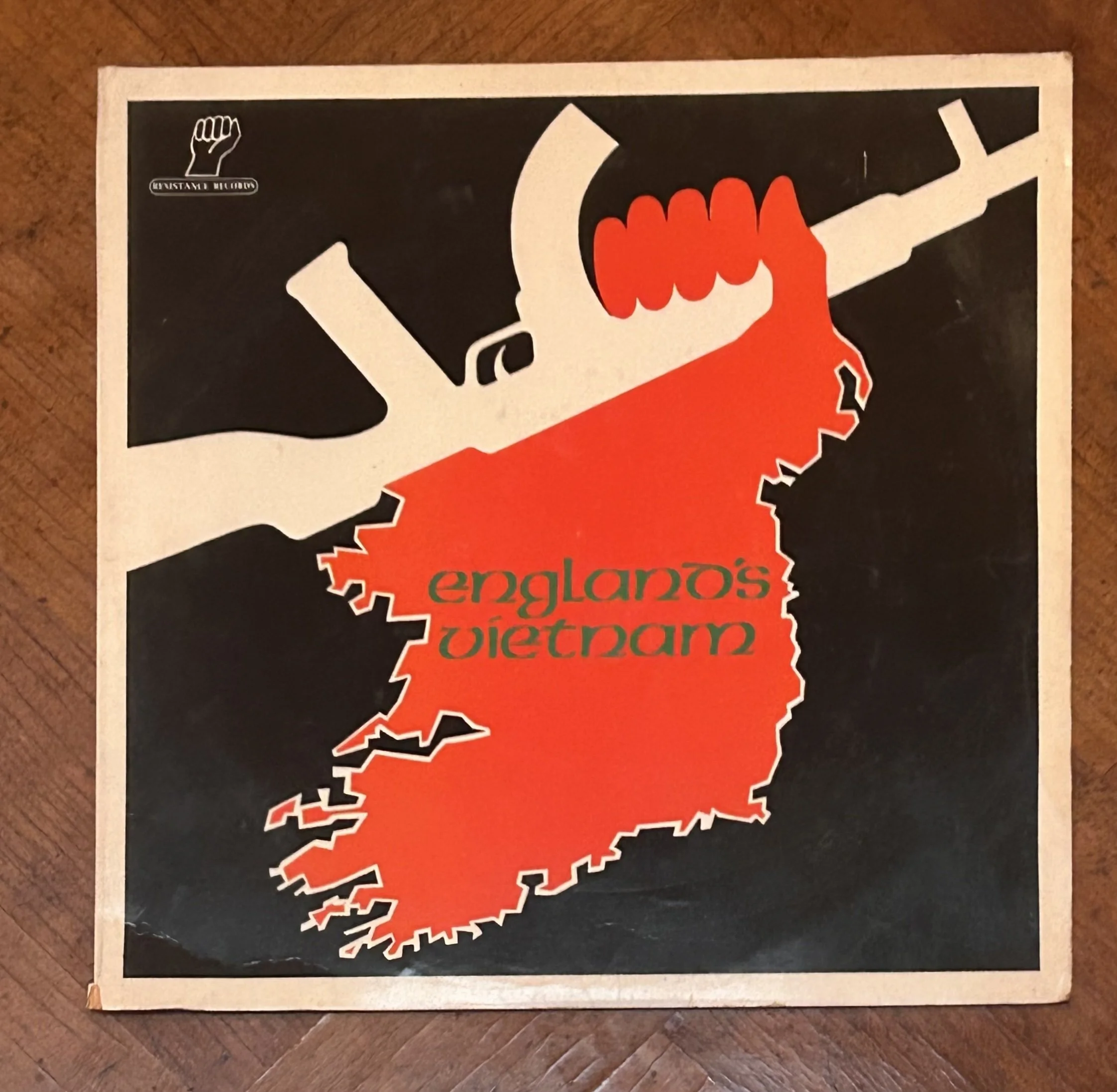
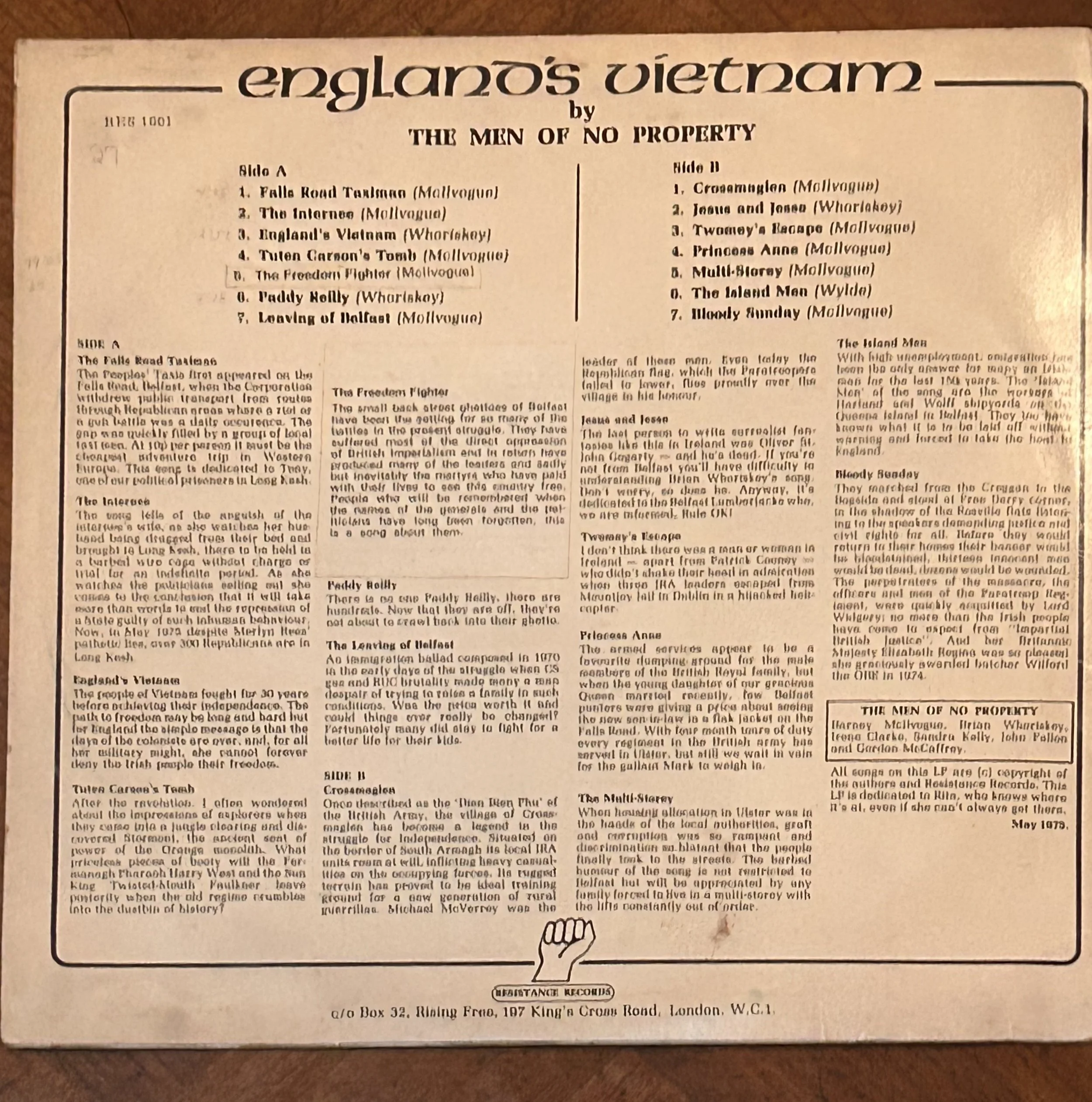
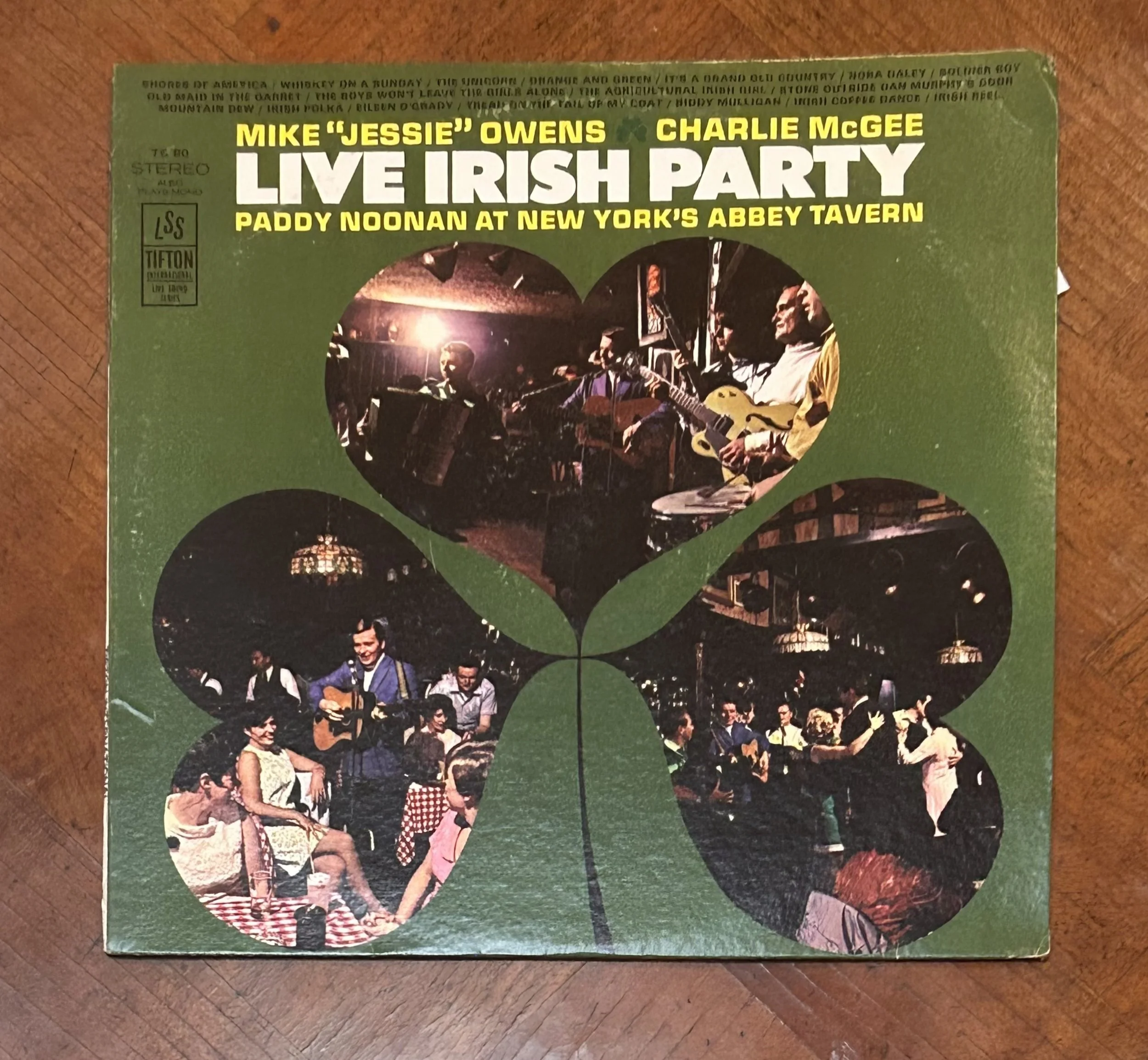
Find below a list of the titles of these vinyls, in order of the slideshow.
-
Saint Patrick’s Mass (1971) composed and arranged by Philip Green, performed by Canon Sydney MacEwan and the Trinity Chorale, directed by George Mitchell.
-
A Grand Irish Party Recorded Live At John Barleycorns (1967) performed by Paddy Noonan And His Grand Band With Charlie McGee, Noel Kingston And The McNamara Sisters.
-
Erin, O Erin, A Thomas Moore Suite (1955) composed and performed by Richard Ellsasser.
-
John Fitzgerald Kennedy “The Presidential Years” (1964) produced by Pickwick International, Inc. with The New York Times.
-
“Say Hello to the Provos” The Music of Freedom Struggle (1975) by The Kelly Bros.
-
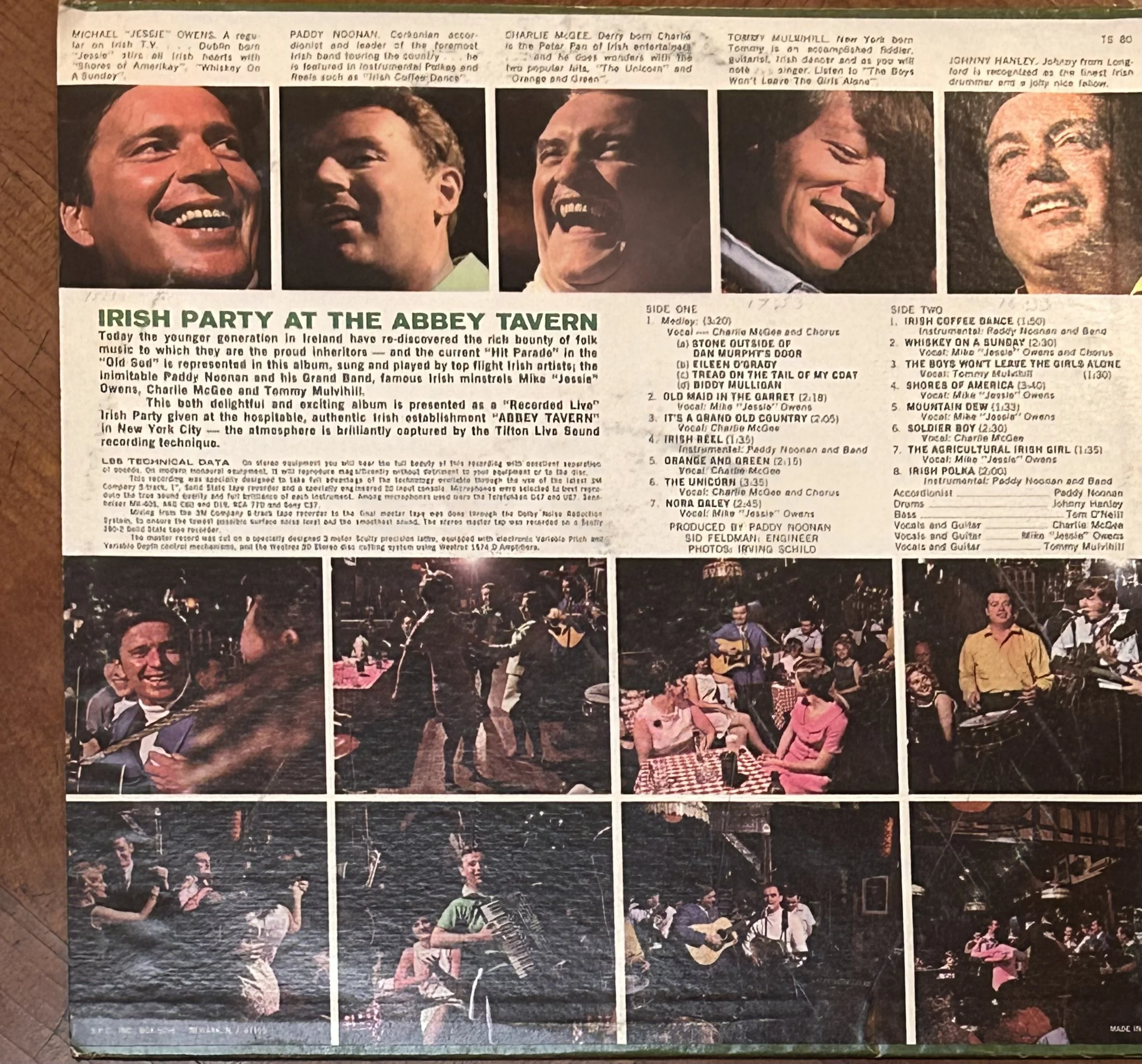
“Live Irish Party” Paddy Noonan at New York’s Abbey Tavern (undated) performed with Mike “Jessie” Owens and Charlie McGee.
You’ll notice that one of these vinyls is not music at all. That record with the familiar face on John Fitzgerald Kennedy comes from another, more recent, tradition. Like other vinyl records of famous political figures, it preserves his best recorded speeches. This vinyl was created shortly after his untimely death, and sold quickly among those who admired the Irish-American president.
Of the music records here, we can still see some variety. Most fitting for the holiday would be the recording of the Saint Patrick’s Day mass by Philip Green. Green was an English-born Catholic convert who composed a specialty arrangement of the Roman Mass with inspiration taken from Irish traditional music. Known mostly for his composition of cinematic scores, Green used this composition (and performance by the Trinity choir) as a way to show his love for Ireland.
Similarly, though more secular, Ellsasser’s Erin, O Erin uses traditional classical music to score a passionate dedication to Ireland. Ellsasser was a musical prodigy, the youngest person ever to memorize and perform all 200+ works of Johann Sebastian Bach at only 19. Though he has no known Irish ancestry, his studies of organ music and theology seem to have influenced this work. It should likewise be noted that many Irish composers have put the works of Irish lyricist Thomas Moore (1779 – 1852) to music. Moore’s influence on Irish musical traditions is lasting, though his framing of his apparent nationalism was criticized by both his contemporaries and successors.
The music that breaks from these classical forms makes the majority of our collections. From live recordings of trad sessions in New York Irish pubs (John Barleycorns and Abbey Tavern, shown here) to more political statements of nationalism (England’s Vietnam or Say Hello to the Provos, for instance), these recordings typically follow a more expected tone of Irish music.
This is not to say there are no disagreements between the similar forms of Irish music. Other vinyl records in our collection criticize some American productions as being “stage Irish” in their accents and advertise their records as being more truthful in their Irish identity. Some records are unabashedly political, serving as a history lesson spanning from the Middle Ages to the 1970s and explaining all Irish revolutions through an endless list of references. Others focus more on selling an idyllic Irish experience through a wistful view of the Irish countryside.
What holds true for all these collections, however, is an overwhelming pride in Irishness. The tonality and instrumentation of these pieces stands out in its Irishness almost equally to their lyricism. Though many of the traditional songs remain the same, the records sell continuously and a new performance is always welcomed. Each new iteration preserves the songs, stories, and history for a new generation. As we dust off these collections, we look forward to seeing the ongoing development of Irish music and celebrating its cultural value on the 17th.
What do you listen to on Saint Patrick’s Day? Do you play or sing along to anything? If you do, we encourage you to think about what this music means to you and how the tradition carries on. The next time you’re listening to Irish music, remember what it meant to those before you.